HomeMCPWorkbenchSkills
HomeWorkbenchNotificationsMe
llms.txt · MCP GuidePrivacy Policy · Terms of Service · Supportv1.8.3
  1. Home
  2. /Reaction

Cesium carbonate → 1-(4-Chlorobutoxy)-4-iodobenzene

HRID 1928653
Print

Reaction equation

HRID 1928653 reaction equation
[I:1][C:2]1[CH:7]=[CH:6][C:5]([OH:8])=[CH:4][CH:3]=1.C(=O)([O-])[O-].[Cs+].[Cs+].[Cl:15][CH2:16][CH2:17][CH2:18][CH2:19]I>C(#N)C>[Cl:15][CH2:16][CH2:17][CH2:18][CH2:19][O:8][C:5]1[CH:6]=[CH:7][C:2]([I:1])=[CH:3][CH:4]=1
ParticipantsConditionsProcedureWorkupSources & evidenceReaction notes

Participants

5

Reactant 3

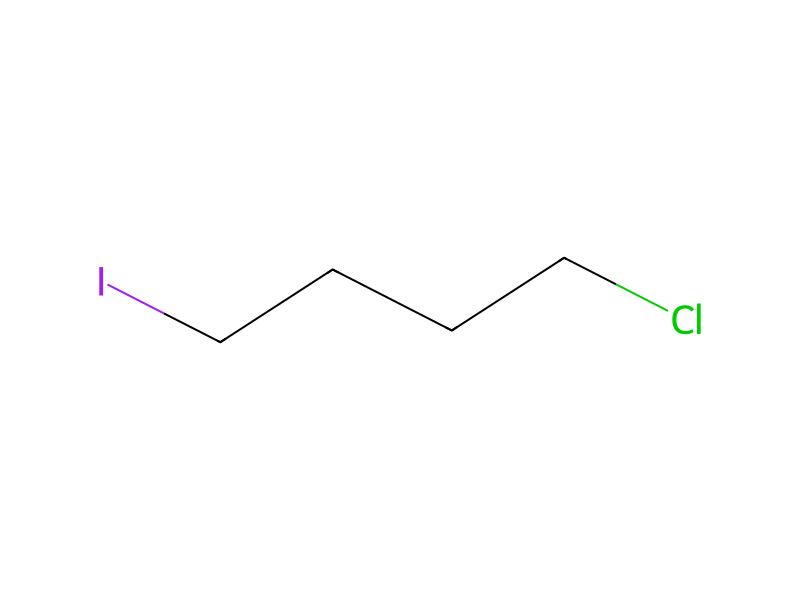
HCID 10796Cesium carbonateHCID 108944-IodophenolHCID 825271-Chloro-4-iodobutane

Product 1

HCID 581868981-(4-Chlorobutoxy)-4-iodobenzeneYield 99.2%

Reagents, catalysts & solvents 1

HCID 6342AcetonitrileSolvent

Conditions

Temperature
100 °C

Procedure

To a solution of 4-iodophenol (1.0 g) in acetonitrile (10 mL), cesium carbonate (3.0 g) and 1-chloro-4-iodobutane (1.2 g) were added and the mixture was heated to 100° C., at which it was stirred for 4 hours. The reaction mixture was cooled to room temperature and filtered to remove insoluble materials, and the filtrate was concentrated under reduced pressure. The resulting residue was purified by NH-type silica gel column chromatography (eluting solvent: n-hexane:ethyl acetate=7:3 to 1:1) to give the titled compound (1.4 g, 99%) as a brown oil.

Workup

  1. temperatureThe reaction mixture was cooled to room temperature
  2. filtrationfiltered
  3. customto remove insoluble materials
  4. concentrationthe filtrate was concentrated under reduced pressure
  5. customThe resulting residue was purified by NH-type silica gel column chromatography (eluting solvent: n-hexane:ethyl acetate=7:3 to 1:1)

Sources & evidence

ORD record
ord-a9a49b1a4cd749048ecdfdb583da9187
Source dataset
uspto-grants-2012_05
DOI
10.6084/m9.figshare.5104873.v1
Patent number
US08183387B2

Reaction notes

On this pageParticipantsConditionsProcedureWorkupSources & evidenceReaction notes