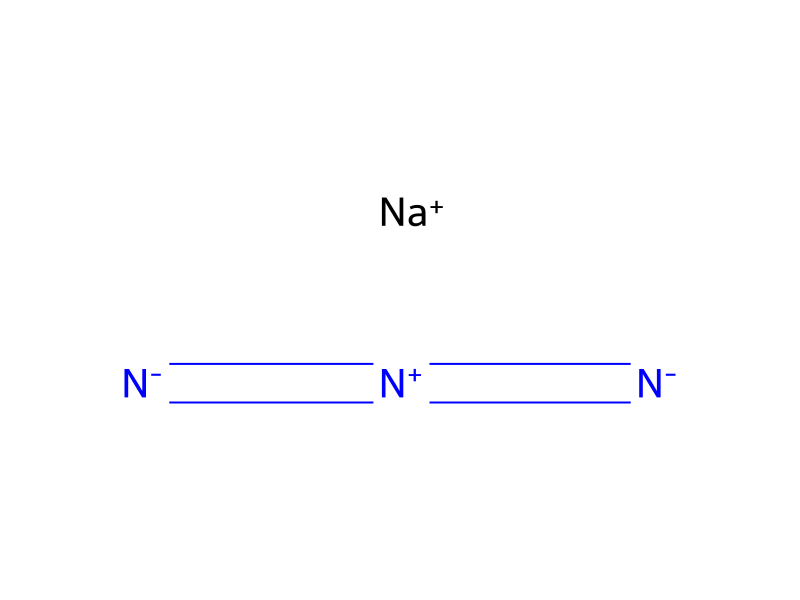
Br[CH:2]1[CH2:17][CH2:16][C:5]2=[C:6]([C:11]([O:13][CH2:14][CH3:15])=[O:12])[S:7][C:8]([S:9][CH3:10])=[C:4]2[C:3]1=[O:18].[N-:19]=[N+:20]=[N-:21].[Na+]>CN(C)C=O.O>[N:19]([CH:2]1[CH2:17][CH2:16][C:5]2=[C:6]([C:11]([O:13][CH2:14][CH3:15])=[O:12])[S:7][C:8]([S:9][CH3:10])=[C:4]2[C:3]1=[O:18])=[N+:20]=[N-:21]Ethyl 5-bromo-4,5,6,7-tetrahydro-3-methylthio-4-oxobenzo[c]thiophene-1-carboxylate (5.24 g) was suspended in N,N-dimethylformamide (80 ml); a solution of sodium azide (1.95 g) in water (12 ml) was added at 0° C. After the reaction mixture was stirred at room temperature for 4 hours, it was poured over water (50 ml) and extracted with ethyl acetate. The organic layer was washed with water and dried (MgSO4), after which the solvent was distilled off. The residue was subjected to silica gel column chromatography and eluted with ethyl acetate-hexane (1:9 to 1:2, v/v) to yield ethyl 5-azido-4,5,6,7-tetrahydro-3-methylthio-4-oxobenzo[c]thiophene-1-carboxylate (3.77 g, 80.7%), which was then recrystallized from ethyl acetate-hexane. Colorless needles. Melting point 163-164° C. (decomposed).