HomeMCPWorkbenchSkills
HomeWorkbenchNotificationsMe
llms.txt · MCP GuidePrivacy Policy · Terms of Service · Supportv1.8.3
  1. Home
  2. /Reaction

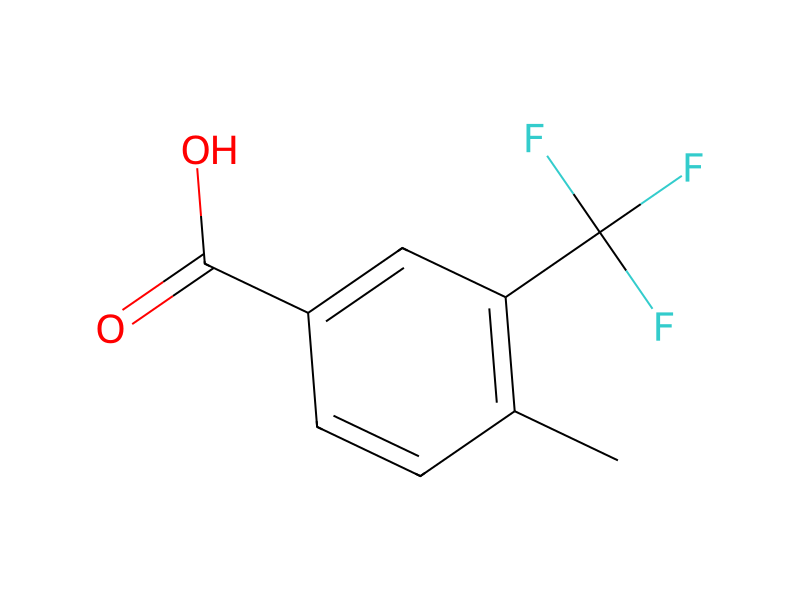
4-Methyl-3-(trifluoromethyl)benzoic acid → 4-(Bromomethyl)-3-(trifluoromethyl)benzoic acid

HRID 1968931
Print

Reaction equation

HRID 1968931 reaction equation
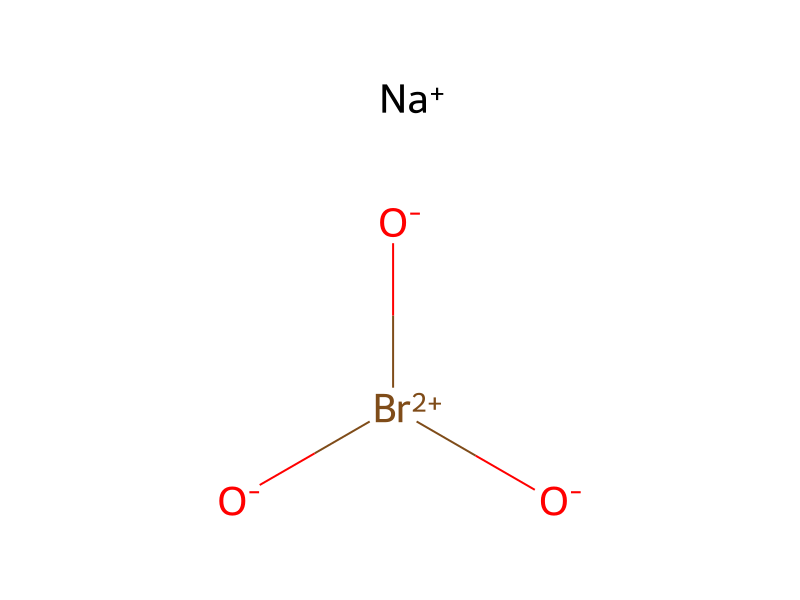
[CH3:1][C:2]1[CH:10]=[CH:9][C:5]([C:6]([OH:8])=[O:7])=[CH:4][C:3]=1[C:11]([F:14])([F:13])[F:12].[Br:15]([O-])(=O)=O.[Na+].S(=O)(O)[O-].[Na+]>C(OC(C)C)(=O)C>[Br:15][CH2:1][C:2]1[CH:10]=[CH:9][C:5]([C:6]([OH:8])=[O:7])=[CH:4][C:3]=1[C:11]([F:12])([F:13])[F:14]
ParticipantsProcedureWorkupSources & evidenceReaction notes

Participants

5

Reactant 3

HCID 27755924-Methyl-3-(trifluoromethyl)benzoic acidHCID 23665763Sodium BisulfiteHCID 23668195Sodium Bromate

Product 1

HCID 231458934-(Bromomethyl)-3-(trifluoromethyl)benzoic acid

Reagents, catalysts & solvents 1

HCID 7915Isopropyl AcetateSolvent

Procedure

1.0 g of 4-methyl-3-(trifluoromethyl)benzoic acid was dissolved in isopropyl acetate (q.s.). To the mixture, sodium bromate aqueous solution (10 ml, containing 2.2 g of sodium bromate) and sodium bisulfite aqueous solution (10 ml, containing 1.52 g of sodium bisulfite) were added alternatively with stirring. After addition, the solution became brownish red. The mixture was heated to reflux until the solution became colorless. Then the organic layer was separated. Again, to the mixture, sodium bromate aqueous solution (10 ml, containing 2.2 g sodium bromate) and sodium bisulfite aqueous solution (10 ml, containing 1.52 g sodium bisulfite) were added alternatively and the mixture was heated to reflux until the solution became colorless. Then the organic layer was separated. Continually, to the mixture, a sodium bromate aqueous solution (10 ml, containing 2.2 g sodium bromate) and a sodium bisulfite aqueous solution (10 ml, containing 1.52 g sodium bisulfite) were added alternatively, and the mixture was heated to reflux until the solution became colorless. Then the organic layer was separated. The organic layer was washed with 5% sodium sulfate solution twice and 15% sodium chloride solution twice, dried over anhydrous Na2SO4, filtered, concentrated under reduced pressure to dry. The is residue was stirred in petroleum ether, and filtered to give a white solid. m.p. 140-145° C.

Workup

  1. additionAfter addition
  2. temperatureThe mixture was heated
  3. temperatureto reflux until the solution
  4. customThen the organic layer was separated
  5. additionAgain, to the mixture, sodium bromate aqueous solution (10 ml, containing 2.2 g sodium bromate) and sodium bisulfite aqueous solution (10 ml, containing 1.52 g sodium bisulfite) were added alternatively
  6. temperaturethe mixture was heated
  7. temperatureto reflux until the solution
  8. customThen the organic layer was separated
  9. additionContinually, to the mixture, a sodium bromate aqueous solution (10 ml, containing 2.2 g sodium bromate) and a sodium bisulfite aqueous solution (10 ml, containing 1.52 g sodium bisulfite) were added alternatively
  10. temperaturethe mixture was heated
  11. temperatureto reflux until the solution
  12. customThen the organic layer was separated
  13. washThe organic layer was washed with 5% sodium sulfate solution twice
  14. dry with material15% sodium chloride solution twice, dried over anhydrous Na2SO4
  15. filtrationfiltered
  16. concentrationconcentrated under reduced pressure
  17. customto dry
  18. stirringThe is residue was stirred in petroleum ether
  19. filtrationfiltered
  20. customto give a white solid

Sources & evidence

ORD record
ord-9c45df9794e847b1bb1519d14107bcf8
Source dataset
uspto-grants-2013_04
DOI
10.6084/m9.figshare.5104873.v1
Patent number
US08426446B2

Reaction notes

On this pageParticipantsProcedureWorkupSources & evidenceReaction notes