Sodium Chloride → Sodium prop-2-enoate--ethenyl acetate (1/1/1)
Reaction equation

[C:1]([OH:5])(=[O:4])[CH:2]=[CH2:3].[OH-].[Na+:7].C(N(CC(O)=O)CC(O)=O)CN(CC(O)=O)CC(O)=O.CCCCCCCC/C=C\CCCCCC[CH2:44][C:45]([O:47][CH2:48][C@@H:49](O)[C@H]1OC[C@H](O)[C@H]1O)=[O:46].C(OC=C)(=O)C.N(C(C)(C)C#N)=NC(C)(C)C#N.[Cl-].[Na+]>CC(C)=O.O>[C:45]([O:47][CH:48]=[CH2:49])(=[O:46])[CH3:44].[C:1]([O-:5])(=[O:4])[CH:2]=[CH2:3].[Na+:7]Participants
Reactant 7






Product 1

Reagents, catalysts & solvents 2


Procedure
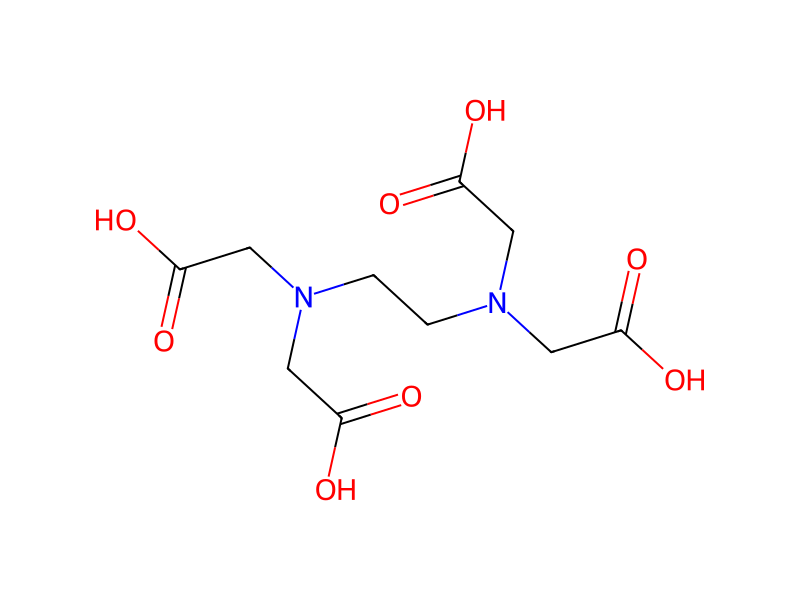
A (vinyl acetate-sodium acrylate) copolymer water-in-oil emulsion was prepared according to the following procedures: An aqueous solution was prepared by mixing, under cooling conditions, 96.49 gm of acrylic acid, 163.75 gm of water, 130 gm of a 40 percent sodium hydroxide solution and 0.02 gm of ethylenediamine tetraacetic acid. Separately, an oil solution was prepared by mixing 5.8 gm of Span-80, 113.3 gm of Isopar-M and 6.5 gm of vinyl acetate. The two solutions were combined in a high speed waring blender to give a uniform emulsion. A catalyst solution was prepared by dissolving 0.26 gm of 2,2'-azobis(isobutyronitrile) in 3.13 ml of acetone. The monomer emulsion was then deoxygenated as described in Example 1. The polymerization was carried out in the manner as in Example 1, except that a one-liter pyrex glass reactor equipped as described in Example 1, was used. The product produced was a milky white emulsion containing about 24 percent by weight of the polymer. The polymer had an intrinsic viscosity of 4.2 dl/gm as measured in a one normal aqueous sodium chloride solution.
Workup
- customAn aqueous solution was prepared
- customSeparately, an oil solution was prepared
- customto give a uniform emulsion
- customA catalyst solution was prepared
- customThe monomer emulsion was then deoxygenated
- customequipped
- customThe product produced
- additioncontaining about 24 percent by weight of the polymer
Sources & evidence
- ORD record
- ord-9263bfa2359c4586878e94151cf95e67
- Source dataset
- uspto-grants-1984_11
- Patent number
- US04485209
Reaction notes
Loading…