HomeMCPWorkbenchSkills
HomeWorkbenchNotificationsMe
llms.txt · MCP GuidePrivacy Policy · Terms of Service · Supportv1.8.3
  1. Home
  2. /Reaction

Acetone → 4-(beta-D-glucopyranos-1-yl)-2-(4-trifluoromethoxy-benzyl)-benzonitrile

HRID 19834
Print

Reaction equation

HRID 19834 reaction equation
Br[CH2:2][C:3]1[CH:10]=[C:9]([C:11]2([O:29][C@H:28]([CH2:30][O:31]C(=O)C)[C@@H:23]([O:24]C(=O)C)[C@H:18]([O:19]C(=O)C)[C@H:13]2[O:14]C(=O)C)[OH:12])[CH:8]=[CH:7][C:4]=1[C:5]#[N:6].[F:35][C:36]([F:48])([F:47])[O:37][C:38]1[CH:43]=[CH:42][C:41](B(O)O)=[CH:40][CH:39]=1.C(=O)([O-])[O-].[K+].[K+].CC(C)=O>[Cl-].[Na+].O.[Pd](Cl)Cl.O>[OH:12][C@:11]1([C:9]2[CH:8]=[CH:7][C:4]([C:5]#[N:6])=[C:3]([CH2:2][C:41]3[CH:40]=[CH:39][C:38]([O:37][C:36]([F:35])([F:47])[F:48])=[CH:43][CH:42]=3)[CH:10]=2)[O:29][C@H:28]([CH2:30][OH:31])[C@@H:23]([OH:24])[C@H:18]([OH:19])[C@H:13]1[OH:14]
ParticipantsProcedureWorkupSources & evidenceReaction notes

Participants

8

Reactant 4

HCID 180AcetoneHCID 11430Potassium CarbonateHCID 27343864-(Trifluoromethoxy)phenylboronic acidHCID 671314102-Bromomethyl-4-(2,3,4,6-tetra-O-acetyl-D-glucopyranos-1-yl)-benzonitrile

Product 1

HCID 866189564-(beta-D-glucopyranos-1-yl)-2-(4-trifluoromethoxy-benzyl)-benzonitrile

Reagents, catalysts & solvents

3
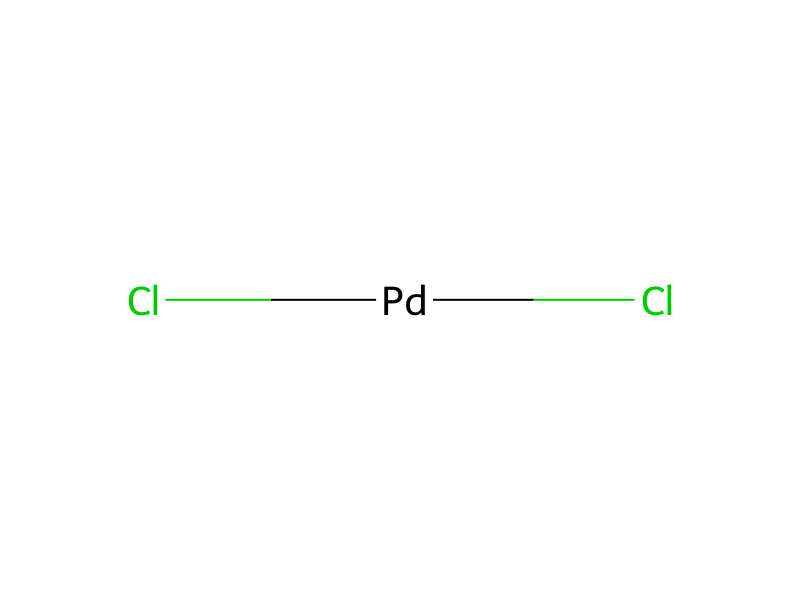
HCID 24290Palladium ChlorideCatalystHCID 962WaterSolventHCID 57417360Sodium chloride; waterSolvent

Procedure

An Ar filled flask is charged with 2-bromomethyl-4-(2,3,4,6-tetra-O-acetyl-D-glucopyranos-1-yl)-benzonitrile (0.25 g), 4-trifluoromethoxy-phenylboronic acid (0.20 g), potassium carbonate (0.26) and a 3:1 mixture of degassed acetone and water (4 mL). The mixture is stirred at room temperature for 5 min, before it is cooled in an ice-bath. Then palladium dichloride (5 mg) is added and the reaction mixture is stirred for 16 h at ambient temperature. The mixture is then diluted with brine and extracted with ethyl acetate. The combined extracts are dried over sodium sulfate and the solvent is removed under reduced pressure. The residue is dissolved in methanol (9 mL) and treated with 4 M aqueous potassium hydroxide solution (1 mL). The resulting solution is stirred at ambient temperature for 1 h and then neutralized with 1 M hydrochloric acid. The methanol is evaporated, and the residue is diluted with brine and extracted with ethyl acetate. The organic extracts collected are dried over sodium sulfate, and the solvent is removed. The residue is chromatographed on silica gel (dichloromethane/methanol 1:0->8:1).

Workup

  1. additionAn Ar filled flask
  2. temperatureis cooled in an ice-bath
  3. stirringthe reaction mixture is stirred for 16 h at ambient temperature
  4. extractionextracted with ethyl acetate
  5. dry with materialThe combined extracts are dried over sodium sulfate
  6. customthe solvent is removed under reduced pressure
  7. dissolutionThe residue is dissolved in methanol (9 mL)
  8. additiontreated with 4 M aqueous potassium hydroxide solution (1 mL)
  9. stirringThe resulting solution is stirred at ambient temperature for 1 h
  10. customThe methanol is evaporated
  11. additionthe residue is diluted with brine
  12. extractionextracted with ethyl acetate
  13. customThe organic extracts collected
  14. dry with materialare dried over sodium sulfate
  15. customthe solvent is removed
  16. customThe residue is chromatographed on silica gel (dichloromethane/methanol 1:0->8:1)

Sources & evidence

ORD record
ord-2978893eff4643ecbe663c6f7d435a8a
Source dataset
uspto-grants-2010_06
DOI
10.6084/m9.figshare.5104873.v1
Patent number
US07745414B2

Reaction notes

On this pageParticipantsProcedureWorkupSources & evidenceReaction notes