HomeMCPSkillsWorkbenchOpenChem
HomeWorkbenchNotificationsMe
llms.txt · skill.md · MCP GuidePrivacy Policy · Terms of Service · Supportv1.8.5
  1. Home
  2. /Reaction

Diisopropylethylamine → 3-{[6-(azetidin-1-ylcarbonyl)pyridin-3-yl]oxy}-N-[1-(difluoromethyl)-1H-pyrazol-3-yl]-5-[(3S)-tetrahydrofuran-3-yloxy]benzamide

HRID 1990285
Print

Reaction equation

ClC(N(C)C)=C(C)C.[N:9]1([C:13]([C:15]2[N:20]=[CH:19][C:18]([O:21][C:22]3[CH:23]=[C:24]([CH:28]=[C:29]([O:31][C@H:32]4[CH2:36][CH2:35][O:34][CH2:33]4)[CH:30]=3)[C:25]([OH:27])=O)=[CH:17][CH:16]=2)=[O:14])[CH2:12][CH2:11][CH2:10]1.Cl.[F:38][CH:39]([F:46])[N:40]1[CH:44]=[CH:43][C:42]([NH2:45])=[N:41]1.CCN(C(C)C)C(C)C>C(Cl)Cl>[N:9]1([C:13]([C:15]2[N:20]=[CH:19][C:18]([O:21][C:22]3[CH:23]=[C:24]([CH:28]=[C:29]([O:31][C@H:32]4[CH2:36][CH2:35][O:34][CH2:33]4)[CH:30]=3)[C:25]([NH:45][C:42]3[CH:43]=[CH:44][N:40]([CH:39]([F:46])[F:38])[N:41]=3)=[O:27])=[CH:17][CH:16]=2)=[O:14])[CH2:10][CH2:11][CH2:12]1

ParticipantsProcedureWorkupSources & evidenceReaction notes

Participants

6

Reactant 4

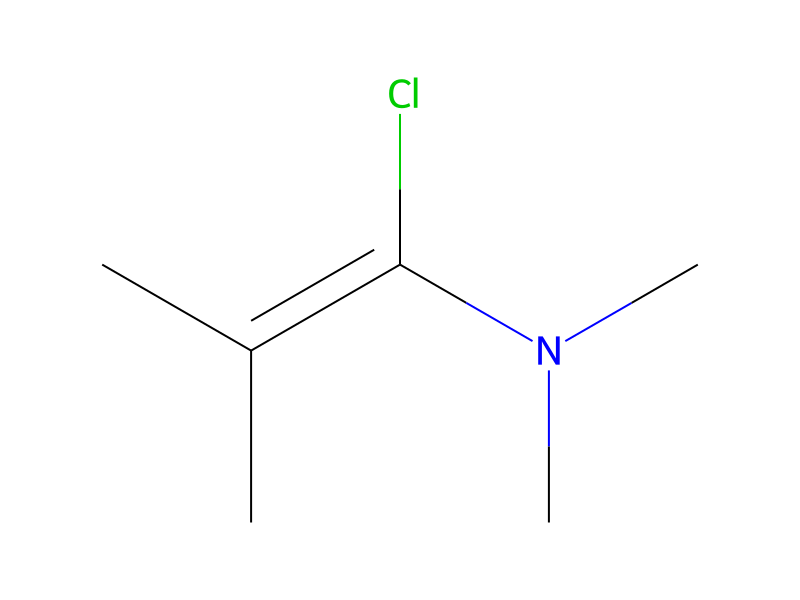
HCID 81531DiisopropylethylamineHCID 6407921-Chloro-N,N-2-trimethylpropenylamineHCID 536296783-{[6-(azetidin-1-ylcarbonyl)pyridin-3-yl]oxy}-5-[(3S)-tetrahydrofuran-3-yloxy]benzoic acidHCID 536296981-(difluoromethyl)-1H-pyrazol-3-amine hydrochloride

Product 1

HCID 53629586
3-{[6-(azetidin-1-ylcarbonyl)pyridin-3-yl]oxy}-N-[1-(difluoromethyl)-1H-pyrazol-3-yl]-5-[(3S)-tetrahydrofuran-3-yloxy]benzamide
Yield 60.1%

Reagents, catalysts & solvents 1

HCID 6344DichloromethaneSolvent

Procedure

1-Chloro-N,N,2-trimethyl-1-propenylamine (0.088 mL, 0.66 mmol) was added to a solution of 3-{[6-(azetidin-1-ylcarbonyl)pyridin-3-yl]oxy}-5-[(3S)-tetrahydrofuran-3-yloxy]benzoic acid (171 mg, 0.44 mmol) in DCM (10 mL) and the reaction was stirred at RT for 30 minutes. After this time 1-(difluoromethyl)pyrazol-3-amine hydrochloride (75 mg, 0.44 mmol) and DIPEA (0.154 mL, 0.89 mmol) were added sequentially. The resulting solution was stirred at RT for 16 hours after which time the solvent was removed in vacuo and ethyl acetate (20 mL) and water (20 mL) were added. The aqueous phase was extracted with ethyl acetate (2×20 mL), washed with a saturated solution of sodium hydrogen carbonate (20 mL), and brine (20 mL). The combined organic extracts were dried (MgSO4), filtered and evaporated. The residue was purified by flash column chromatography on silica, eluting with 50-100% ethyl acetate in isohexane, to give the desired product as a white solid (132 mg). 1H NMR δ (CDCl3): 2.40-2.12 (m, 4H), 4.03-3.89 (m, 4H), 4.25 (t, 2H), 4.71 (t, 2H), 5.01-4.96 (m, 1H), 6.76 (t, 1H), 7.03 (t, 1H), 7.08 (d, 1H), 7.11 (s, 1H), 7.22 (s, 1H), 7.38 (dd, 1H), 7.75 (d, 1H), 8.13 (d, 1H), 8.33 (d, 1H), 8.50 (s, 1H); 19F NMR δ (CDCl3): −93.84; m/z 500 (M+H)+.

Workup

  1. stirringThe resulting solution was stirred at RT for 16 hours after which time the solvent
  2. customwas removed in vacuo and ethyl acetate (20 mL) and water (20 mL)
  3. additionwere added
  4. extractionThe aqueous phase was extracted with ethyl acetate (2×20 mL)
  5. washwashed with a saturated solution of sodium hydrogen carbonate (20 mL), and brine (20 mL)
  6. dry with materialThe combined organic extracts were dried (MgSO4)
  7. filtrationfiltered
  8. customevaporated
  9. customThe residue was purified by flash column chromatography on silica
  10. washeluting with 50-100% ethyl acetate in isohexane

Sources & evidence

ORD record
ord-73c2a71e662841fe9ee4f00f6141a339
Source dataset
uspto-grants-2010_01
DOI
10.6084/m9.figshare.5104873.v1
Patent number
US07642259B2

Reaction notes

On this pageParticipantsProcedureWorkupSources & evidenceReaction notes
