Reaction equation
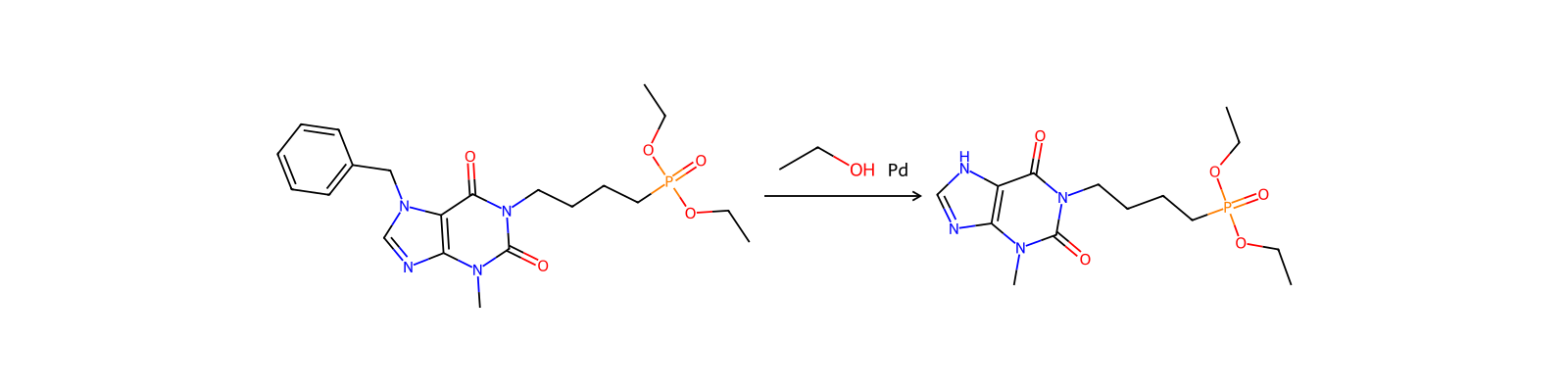
C([N:8]1[C:16]2[C:15](=[O:17])[N:14]([CH2:18][CH2:19][CH2:20][CH2:21][P:22](=[O:29])([O:26][CH2:27][CH3:28])[O:23][CH2:24][CH3:25])[C:13](=[O:30])[N:12]([CH3:31])[C:11]=2[N:10]=[CH:9]1)C1C=CC=CC=1>C(O)C.[Pd]>[CH3:31][N:12]1[C:11]2[N:10]=[CH:9][NH:8][C:16]=2[C:15](=[O:17])[N:14]([CH2:18][CH2:19][CH2:20][CH2:21][P:22](=[O:29])([O:23][CH2:24][CH3:25])[O:26][CH2:27][CH3:28])[C:13]1=[O:30]Participants
4
Reactant 1

Product 1

Reagents, catalysts & solvents 2


Procedure
15.7 g (0.035 mol) of diethyl [4-(7-benzyl-3-methylxanthin-1-yl)butyl]-phosphonate were hydrogenated in 150 ml of ethanol over 1 g of palladium (10%) on active carbon at room temperature in the course of 8 hours. The catalyst was filtered off, the filtrate was concentrated under reduced pressure and the residue was crystallized from diisopropyl ether.
Workup
- filtrationThe catalyst was filtered off
- concentrationthe filtrate was concentrated under reduced pressure
- customthe residue was crystallized from diisopropyl ether
Sources & evidence
- ORD record
- ord-ecb037eb61a74599a6353b1d72d5a468
- Source dataset
- uspto-grants-1998_03
- Patent number
- US05728686
Linked notes
Loading…