HomeMCPWorkbenchSkills
HomeWorkbenchNotificationsMe
llms.txt · MCP GuidePrivacy Policy · Terms of Service · Supportv1.8.0
  1. Home
  2. /Reaction

Potassium Carbonate → 5-(5-Bromopyridin-3-YL)oxazole

HRID 2036813
Notes
Print preview

Reaction equation

HRID 2036813 reaction equation
[Br:1][C:2]1[CH:3]=[N:4][CH:5]=[C:6]([CH:9]=1)[CH:7]=[O:8].C([O-])([O-])=O.[K+].[K+].CC1C=CC(S([CH2:26][N+:27]#[C-:28])(=O)=O)=CC=1>CO>[Br:1][C:2]1[CH:9]=[C:6]([C:7]2[O:8][CH:28]=[N:27][CH:26]=2)[CH:5]=[N:4][CH:3]=1
ParticipantsConditionsProcedureWorkupSources & evidenceReaction notes

Participants

5

Reactant 3

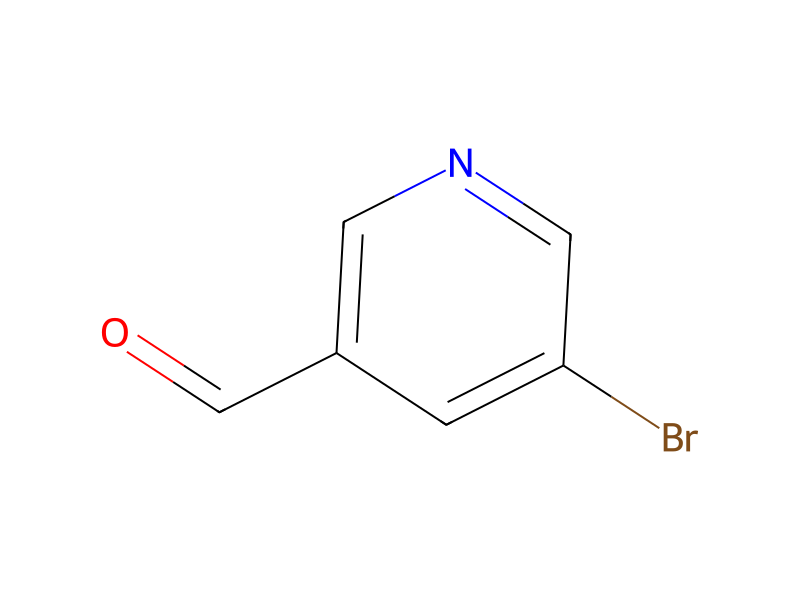
HCID 11430Potassium CarbonateHCID 161915Tosylmethyl isocyanideHCID 27847345-Bromo-3-pyridinecarboxaldehyde

Product 1

HCID 670559205-(5-Bromopyridin-3-YL)oxazoleYield 53.3%

Reagents, catalysts & solvents 1

HCID 887MethanolSolvent

Conditions

Temperature
85 °C

Procedure

To a solution of 5-bromonicotinaldehyde (0.2 g, 1 mmol) in MeOH (5 mL) was added K2CO3 (0.3 g, 2 mmol) followed by TOSMIC (0.27 g, 1.39 mmol). The mixture was heated to 85° C. for 2 h. Methanol was evaporated under reduced pressure and the residue was dissolved in DCM then washed with water. The organic extracts were dried over sodium sulfate, filtered and concentrated. The residue was purified by silica gel column chromatography using 2.1% MeOH in DCM as the eluent to provide 5-(5-bromopyridin-3-yl)oxazole (0.12 g. 50%). LCMS Method Y: retention time 1.39 min; [M+1]=225.0.

Workup

  1. customMethanol was evaporated under reduced pressure
  2. dissolutionthe residue was dissolved in DCM
  3. washthen washed with water
  4. dry with materialThe organic extracts were dried over sodium sulfate
  5. filtrationfiltered
  6. concentrationconcentrated
  7. customThe residue was purified by silica gel column chromatography

Sources & evidence

ORD record
ord-857336e73deb489c8d749b71c39cabab
Source dataset
uspto-grants-2013_11
DOI
10.6084/m9.figshare.5104873.v1
Patent number
US08575184B2

Reaction notes

Loading…

On this pageParticipantsConditionsProcedureWorkupSources & evidenceReaction notes