Diisopropylethylamine → 3-(1-Cyanocyclopropanecarboxamido)biphenyl-2-carboxamide
HRID 2036831
Reaction equation

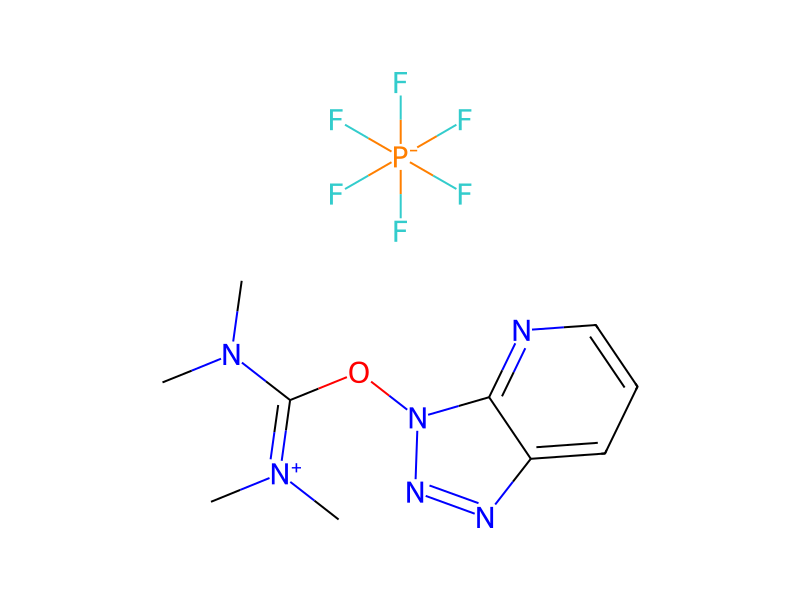
[C:1]([C:3]1([C:6]([OH:8])=O)[CH2:5][CH2:4]1)#[N:2].CN(C(ON1N=NC2C=CC=NC1=2)=[N+](C)C)C.F[P-](F)(F)(F)(F)F.CCN(C(C)C)C(C)C.[NH2:42][C:43]1[CH:48]=[CH:47][CH:46]=[C:45]([C:49]2[CH:54]=[CH:53][CH:52]=[CH:51][CH:50]=2)[C:44]=1[C:55]([NH2:57])=[O:56]>C(Cl)Cl>[C:1]([C:3]1([C:6]([NH:42][C:43]2[CH:48]=[CH:47][CH:46]=[C:45]([C:49]3[CH:54]=[CH:53][CH:52]=[CH:51][CH:50]=3)[C:44]=2[C:55]([NH2:57])=[O:56])=[O:8])[CH2:5][CH2:4]1)#[N:2]Participants
6