Dibromodichloromethane → Bromotrichloromethane
HRID 2049230
Reaction equation

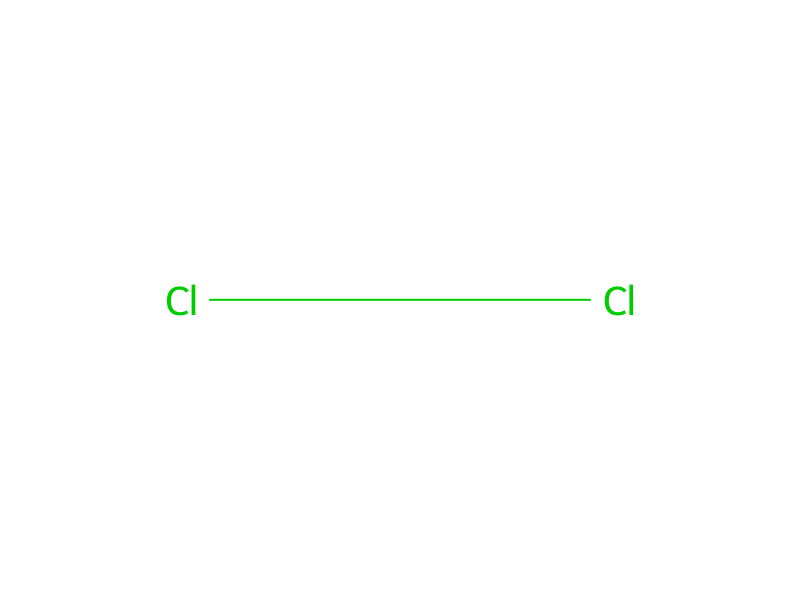
[Br:1][C:2]([Br:5])([Cl:4])[Cl:3].[Sb](Cl)(Cl)[Cl:7].ClCl>>[Cl:7][C:2]([Cl:3])([Cl:4])[Br:5].[Br:1][C:2]([Br:5])([Cl:4])[Cl:3]Participants
5



Conditions
- Temperature
- 110 °C
[Br:1][C:2]([Br:5])([Cl:4])[Cl:3].[Sb](Cl)(Cl)[Cl:7].ClCl>>[Cl:7][C:2]([Cl:3])([Cl:4])[Br:5].[Br:1][C:2]([Br:5])([Cl:4])[Cl:3]Dibromodichloromethane (4.3 moles, CBr2Cl2) and 0.5 mole of antimony trichloride (SbCl3) were placed in a one liter flask. The flask was equipped with a gas inlet for the introduction of chlorine and with a four bulb reflux condenser heated with atmospheric steam. The flask was heated to 110° C. and 2.2 moles of chlorine were then introduced into the mixture. The resulting reaction was exothermic. The reaction temperature was maintained within the range of 107° to 118° C. for about 1.5 hours. Bromine and low boiling organics were continuously distilled from the top of the condenser and condensed in an ice cooled trap. Fractionation of the recovered organic material yielded 8.4 mole percent carbon tetrachloride (CCl4), 63.3 mole percent of trichlorobromomethane (CBrCl3), and 22.6 mole percent dibromodichloromethane (CBr2Cl2). The total recovery was 94.4 mole percent. Eighty-four percent of the bromine was recovered, excluding that which remained in the residual antimony salts.