Benzene → HCID 22290015, compound
HRID 2049948
Reaction equation

[C:1]([C:10]1[CH:15]=[CH:14][CH:13]=[CH:12][C:11]=1[OH:16])([C:4]1[CH:9]=[CH:8][CH:7]=[CH:6][CH:5]=1)([CH3:3])[CH3:2].C1C=CC=CC=1.[C:23](Cl)(=[O:30])[C:24]1[CH:29]=[CH:28][CH:27]=[CH:26][CH:25]=1>C(N(CC)CC)C>[C:23]([O:16][C:11]1[CH:12]=[CH:13][CH:14]=[CH:15][C:10]=1[C:1]([C:4]1[CH:9]=[CH:8][CH:7]=[CH:6][CH:5]=1)([CH3:3])[CH3:2])(=[O:30])[C:24]1[CH:29]=[CH:28][CH:27]=[CH:26][CH:25]=1Participants
5
Reactant 3

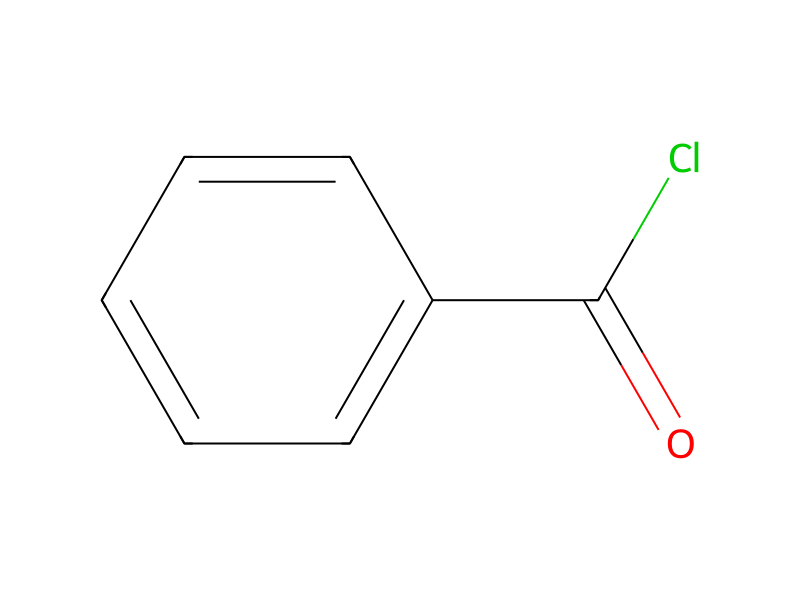

Product 1

Reagents, catalysts & solvents 1

Procedure
Cumylphenyl benzoate is prepared in accordance with the following procedure: one mole of cumylphenol was dissolved in 600 ml of benzene containing 1.2 moles of triethylamine in a 2-liter stirred glass reactor equipped with external heating and cooling devices. The reaction mass was cooled to and maintained at 15°-20° C. during the addition of 1.1 moles of benzoyl chloride over a period of 1.5 hours. After completion of addition, the resulting slurry was heated to and maintained at 40°-45° C. for 1 hour, and thereafter cooled to ambient temperature and filtered. The filter cake was washed with 200 ml of toluene and the combined washings and filtrate distilled to give 214.9 g (68 mole %) of a pale yellow oil having a boiling point at 0.5 mm Hg of 261°-265° C., a specific gravity at 55° C. of 1.082, and a viscosity at 55° C. of 215 cps. On standing, the oil solidified to form a white solid having a melting point of 43°-46.5° C.