Reaction equation

[N+:1]([C:4]1[CH:11]=[CH:10][C:7]([CH2:8]Br)=[CH:6][CH:5]=1)([O-:3])=[O:2].C(OCC)(=O)C[SH:14].C(=O)([O-])[O-].[K+].[K+].BrBr.[CH3:27][CH2:28][O:29][CH2:30][CH3:31]>O.[I-].[K+].CC(C)=O>[N+:1]([C:4]1[CH:11]=[CH:10][C:7]([CH2:8][CH2:27][C:28]([O:29][CH2:30][CH3:31])=[S:14])=[CH:6][CH:5]=1)([O-:3])=[O:2]Participants
9
Reactant 5


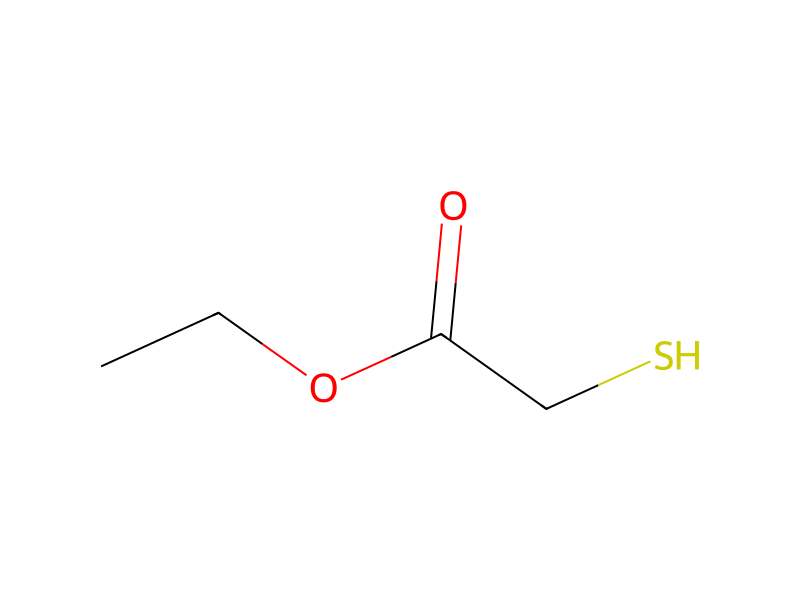


Product 1

Reagents, catalysts & solvents 3



Procedure
43.2 g (0.2 mol) of p-nitrobenzylbromide, 200 ml of acetone, 0.2 g of potassium iodide, 24 ml of ethyl thioglycolate (namely a slight excess) and 27.6 g (0.2 mol) of potassium carbonate are successively introduced into a 1 liter 3-necked flask. The mixture is heated under reflux for about 4 hours until the bromine derivative completely disappears; the acetone is evaporated, the oil obtained is taken up in ether and in water, the ether phase is washed with a dilute solution of NaOH to remove the excess thiol, and then with a dilute solution of HCl, the solution is dried over Na2SO4 and the solvent is evaporated off. 49 g (yield: 95%) of the stated product, which is in the form of an orange coloured oil, are obtained.
Workup
- temperatureThe mixture is heated
- customthe acetone is evaporated
- customthe oil obtained
- washthe ether phase is washed with a dilute solution of NaOH
- customto remove the excess thiol
- dry with materialwith a dilute solution of HCl, the solution is dried over Na2SO4
- customthe solvent is evaporated off
Sources & evidence
- ORD record
- ord-18bf7a45a4894d4ca2d0708043cae54b
- Source dataset
- uspto-grants-1980_01
- Patent number
- US04183951
Linked notes
Loading…