HomeMCPWorkbenchSkills
HomeWorkbenchNotificationsMe
llms.txt · MCP GuidePrivacy Policy · Terms of Service · Supportv1.8.3
  1. Home
  2. /Reaction

Potassium Hydroxide → 3-Acetyl-4-(2,2-dichloroethenyl)-5,5-dimethyloxolan-2-one

HRID 2058115
Print

Reaction equation

HRID 2058115 reaction equation
[OH-].[K+].[C:3]([O-:9])(=[O:8])[CH2:4][C:5]([CH3:7])=[O:6].[CH3:10][C:11](O)([CH:13](Cl)[CH2:14][C:15](Cl)([Cl:17])[Cl:16])[CH3:12]>C1(C)C=CC=CC=1.[Br-].C([N+](CCCC)(CCCC)CCCC)CCC>[C:5]([CH:4]1[CH:13]([CH:14]=[C:15]([Cl:17])[Cl:16])[C:11]([CH3:12])([CH3:10])[O:9][C:3]1=[O:8])(=[O:6])[CH3:7]
ParticipantsConditionsProcedureWorkupSources & evidenceReaction notes

Participants

6

Reactant 3

HCID 14797Potassium HydroxideHCID 6971017AcetoacetateHCID 125038493,5,5,5-Tetrachloro-2-methylpentan-2-ol

Product 1

HCID 3277463-Acetyl-4-(2,2-dichloroethenyl)-5,5-dimethyloxolan-2-one

Reagents, catalysts & solvents 2

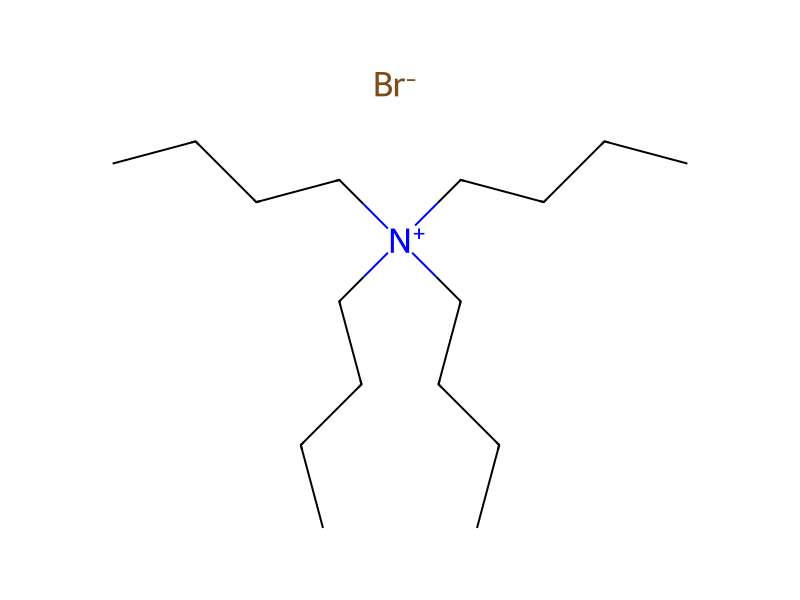
HCID 74236Tetrabutylammonium BromideCatalyst
HCID 1140
Toluene
Solvent

Conditions

Temperature
80 °C

Procedure

112 g of 50% strength KOH were added dropwise at room temperature to 162 g (0.5 mol) of the acetoacetate of 2-methyl-3,5,5,5-tetrachloropentan-2-ol in 200 ml of toluene and 5 g of tetrabutylammonium bromide. The mixture was then heated to 80° C. for a further 1-2 hours. After cooling the mixture, the aqueous phase was rendered strongly acid and the salts which had precipitated were dissolved with water. The organic phase was then separated off and dried with sodium sulphate and the solvent was stripped off under reduced pressure. 105 g of 2-acetyl-3-(2',2'-dichlorovinyl)-4-methyl-γ-valerolactone were obtained.

Workup

  1. temperatureAfter cooling the mixture
  2. customthe salts which had precipitated
  3. dissolutionwere dissolved with water
  4. customThe organic phase was then separated off
  5. dry with materialdried with sodium sulphate

Sources & evidence

ORD record
ord-ad56f9acf5de445388e0ab594787f018
Source dataset
uspto-grants-1980_07
DOI
10.6084/m9.figshare.5104873.v1
Patent number
US04215050

Reaction notes

On this pageParticipantsConditionsProcedureWorkupSources & evidenceReaction notes