3-Chloro-L-Tyrosine → HCID 45255158, compound
HRID 2065634
Reaction equation

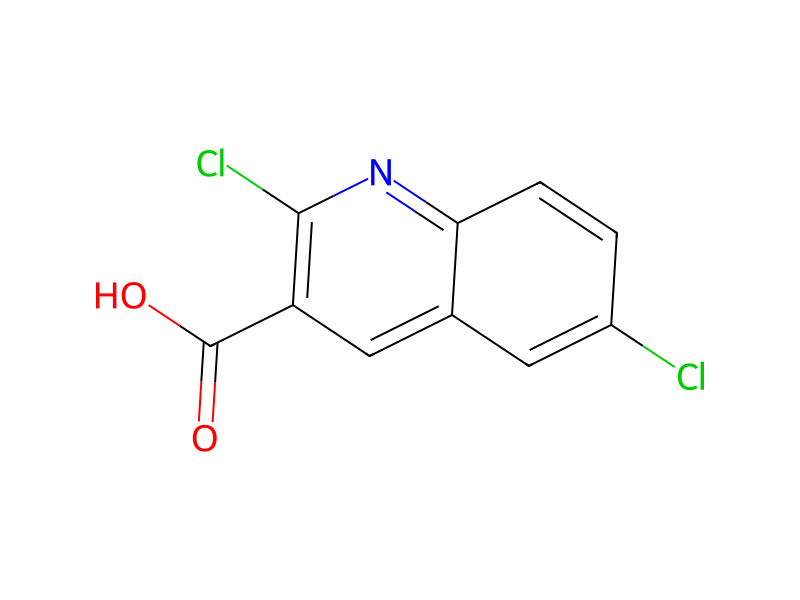
Cl[C:2]1[C:11]([C:12]([OH:14])=[O:13])=[CH:10][C:9]2[C:4](=[CH:5][CH:6]=[C:7]([Cl:15])[CH:8]=2)[N:3]=1.[Cl:16][C:17]1[CH:18]=[C:19]([CH:26]=[CH:27][C:28]=1[OH:29])[CH2:20][C@@H:21]([C:23]([OH:25])=[O:24])[NH2:22]>>[C:23]([C@@H:21]([NH:22][C:2]1[C:11]([C:12]([OH:14])=[O:13])=[CH:10][C:9]2[C:4](=[CH:5][CH:6]=[C:7]([Cl:15])[CH:8]=2)[N:3]=1)[CH2:20][C:19]1[CH:26]=[CH:27][C:28]([OH:29])=[C:17]([Cl:16])[CH:18]=1)([OH:25])=[O:24]Participants
3


Procedure
In close analogy to the procedure described in Example 1, 2,6-dichloroquinoline-3-carboxylic acid is reacted with 3-chloro-4-hydroxy-L-phenylalanine to provide the title compound in good yield.
Sources & evidence
- ORD record
- ord-290afd8ee0b04078825adcbf6d2202f3
- Source dataset
- uspto-grants-2012_10
- Patent number