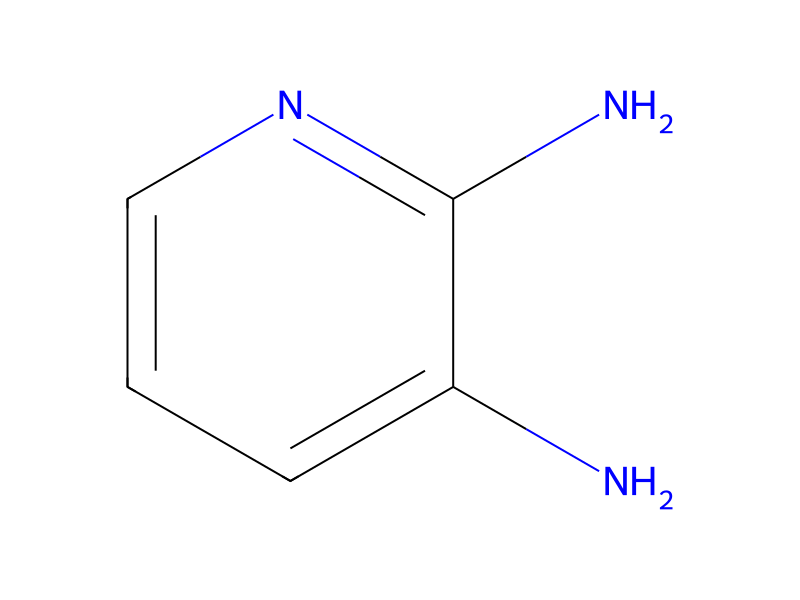
[NH2:1][C:2]1[C:7]([NH2:8])=[CH:6][CH:5]=[CH:4][N:3]=1.[CH3:9][C:10]1[CH:17]=[CH:16][CH:15]=[C:14]([NH:18][C:19]([O:21][CH3:22])=[O:20])[C:11]=1[CH2:12]Cl.C(=O)([O-])[O-].[K+].[K+]>CO>[NH2:1][C:2]1[C:7]([NH:8][CH2:12][C:11]2[C:14]([NH:18][C:19]([O:21][CH3:22])=[O:20])=[CH:15][CH:16]=[CH:17][C:10]=2[CH3:9])=[CH:6][CH:5]=[CH:4][N:3]=1To a solution of 2,3-diaminopyridine (1.09 g) in methanol (22 ml) was added 2-methyl-6-methoxycarbonylaminobenzyl chloride (2.14 g) and potassium carbonate (1.38 g) at room temperature and the mixture was stirred for 1.5 hours. The insoluble material was removed by filtration and methanol in the filtrate was evaporated under reduced pressure. The residue was subjected to column chromatography on silica gel (30 g) and eluted with a mixture of chloroform and methanol (100:1) to give a crystalline product. The crystals were triturated with diisopropyl ether to give 2-amino-3-(2-methyl-6-methoxycarbonylaminobenzylamino)pyridine (1.44 g).