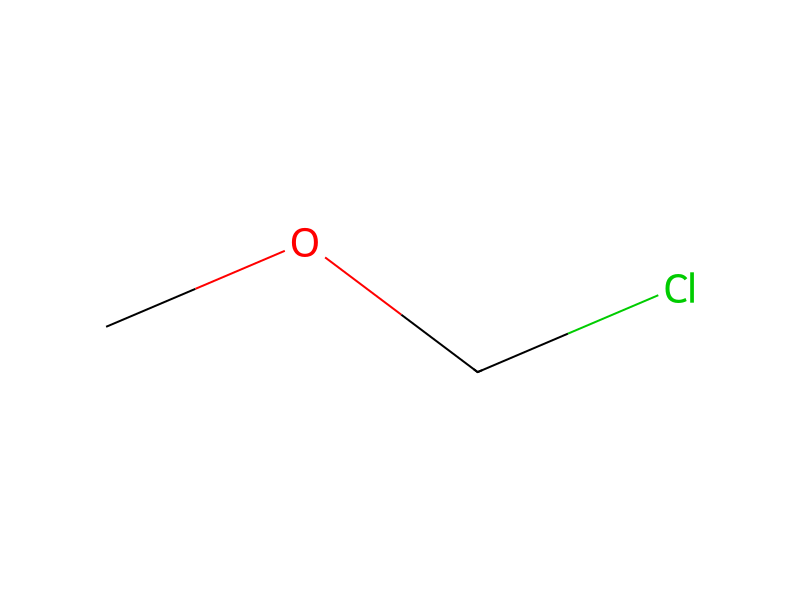
C(N(C(C)C)CC)(C)C.[CH3:10][O:11][CH2:12]Cl.[Cl:14][C:15]1[CH:20]=[C:19]([CH2:21][C:22]([O:24][CH3:25])=[O:23])[CH:18]=[CH:17][C:16]=1[C:26]1[CH:31]=[CH:30][C:29]([OH:32])=[CH:28][CH:27]=1.O>C(Cl)Cl>[Cl:14][C:15]1[CH:20]=[C:19]([CH2:21][C:22]([O:24][CH3:25])=[O:23])[CH:18]=[CH:17][C:16]=1[C:26]1[CH:31]=[CH:30][C:29]([O:32][CH2:12][O:11][CH3:10])=[CH:28][CH:27]=1Diisopropylethylamine (936 μl, 5.37 mmol) and chloromethyl methyl ether (303 μl, 4.02 mmol) were successively added to a solution of methyl (2-chloro-4′-hydroxy-1,1′-biphenyl-4-yl)acetate (650 mg, 2.68 mmol) obtained in Example (23-3) in methylene chloride (10 ml) under ice-cooling, and the mixture was stirred for 3 hours. After the reaction mixture was poured into water and the mixture was extracted with ethyl acetate, the organic layer was successively washed with water and a saturated aqueous NaCl solution and dried with anhydrous sodium sulfate. The solvent was removed under reduced pressure to give crude methyl [2-chloro-4′-(methoxymethoxy)-1,1′-biphenyl-4-yl]acetate. According to a method similar to Example (104-1), Example (12-4), Example (40-2), Example (33-5) and Example (17-4), from the compound obtained in the above, the title compound was obtained as a colorless powder (260 mg, six-step total yield: 18%).