HomeMCPWorkbenchSkills
HomeWorkbenchNotificationsMe
llms.txt · MCP GuidePrivacy Policy · Terms of Service · Supportv1.8.3
  1. Home
  2. /Reaction

Cesium carbonate → (1H-Thieno[3,2-c]pyrazol-5-yl)methanol

HRID 2078734
Print

Reaction equation

HRID 2078734 reaction equation
C(=[N:14][N:15]=[CH:16][C:17]1[S:18][C:19]([C:23](C)(C)[O:24][SiH2]C(C)(C)C)=[CH:20][C:21]=1Br)(C1C=CC=CC=1)C1C=CC=CC=1.C(=NN)(C1C=CC=CC=1)C1C=CC=CC=1.C(=O)([O-])[O-].[Cs+].[Cs+]>C1(C)C=CC=CC=1.C1(P[C-]2C=CC=C2)C=CC=CC=1.[C-]1(PC2C=CC=CC=2)C=CC=C1.[Fe+2].C([O-])(=O)C.[Pd+2].C([O-])(=O)C>[NH:14]1[C:21]2[CH:20]=[C:19]([CH2:23][OH:24])[S:18][C:17]=2[CH:16]=[N:15]1
ParticipantsConditionsProcedureWorkupSources & evidenceReaction notes

Participants

7

Reactant 3

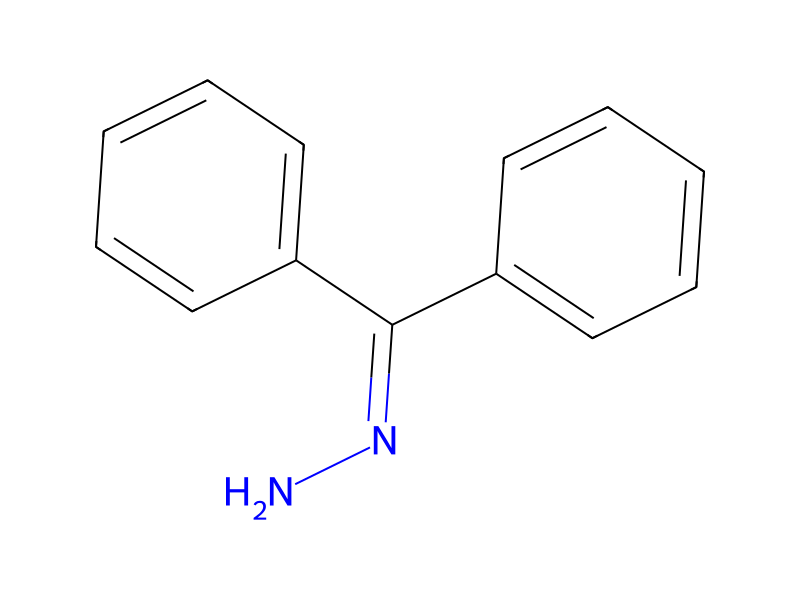
HCID 10796Cesium carbonateHCID 79304DiphenylmethylidenehydrazineHCID 131727413N-benzhydrylidene-N'-[1-[3-bromo-5-(tert-butyl-dimethyl-silanyloxymethyl)-thiophen-2-yl]-methylidene]-hydrazine2×

Product 1

HCID 57354336(1H-Thieno[3,2-c]pyrazol-5-yl)methanolYield 27%

Reagents, catalysts & solvents 3

HCID 167845
palladium(II) acetate
Catalyst
HCID 133083342Bis(cyclopenta-2,4-dien-1-yl(phenyl)phosphane);iron(2+)Catalyst
HCID 1140TolueneSolvent

Conditions

Temperature
90 °C

Procedure

To a solution of N-benzhydrylidene-N′-[1-[3-bromo-5-(tert-butyl-dimethyl-silanyloxymethyl)-thiophen-2-yl]-methylidene]-hydrazine [41.2 g, 80.2 mmol, Intermediate (69)] in toluene (500 mL) were added benzophenone hydrazone (18.9 g, 96.2 mmol), cesium carbonate (44.3 g, 136.3 mmol) then 1,1′-diphenylphosphinoferrocene (6.66 g, 12 mmol), and palladium acetate (1.35 g, 6 mmol). The orange mixture was stirred at 90° C. for 20 hours. The insoluble was filtered off and the filtrate was concentrated. The residue was chromatographed (n-heptane/ethyl acetate, 90/10). The resulting dark orange oil (45.7 g) was dissolved in ethanol (400 mL), then concentrated hydrochloric acid (150 mL) was added. The dark red mixture was stirred at 75° C. overnight. A 2.5 N solution of sodium hydroxide in water was added until pH is neutral. The mixture was then extracted twice with ethyl acetate. The organic layer was dried over magnesium sulfate and concentrated. The residue was chromatographed through silica gel (n-heptane/ethyl acetate, 50/50 then 20/80 as eluant) to afford (1H-thieno[3,2-c]pyrazol-5-yl)-methanol [3.3 g, 27%, Intermediate (70)] as an orange powder.


Workup

  1. filtrationThe insoluble was filtered off
  2. concentrationthe filtrate was concentrated
  3. customThe residue was chromatographed (n-heptane/ethyl acetate, 90/10)
  4. dissolutionThe resulting dark orange oil (45.7 g) was dissolved in ethanol (400 mL)
  5. additionconcentrated hydrochloric acid (150 mL) was added
  6. stirringThe dark red mixture was stirred at 75° C. overnight
  7. additionA 2.5 N solution of sodium hydroxide in water was added until pH
  8. extractionThe mixture was then extracted twice with ethyl acetate
  9. dry with materialThe organic layer was dried over magnesium sulfate
  10. concentrationconcentrated
  11. customThe residue was chromatographed through silica gel (n-heptane/ethyl acetate, 50/50

Sources & evidence

ORD record
ord-f8b054a0fb58408698937ac68d17704b
Source dataset
uspto-grants-2011_04
DOI
10.6084/m9.figshare.5104873.v1
Patent number
US07928231B2

Reaction notes

On this pageParticipantsConditionsProcedureWorkupSources & evidenceReaction notes