Reaction equation

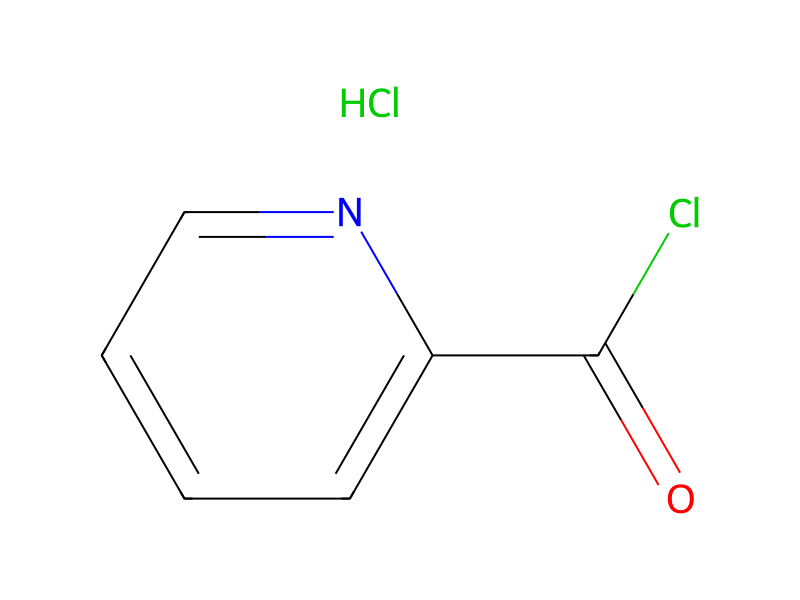
C(N(CC)CC)C.Cl.[N:9]1[CH:14]=[CH:13][CH:12]=[CH:11][C:10]=1[C:15](Cl)=[O:16].[Br:18][C:19]1[CH:25]=[CH:24][C:22]([NH2:23])=[CH:21][C:20]=1[F:26]>C(Cl)(Cl)Cl>[Br:18][C:19]1[CH:25]=[CH:24][C:22]([NH:23][C:15]([C:10]2[CH:11]=[CH:12][CH:13]=[CH:14][N:9]=2)=[O:16])=[CH:21][C:20]=1[F:26]Participants
5
Reactant 3


Product 1

Reagents, catalysts & solvents 1

Procedure
2.9 ml of triethylamine and 1.87 g of picolinic acid chloride hydrochloride were added to a chloroform (30 ml) solution of 1 g of 4-bromo-3-fluoroaniline, and stirred at room temperature for 4 hours. The reaction liquid was diluted with chloroform, washed with aqueous saturated sodium bicarbonate solution and saturated saline water, and dried with anhydrous magnesium sulfate. The solvent was evaporated away, and the residue was purified through silica gel column chromatography (developing solvent: hexane/ethyl acetate=4/1) to obtain 1.44 g of the entitled compound as a pale yellow crystal.
Workup
- customThe reaction liquid
- washwashed with aqueous saturated sodium bicarbonate solution and saturated saline water
- dry with materialdried with anhydrous magnesium sulfate
- customThe solvent was evaporated away
- customthe residue was purified through silica gel column chromatography (developing solvent: hexane/ethyl acetate=4/1)
Sources & evidence
- ORD record
- ord-d0c1e3ecd2c34458b553a72b4096c6c1
- Source dataset
- uspto-grants-2011_04
- Patent number
- US07932394B2
Linked notes
Loading…