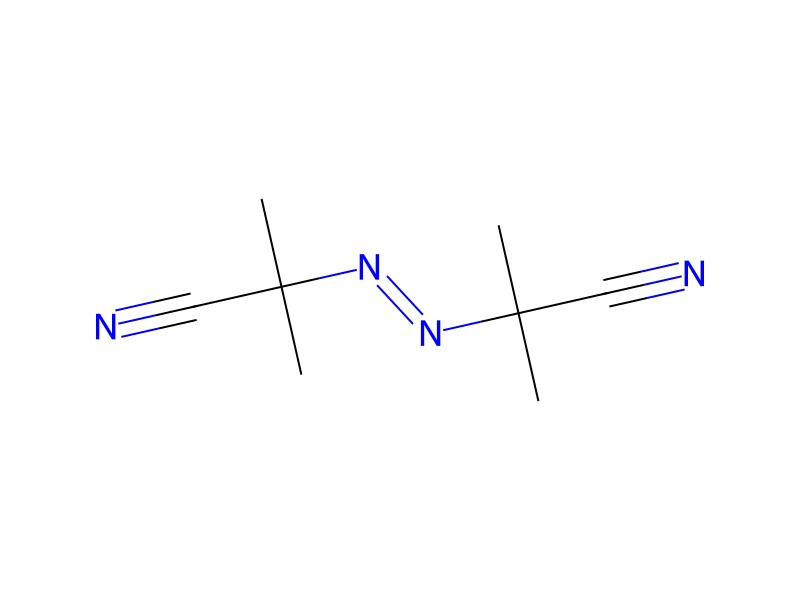
[CH3:1][O:2][C:3](=[O:15])[C:4]1[C:5](=[CH:10][C:11]([CH3:14])=[CH:12][CH:13]=1)[C:6]([O:8][CH3:9])=[O:7].Br[N:17]1[C:21](=[O:22])[CH2:20][CH2:19][C:18]1=[O:23].N([C:31]([CH3:35])([CH3:34])C#N)=NC(C)(C)C#N.O.[C:37](Cl)(Cl)(Cl)Cl>>[CH3:1][O:2][C:3](=[O:15])[C:4]1[C:5](=[CH:10][C:11]([CH2:14][N:17]2[C:21](=[O:22])[C:20]3[C:19](=[CH:37][CH:35]=[CH:31][CH:34]=3)[C:18]2=[O:23])=[CH:12][CH:13]=1)[C:6]([O:8][CH3:9])=[O:7]The compound (202 mg) obtained in Example 7-1 was dissolved in carbon tetrachloride (7.1 ml) and added with N-bromosuccinimide (205 mg) and 2,2′-azobisisobutyronitrile (15.8 mg) and the whole was refluxed under heating for 20 hours. The solution was further added with carbon tetrachloride (7.0 ml) and N-bromosuccinimide (51.3 mg) and the whole was refluxed under heating for additional 4 hours. After having been left for cooling, the solution was added with water to stop the reaction and then subjected to extraction with chloroform. The organic layer was washed with water and a saturated saline solution and then dried with anhydrous sodium sulfate. The solvent was distilled off and the residue was then dissolved in DMF (5.8 ml) The solution was added with potassium phthalimide (359 mg) and stirred at room temperature for 16 hours. The residue obtained by distilling the solvent off was purified through silica gel column chromatography (hexane/ethyl acetate), thereby obtaining the subject compound (226 mg) as a white solid.