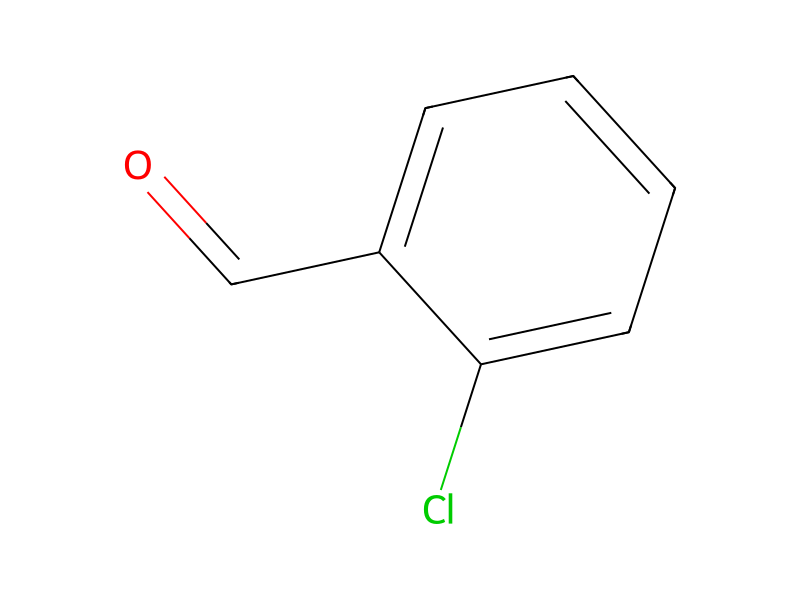
2-Chlorobenzaldehyde → Ethyl 2-(2-o-chlorophenyl-6-benzoxazolyl)propionate
HRID 2082919
Reaction equation

[Cl:1][C:2]1[CH:9]=[CH:8][CH:7]=[CH:6][C:3]=1[CH:4]=[O:5].O[C:11]1[CH:12]=[C:13]([CH:18]([CH3:24])[C:19]([O:21][CH2:22][CH3:23])=[O:20])[CH:14]=[CH:15][C:16]=1[NH2:17]>C1(C)C=CC=CC=1>[Cl:1][C:2]1[CH:9]=[CH:8][CH:7]=[CH:6][C:3]=1[C:4]1[O:5][C:11]2[CH:12]=[C:13]([CH:18]([CH3:24])[C:19]([O:21][CH2:22][CH3:23])=[O:20])[CH:14]=[CH:15][C:16]=2[N:17]=1Participants
4
Reactant 2

Product 1

Reagents, catalysts & solvents 1

Procedure
A solution of o-chlorobenzaldehyde (4.3 g.) and ethyl 2-(3-hydroxy-4-aminophenyl)propionate (6 g.) in toluene (100 ml.) was heated, using a Dean and Stark apparatus to collect the water formed. After 30 minutes the solution was evaporated to dryness. The residue was dissolved in acetic acid (100 ml.), lead tetracetate (15 g.) was added and the solution was heated on a steam bath for 1 hour. The solution was poured into ice/water and extracted with ether to give the oil, ethyl 2-(2-o-chlorophenyl-6-benzoxazolyl)propionate, a sample of which gave a satisfactory micro-analysis.