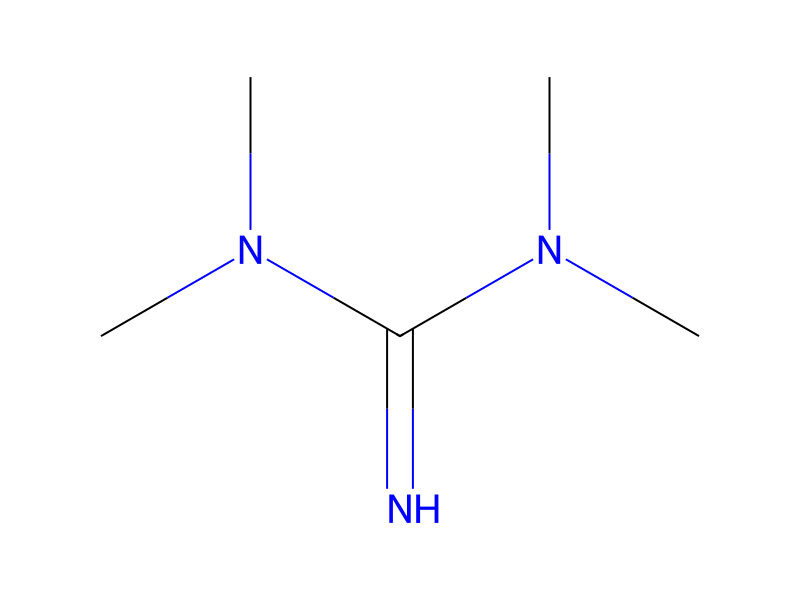
To (2-methylphenyl)phenyl ketone hydrazone (10.5 g, 0.05 moles) dissolved in 1,2-dichloroethane (50 ml) containing iodide (2 ml, 1% w/v solution) and 1,1,3,3-tetramethylguanidine (22.5 ml) was added peracetic acid solution (11.4 ml, 1.27 × 0.05 moles) at 0° over 30 minutes. After the addition the mixture was stirred for 5 minutes longer. The red solution was washed with water (5 × 200 ml), dried over sodium sulphate and made up to 250 ml in a volumetric flask. An aliquot (50 ml) treated with excess acetic acid yielded 221 ml gas corrected to NTP which corresponded to a 98.6% yield of diazoalkane. The compound was characterised by a major absorption at 2050 cm-1 and λmax 516 nm. A solid ester derivative was made by treating (5R, 6R, 1S, 3S)-2,2-dimethyl-6-phenylacetamidopenam-3-carboxylic acid 1-oxide in chloroform with an aliquot of the diazoalkane solution. After gas evolution had ceased the slightly yellow solution was washed with 5% sodium bicarbonate solution, water, and the organic residue left after removal of the organic solvent crystallised from hot propan-2-ol. The solid was identified as (2-methylphenyl)phenylmethyl (5R, 6R, 3S, 1S)-2,2-dimethylpenam-6-phenylacetamidopenam-3-carboxylate 1-oxide by its n.m.r. spectrum and melting point and mixed melting point 140° - 145° with an authentic sample of the ester.