HomeMCPWorkbenchSkills
HomeWorkbenchNotificationsMe
llms.txt · MCP GuidePrivacy Policy · Terms of Service · Supportv1.8.3
  1. Home
  2. /Reaction

Cysteamine Hydrochloride → N-acryloyl morpholine 2-hydroxyethyl acrylamide

HRID 2083843
Print

Reaction equation

HRID 2083843 reaction equation
Cl.NCCS.Cl.Cl.N(C(C)(C)C(N)=N)=NC(C)(C)C(N)=N.[C:22]([N:26]1[CH2:31][CH2:30][O:29][CH2:28][CH2:27]1)(=[O:25])[CH:23]=[CH2:24].OCC[NH:35][C:36](=[O:39])[CH:37]=[CH2:38]>O>[C:22]([N:26]1[CH2:31][CH2:30][O:29][CH2:28][CH2:27]1)(=[O:25])[CH:23]=[CH2:24].[OH:25][CH2:22][CH2:23][C:37](=[CH2:38])[C:36]([NH2:35])=[O:39]
ParticipantsConditionsProcedureWorkupSources & evidenceReaction notes

Participants

6

Reactant 4

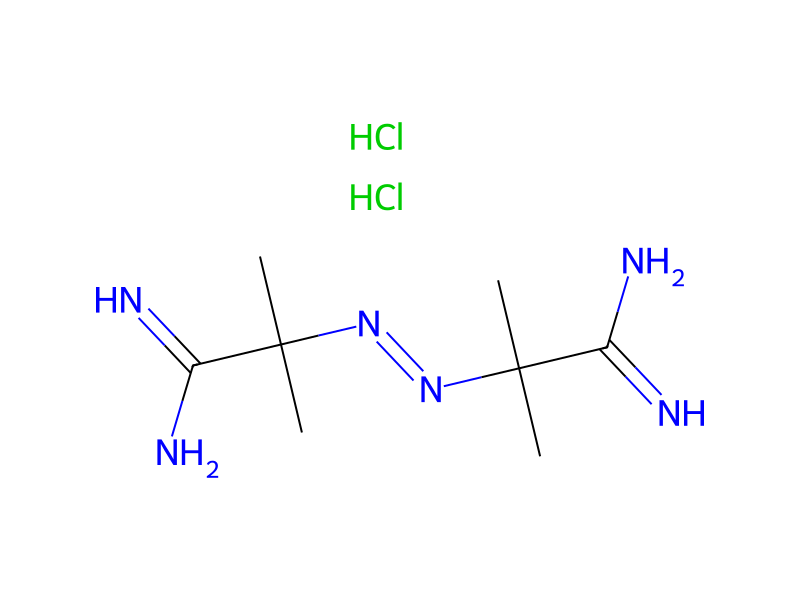
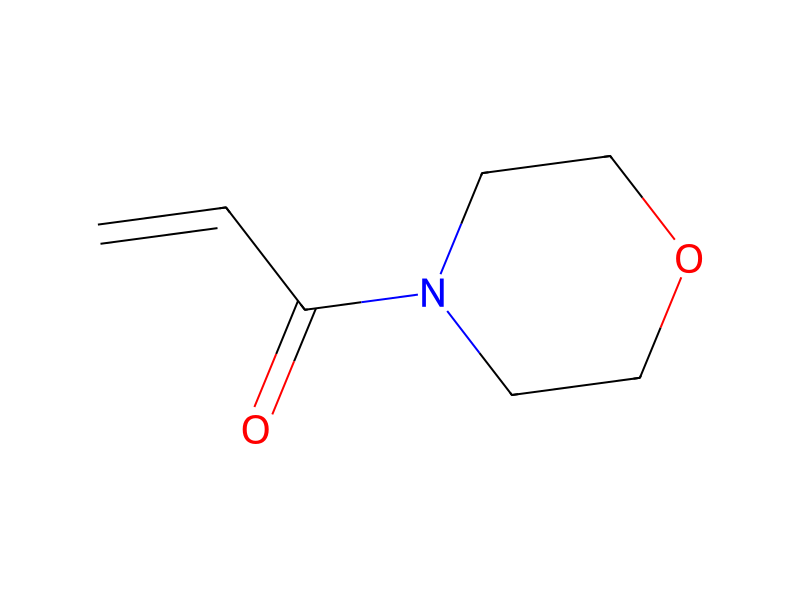
HCID 9082Cysteamine HydrochlorideHCID 763442,2'-Azobis(2-methylpropanimidamide) dihydrochlorideHCID 98723AcryloylmorpholineHCID 193628N-(2-Hydroxyethyl)acrylamide (stabilized with MEHQ)

Product 1

HCID 69905939N-acryloyl morpholine 2-hydroxyethyl acrylamide

Reagents, catalysts & solvents 1

HCID 962
Water
Solvent

Conditions

Temperature
60 °C

Procedure

A 1000 mL three-necked round bottom flask is charged with a solution of 28.4 9 (250 mmol) cysteamine hydrochloride in 400 mL deionized water. 407 mg (1.5 mmol) α,α′-azodiiso-butyramidine dihydrochloride and 70.6 g (500 mmol) acryloyl morpholine and 28.8 g (250 mmol) N-hydroxyethyl acrylamide are added. An intensive cooler and an internal thermometer are connected to the flask. The apparatus is evacuated to 100 mbar and filled with argon. This is repeated five times. The mixture is heated to 60° C. for four hours and then cooled to room temperature. An analytical sample is freeze-dried and the monomer conversion is determined by 1H-NMR spectroscopy. No resonances corresponding to C═C double bonds can be detected, indicating >98% conversion of the monomer. The remaining mixture is adjusted to pH=10 by addition of 30% KOH solution. Salts and low molecular weight residues such as unreacted chain transfer agent are removed by reverse osmosis using a Millipore Proscale system equipped with a Millipore Helicon RO-4 Nanomax 50 membrane operating at a pressure of 15 bar. The product is isolated from the obtained retentate by freeze-drying. Yield: 85 g of a white powder. The concentration of amino-groups is determined by functional group titration, result 0.95 mmol/g NH2 corresponding to an average molecular weight of the co-telomer of 1050 g/mol. GPC-analysis indicates a monomodal molecular weight distribution and the absence of high molecular weight polymer.

Workup

  1. customThe apparatus is evacuated to 100 mbar
  2. additionfilled with argon
  3. temperaturecooled to room temperature
  4. customAn analytical sample is freeze-dried
  5. additionThe remaining mixture is adjusted to pH=10 by addition of 30% KOH solution
  6. customSalts and low molecular weight residues such as unreacted chain transfer agent are removed by reverse osmosis
  7. customequipped with a Millipore Helicon RO-4 Nanomax 50 membrane operating at a pressure of 15 bar
  8. customThe product is isolated from the obtained retentate
  9. customby freeze-drying
  10. customresult 0.95 mmol/g NH2 corresponding to an average molecular weight of the co-telomer of 1050 g/mol

Sources & evidence

ORD record
ord-f8d1312791c24032aea4ac39bcb777b1
Source dataset
uspto-grants-2004_04
DOI
10.6084/m9.figshare.5104873.v1
Patent number
US06715874B1

Reaction notes

On this pageParticipantsConditionsProcedureWorkupSources & evidenceReaction notes