Reaction equation
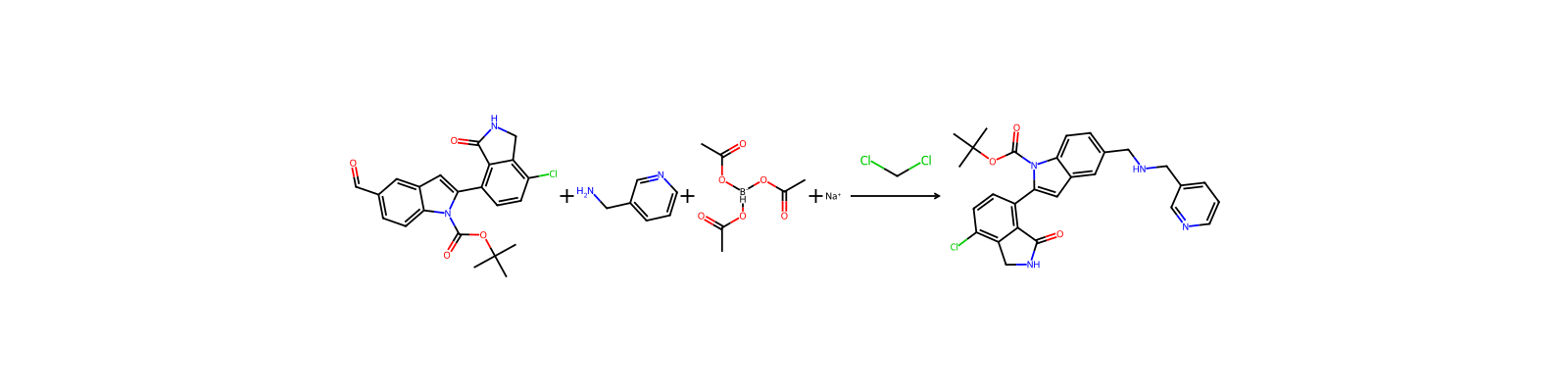
[Cl:1][C:2]1[CH:10]=[CH:9][C:8]([C:11]2[N:12]([C:22]([O:24][C:25]([CH3:28])([CH3:27])[CH3:26])=[O:23])[C:13]3[C:18]([CH:19]=2)=[CH:17][C:16]([CH:20]=O)=[CH:15][CH:14]=3)=[C:7]2[C:3]=1[CH2:4][NH:5][C:6]2=[O:29].[NH2:30][CH2:31][C:32]1[CH:33]=[N:34][CH:35]=[CH:36][CH:37]=1.C(O[BH-](OC(=O)C)OC(=O)C)(=O)C.[Na+]>ClCCl>[Cl:1][C:2]1[CH:10]=[CH:9][C:8]([C:11]2[N:12]([C:22]([O:24][C:25]([CH3:28])([CH3:27])[CH3:26])=[O:23])[C:13]3[C:18]([CH:19]=2)=[CH:17][C:16]([CH2:20][NH:30][CH2:31][C:32]2[CH:33]=[N:34][CH:35]=[CH:36][CH:37]=2)=[CH:15][CH:14]=3)=[C:7]2[C:3]=1[CH2:4][NH:5][C:6]2=[O:29]Participants
5
Reactant 3

Product 1

Reagents, catalysts & solvents 1

Procedure
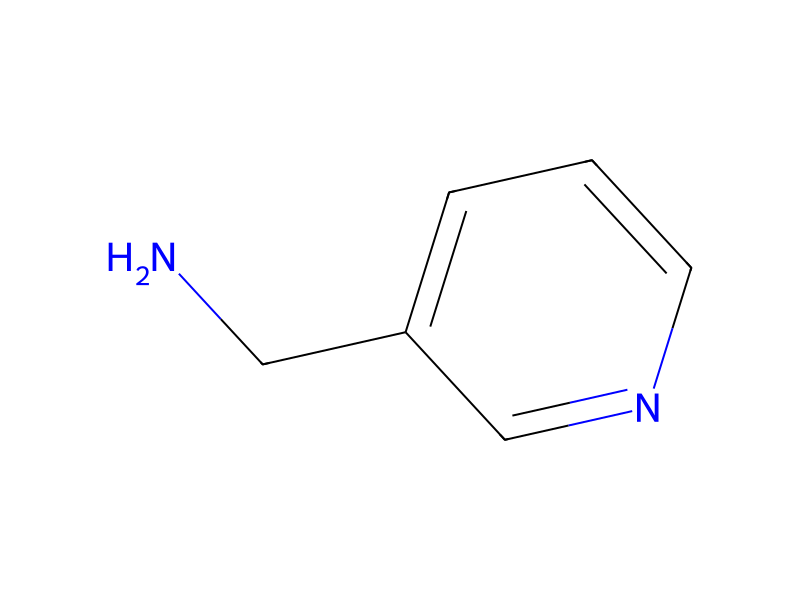
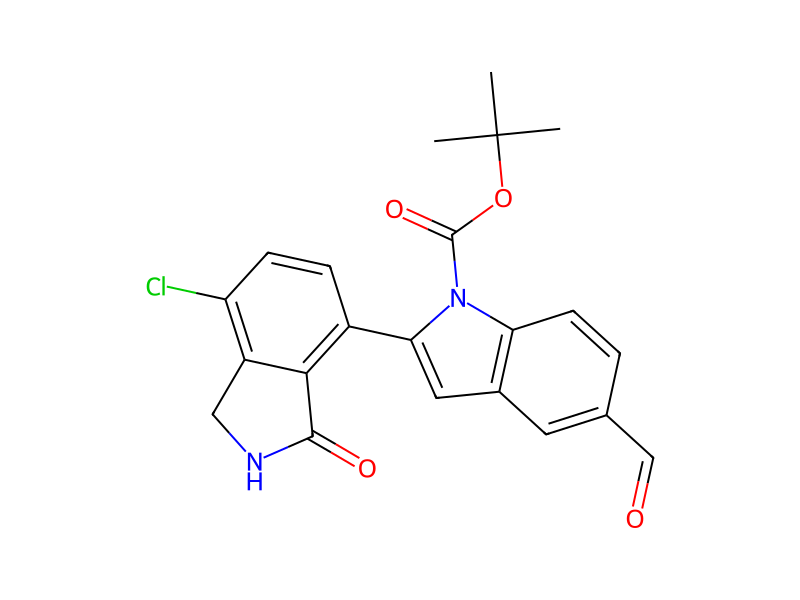
In a similar manner to Step 1 of Example 56, 4-chloro-7-[1-(tert-butoxycarbonyl)-5-formylindol-2-yl]isoindolinone (20.0 mg, 0.0487 mmol) was dissolved in dichloromethane (0.5 mL). The solution was treated with 3-aminomethylpyridine (0.010 mL, 0.098 mmol) and sodium triacetoxyborohydride (32 mg, 0.15 mmol) to obtain 4-chloro-7-(1-(tert-butoxycarbonyl)-5-[(pyridin-3-ylmethyl)amino methyl]indol-2-yl)isoindolinone.
Sources & evidence
- ORD record
- ord-5c7bc26dd9e049c4b0dceb6879ec458f
- Source dataset
- uspto-grants-2010_06
- Patent number
- US07745641B2
Linked notes
Loading…