2-Methylpropanehydrazide → tert-butyl [3-(N'-isobutyryl-hydrazino)-3-oxo-propyl]-carbamate
HRID 2110933
Reaction equation

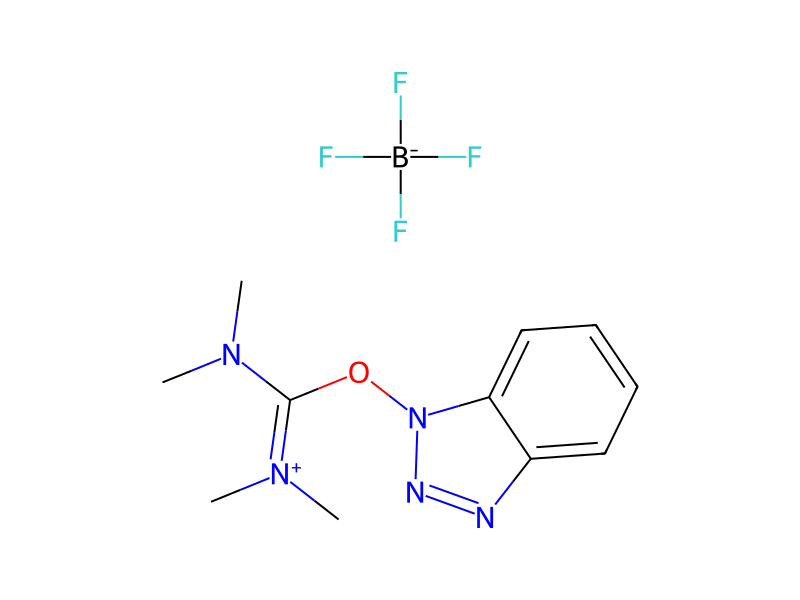
[C:1]([O:5][C:6]([NH:8][CH2:9][CH2:10][C:11]([OH:13])=O)=[O:7])([CH3:4])([CH3:3])[CH3:2].[C:14]([NH:19][NH2:20])(=[O:18])[CH:15]([CH3:17])[CH3:16].F[B-](F)(F)F.N1(OC(N(C)C)=[N+](C)C)C2C=CC=CC=2N=N1.C(N(C(C)C)CC)(C)C>O1CCCC1.ClCCl>[C:1]([O:5][C:6](=[O:7])[NH:8][CH2:9][CH2:10][C:11]([NH:20][NH:19][C:14](=[O:18])[CH:15]([CH3:17])[CH3:16])=[O:13])([CH3:2])([CH3:3])[CH3:4]Participants
6