HomeMCPWorkbenchSkills
HomeWorkbenchNotificationsMe
llms.txt · MCP GuidePrivacy Policy · Terms of Service · Supportv1.8.3
  1. Home
  2. /Reaction

Lithium Chloride → 5-(3-methylpyrid-2-yl)pyridazin-3(2H)-one

HRID 2117329
Print

Reaction equation

HRID 2117329 reaction equation
Cl[C:2]1[CH:7]=[N:6][NH:5][C:4](=[O:8])[CH:3]=1.C([Sn](CCCC)(CCCC)[C:14]1[C:19]([CH3:20])=[CH:18][CH:17]=[CH:16][N:15]=1)CCC.[Cl-].[Li+].C(OCC)(=O)C.O>O1CCOCC1.[Pd].C1(P(C2C=CC=CC=2)C2C=CC=CC=2)C=CC=CC=1.C1(P(C2C=CC=CC=2)C2C=CC=CC=2)C=CC=CC=1.C1(P(C2C=CC=CC=2)C2C=CC=CC=2)C=CC=CC=1.C1(P(C2C=CC=CC=2)C2C=CC=CC=2)C=CC=CC=1.[Cu]I>[CH3:20][C:19]1[C:14]([C:2]2[CH:7]=[N:6][NH:5][C:4](=[O:8])[CH:3]=2)=[N:15][CH:16]=[CH:17][CH:18]=1
ParticipantsProcedureWorkupSources & evidenceReaction notes

Participants

8

Reactant 4

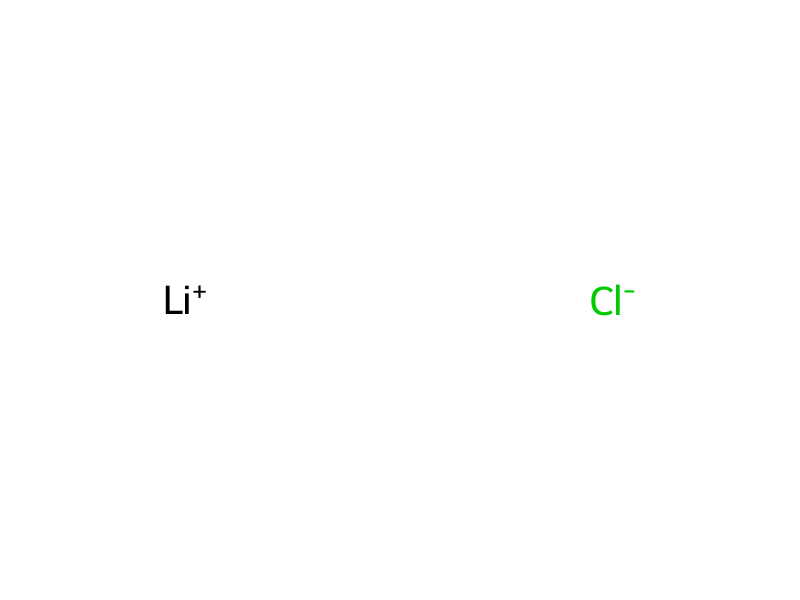
HCID 433294Lithium ChlorideHCID 164270983-Methyl-2-(tributylstannyl)pyridineHCID 199057185-Chloropyridazin-3(2H)-oneHCID 22728543Water ethylacetate

Product 1

HCID 691581195-(3-methylpyrid-2-yl)pyridazin-3(2H)-oneYield 69.4%

Reagents, catalysts & solvents 3

HCID 24350
Copper(1+) iodide; Copper(I) iodide; Cuprous iodide; Cuprous iodide (CuI)
Catalyst
HCID 11979704Tetrakis(triphenylphosphine)palladiumCatalyst
HCID 312751,4-DioxaneSolvent

Procedure

To a mixture of 5-chloropyridazin-3(2H)-one (0.135 g, 1 mmol) and 2-(tri-n-butylstannyl)-3-methylpyridine (0.42 g, 1.1 mmol) in anhydrous 1,4-dioxane (2 ml) was added tetrakis(triphenylphosphine)-palladium (0) (0.06 g, 0.051 mmol), copper(I)iodide (20 mg, 0.1 mmol) and lithium chloride (0.13 g, 3.1 mmol) and the mixture was irradiated in a Smith microwave reactor at 160° C. for 15 minutes. The mixture was allowed to cool to room temperature and poured onto a mixture of ethyl acetate/water (10 ml/5 ml). The phases were separated and the aqueous phase was extracted two times more with ethyl acetate. The combined organic layers were washed with brine, dried over sodium sulfate and adsorbed onto silica gel. Purification by flash chromatography (ethyl acetate) gave 5-(3-methylpyrid-2-yl)pyridazin-3(2H)-one (0.13 g, 69%) as a yellow solid which was suspended in phosphorous oxychloride (5 ml, 54 mmol) and the mixture was heated at 100° C. for 1 hour. After cooling to room temperature the homogeneous dark solution was evaporated under reduced pressure and repartitioned between chloroform and water (50 ml each). The pH was adjusted to 8 by portionwise addition of saturated aqueous sodium carbonate solution and the phases were separated. After two further extractions the combined organic extracts were washed with water and brine and dried over sodium sulfate. After filtration the compound was adsorbed onto silica gel and purified by flash column (50% ethyl acetate-iso-hexane) to yield the title compound (0.38 g, 54%).

Workup

  1. customthe mixture was irradiated in a Smith microwave reactor at 160° C. for 15 minutes
  2. customThe phases were separated
  3. extractionthe aqueous phase was extracted two times more with ethyl acetate
  4. washThe combined organic layers were washed with brine
  5. dry with materialdried over sodium sulfate
  6. customPurification by flash chromatography (ethyl acetate)

Sources & evidence

ORD record
ord-a634432ce74d4aa69137e3a7de546b24
Source dataset
uspto-grants-2008_10
DOI
10.6084/m9.figshare.5104873.v1
Patent number
US07442701B2

Reaction notes

On this pageParticipantsProcedureWorkupSources & evidenceReaction notes


