HomeMCPWorkbenchSkills
HomeWorkbenchNotificationsMe
llms.txt · MCP GuidePrivacy Policy · Terms of Service · Supportv1.8.0
  1. Home
  2. /Reaction

Acetone → 3-(2,5-Dioxo-2,5-dihydro-1H-pyrrol-1-yl)phenyl cyanate

HRID 2118773
Notes
Print preview

Reaction equation

HRID 2118773 reaction equation
[OH:1][C:2]1[CH:3]=[C:4]([N:8]2[C:12](=[O:13])[CH:11]=[CH:10][C:9]2=[O:14])[CH:5]=[CH:6][CH:7]=1.[N:15]#[C:16]Br.CC(C)=O.C(N(CC)CC)C>O>[O:13]=[C:12]1[CH:11]=[CH:10][C:9](=[O:14])[N:8]1[C:4]1[CH:3]=[C:2]([O:1][C:16]#[N:15])[CH:7]=[CH:6][CH:5]=1
ParticipantsConditionsProcedureWorkupSources & evidenceReaction notes

Participants

6

Reactant 4

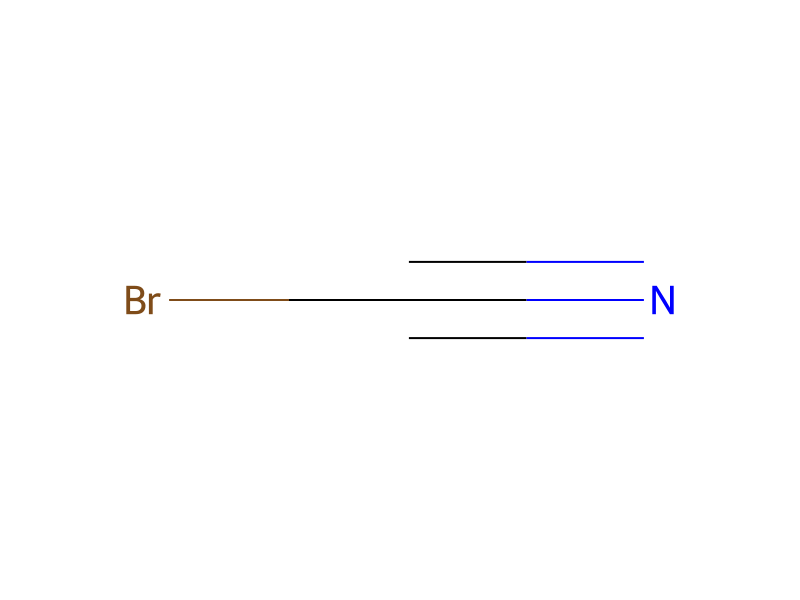
HCID 180AcetoneHCID 8471Triethylamine2×HCID 10476Cyanogen BromideHCID 5325833N-(3-hydroxyphenyl)maleimide

Product 1

HCID 199676113-(2,5-Dioxo-2,5-dihydro-1H-pyrrol-1-yl)phenyl cyanateYield 90.6%

Reagents, catalysts & solvents 1

HCID 962
Water
Solvent

Conditions

Temperature
-5 °C

Procedure

A 15.80 gram portion of N-(3-hydroxyphenyl)maleimide (0.0835 mole), 9.29 grams of cyanogen bromide (0.0877 mole) and 300 milliliters of acetone were added to a reactor and maintained under a nitrogen atmosphere with stirring. The stirred solution was cooled to -5° C. then 8.50 grams of triethylamine (0.0840 mole) was added to the reactor over a ten minute (600 s) period and so as to maintain the reaction temperature at -5° to -3° C. After completion of the triethylamine addition, the reactor was maintained at -5° to -3° C. for an additional forty minutes (2400 s), followed by addition of the reactor contents to 1500 milliliters of deionized water. After five minutes (300 s), the water and product mixture was multiply extracted with three 100 milliliter volumes of methylene chloride. The combined methylene chloride extract was washed with 1000 milliliters of deionized water followed by a second deionized water washing with 500 milliliters of deionized water then drying over anhydrous sodium sulfate. The dry methylene chloride extract was filtered and solvent removed by rotary evaporation under vacuum for 30 minutes at 100° C. 3-(2,5-dihydro-2,5-dioxo-1H-pyrrol-1-yl)phenyl cyanate (16.2 grams) was recovered in 90.6 percent yield as a light tan colored powder. Infrared spectrophotometric analysis of a film sample of the product confirmed the product structure (disappearance of phenolic hydroxyl absorbance, appearance of cyanate absorbance at 2232 and 2274 cm-1, maintenance of maleimide carbonyl absorbance at 1714 cm-1).


Workup

  1. temperaturemaintained under a nitrogen atmosphere
  2. temperatureso as to maintain the reaction temperature at -5° to -3° C
  3. temperaturethe reactor was maintained at -5° to -3° C. for an additional forty minutes (2400 s)
  4. extractionthe water and product mixture was multiply extracted with three 100 milliliter volumes of methylene chloride
  5. extractionThe combined methylene chloride extract
  6. washwas washed with 1000 milliliters of deionized water
  7. dry with materialthen drying over anhydrous sodium sulfate
  8. extractionThe dry methylene chloride extract
  9. filtrationwas filtered
  10. customsolvent removed by rotary evaporation under vacuum for 30 minutes at 100° C
  11. custom3-(2,5-dihydro-2,5-dioxo-1H-pyrrol-1-yl)phenyl cyanate (16.2 grams) was recovered in 90.6 percent yield as a light tan colored powder

Sources & evidence

ORD record
ord-ce19618ea04a43fea3558dde7f5df622
Source dataset
uspto-grants-1987_07
DOI
10.6084/m9.figshare.5104873.v1
Patent number
US04680378

Reaction notes

Loading…

On this pageParticipantsConditionsProcedureWorkupSources & evidenceReaction notes