Reaction equation

NC1C=CC(C)=C2C=1C(=O)NC2.NC1C=CC=C2C=1C(=O)NC2.[I-].[K+].II.[N+]([O-])(OC(C)(C)C)=O.[I:36][C:37]1[CH:38]=[CH:39][C:40](C)=[C:41]2[C:45]=1[C:44](=[O:46])[NH:43][CH2:42]2>C(#N)C.[Cu](I)I>[I:36][C:37]1[CH:38]=[CH:39][CH:40]=[C:41]2[C:45]=1[C:44](=[O:46])[NH:43][CH2:42]2Participants
9
Reactant 6




Product 1

Reagents, catalysts & solvents 2

Procedure
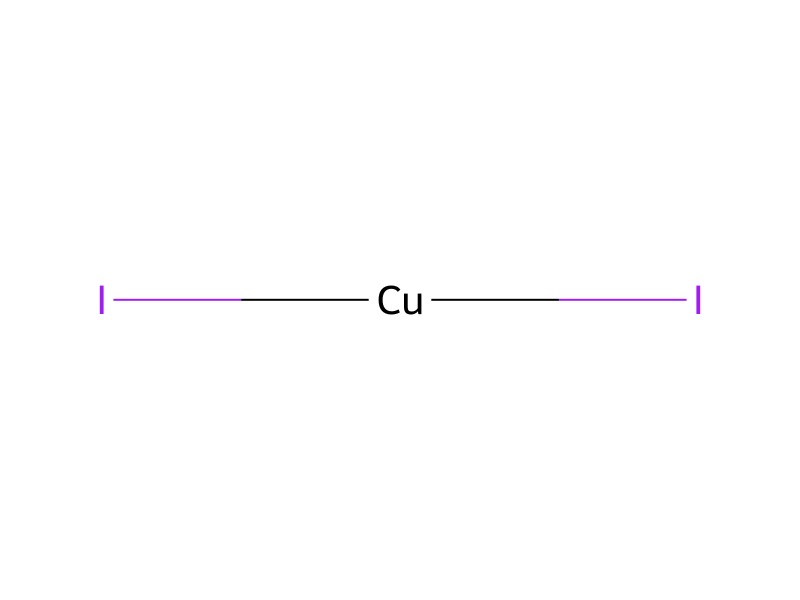
In a similar manner to Step 4 of Example 140, a mixture of 7-amino-4-methylisoindolinone and 7-aminoisoindolinone (10/1, 57.4 mg, 0.357 mmol) was dissolved in acetonitrile (4.6 mL), and the solution was treated with potassium iodide (78 mg, 0.47 mmol), copper iodide (90 mg, 0.47 mmol), iodine (120 mg, 0.471 mmol) and tert-butyl nitrate (0.128 mL, 1.07 mmol), followed by purification by preparative thin-layer chromatography (chloroform/acetonitrile=5/1) to obtain a mixture of 7-iodo-4-methylisoindolinone and 7-iodoisoindolinone (44.8 mg, ratio 10/1, yield 50%).
Workup
- customfollowed by purification by preparative thin-layer chromatography (chloroform/acetonitrile=5/1)
- customto obtain
Sources & evidence
- ORD record
- ord-67c101f9644c4906b0a4a7cbf1725fa0
- Source dataset
- uspto-grants-2010_06
- Patent number
- US07745641B2
Linked notes
Loading…