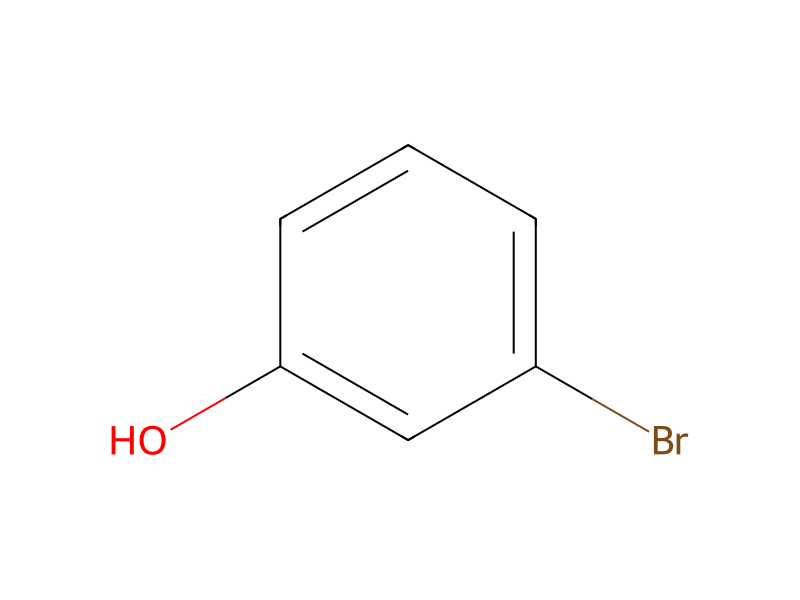
[N+]([C:4]1[CH:9]=[CH:8][C:7]([C:10]([C:12]([C:14]2[CH:19]=[CH:18][CH:17]=[CH:16][CH:15]=2)=[O:13])=[O:11])=[CH:6][CH:5]=1)([O-])=O.[Br:20][C:21]1[CH:22]=[C:23]([OH:27])[CH:24]=[CH:25][CH:26]=1.C(=O)([O-])[O-].[K+].[K+]>CS(C)=O>[Br:20][C:21]1[CH:22]=[C:23]([CH:24]=[CH:25][CH:26]=1)[O:27][C:4]1[CH:9]=[CH:8][C:7]([C:10]([C:12]([C:14]2[CH:19]=[CH:18][CH:17]=[CH:16][CH:15]=2)=[O:13])=[O:11])=[CH:6][CH:5]=1To a 250 ml flask fitted with reflux condenser, thermometer, and nitrogen inlet were added 4-nitrobenzil (10.83 g, 42.49 mmol), 3-bromophenol (7.35 g, 42.49 mmol) and dimethylsulfoxide (150 ml). After stirring at room temperature for 20 minutes under a nitrogen atmosphere, potassium carbonate (11.73 g, 84.98 mmol) was added to the flask and the flask was heated to an internal temperature of 95° C. for 19 h under nitrogen. When cooled to room temperature the solution was very slowly poured into 12N HCL (500 ml) and extracted with methylene chloride (2×100 ml). The organic layer was washed with water (3×500 ml), dried over anhydrous magnesium sulfate, and evaporated to dryness by rotary evaporation. The light orange oil was then dissolved in 4:1 hexane:methylene chloride and chromatographed on a silica gel column (Woelm DCC, 211.94 g, 5 cm dia×24 cm H). The purified product was recrystallized twice from methylene chloride:methanol (25 ml:150 ml) to afford light yellow crystals (11.08 g, 69%): mp 75°-76° C.