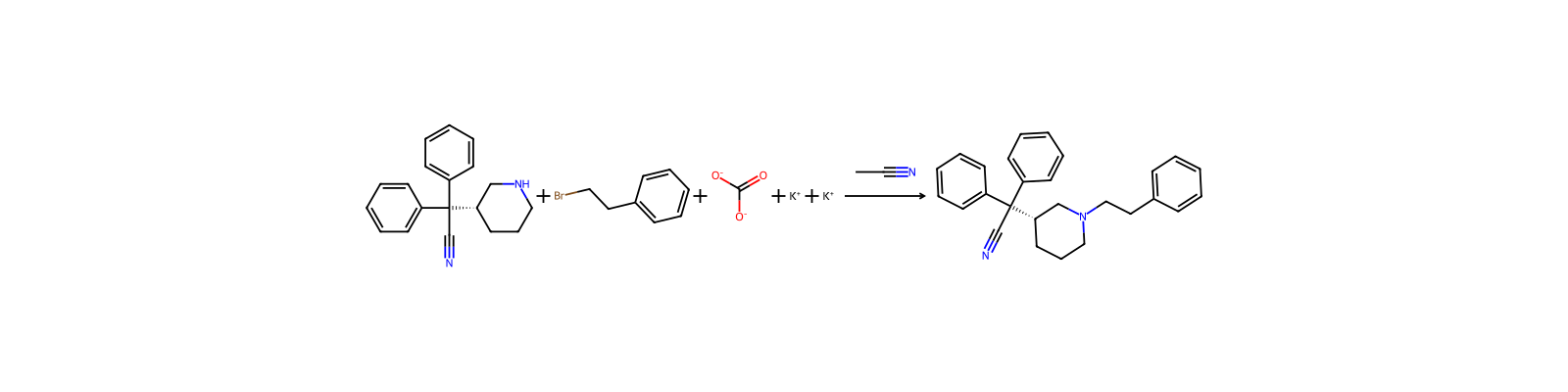
[C:1]([C:3]([C@H:16]1[CH2:21][CH2:20][CH2:19][NH:18][CH2:17]1)([C:10]1[CH:15]=[CH:14][CH:13]=[CH:12][CH:11]=1)[C:4]1[CH:9]=[CH:8][CH:7]=[CH:6][CH:5]=1)#[N:2].[CH2:22](Br)[CH2:23][C:24]1[CH:29]=[CH:28][CH:27]=[CH:26][CH:25]=1.C(=O)([O-])[O-].[K+].[K+]>C(#N)C>[C:1]([C:3]([C@H:16]1[CH2:21][CH2:20][CH2:19][N:18]([CH2:22][CH2:23][C:24]2[CH:29]=[CH:28][CH:27]=[CH:26][CH:25]=2)[CH2:17]1)([C:10]1[CH:11]=[CH:12][CH:13]=[CH:14][CH:15]=1)[C:4]1[CH:9]=[CH:8][CH:7]=[CH:6][CH:5]=1)#[N:2]A mixture containing 3-(R)-(+)-(1-cyano-1,1-diphenylmethyl)piperidine (1 g), phenethyl bromide (0.-67 g), anhydrous potassium carbonate (1.5 g) and acetonitrile (25 ml) was heated under reflux for 4 hours. The mixture was partitioned between dichloromethane (50 ml) and 10% aqueous potassium carbonate (30 ml), the layers separated, and the aqueous layer extracted with dichloromethane (3×30 ml)--. The combined dichloromethane extracts were dried (MgSO4) and concentrated in vacuo to give an oil which was purified by column chromatography on silica eluting with hexane containing dichloromethane (30% up to 70%) then dichloromethane containing methanol (0% up to 5%). The product-containing fractions were combined and concentrated in vacuo to give an oil which was crystallised from acetonitrile to give the title compound as colourless rhombs, yield 0.72 g, m.p. 134°-138° C., [α]D25 +13.3° (C 1.0, CH2Cl2).
Loading…