Reaction equation
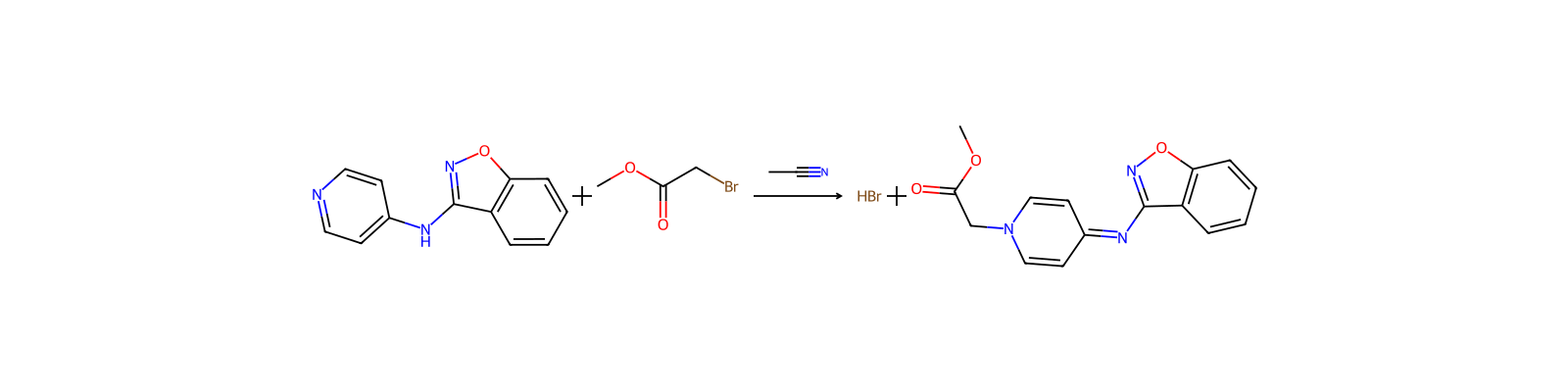
[N:1]1[CH:6]=[CH:5][C:4]([NH:7][C:8]2[C:12]3[CH:13]=[CH:14][CH:15]=[CH:16][C:11]=3[O:10][N:9]=2)=[CH:3][CH:2]=1.[Br:17][CH2:18][C:19]([O:21][CH3:22])=[O:20]>C(#N)C>[BrH:17].[CH3:22][O:21][C:19](=[O:20])[CH2:18][N:1]1[CH:2]=[CH:3][C:4](=[N:7][C:8]2[C:12]3[CH:13]=[CH:14][CH:15]=[CH:16][C:11]=3[O:10][N:9]=2)[CH:5]=[CH:6]1Participants
4



Procedure
A mixture of 3-(4-pyridinylamino)-1,2-benzisoxazole (0.9 g, 4.3 mmol) and methyl bromoacetate (0.44 mL, 1.1 eq) in acetonitrile (25 mL) was heated at reflux for one hour. The mixture was then allowed to cool to room temperature and the precipitated product was collected by filtration. The white solid was washed with diethyl ether and dried under vacuum to provide the title compound (1.1 g, 70%), mp 235-236° C.
Workup
- temperaturewas heated
- temperatureat reflux for one hour
- filtrationthe precipitated product was collected by filtration
- washThe white solid was washed with diethyl ether
- customdried under vacuum
Sources & evidence
- ORD record
- ord-dc610c599a6a47cbbab5dcc6ac8c553a
- Source dataset
- uspto-grants-1998_03
- Patent number
- US05728717
Linked notes
Loading…