Reaction equation

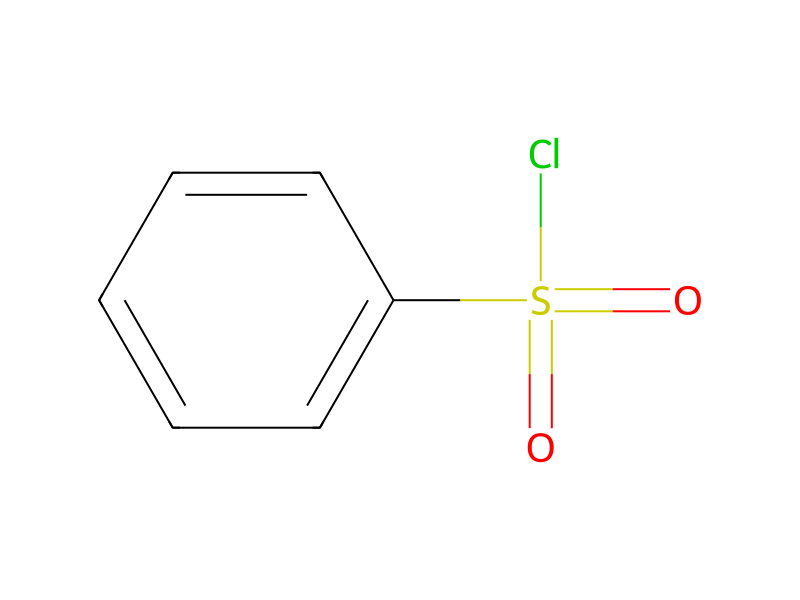
[NH:1]1[C:10]2[C:5](=[CH:6][CH:7]=[CH:8][CH:9]=2)[NH:4][CH2:3][C:2]1=[O:11].C(=O)([O-])[O-].[K+].[K+].[C:18]1([S:24](Cl)(=[O:26])=[O:25])[CH:23]=[CH:22][CH:21]=[CH:20][CH:19]=1>CC(C)=O>[C:18]1([S:24]([N:4]2[C:5]3[C:10](=[CH:9][CH:8]=[CH:7][CH:6]=3)[NH:1][C:2](=[O:11])[CH2:3]2)(=[O:26])=[O:25])[CH:23]=[CH:22][CH:21]=[CH:20][CH:19]=1Participants
Reactant 3


Product 1

Reagents, catalysts & solvents 1

Procedure
A suspension of 10 g. (0.068 mole) of 3,4-dihydro-2(1H)-quinoxalinone (3,4-dihydro-2-hydroxyquinoxaline) [prepared in 50% yield according to the procedure described by W. H. Perkin et al. in the Journal of the Chemical Society, Vol. 123, p.2399(1923)] and 9.6 g. (0.069 mole) of potassium carbonate in 250 ml. of acetone was stirred under a nitrogen atmosphere at 40° C., while 11.5 g. (0.07 mole) of benzenesulfonyl chloride was added during the course of a 30-minute period. The reaction mixture was next heated at reflux temperature for 14 hours and then poured onto 500 ml. of ice. The resulting brown solid was recrystallized from ethyl acetate to yield 10.2 g (52%) of pure 4-benzenesulfonyl-3,4-dihydro-2(1H)-quinoxalinone, m.p. 183°-185° C. The pure product was further characterized by means of nuclear magnetic resonance data and elemental analysis.
Workup
- additionA suspension of 10 g
- temperatureThe reaction mixture was next heated
- temperatureat reflux temperature for 14 hours
- additionpoured onto 500 ml
- customThe resulting brown solid was recrystallized from ethyl acetate
Sources & evidence
- ORD record
- ord-e63bd5bf0967443388cb193dc309b8b9
- Source dataset
- uspto-grants-1990_07
- Patent number
- US04940708
Linked notes
Loading…