HomeMCPWorkbenchSkills
HomeWorkbenchNotificationsMe
llms.txt · MCP GuidePrivacy Policy · Terms of Service · Supportv1.8.0
  1. Home
  2. /Reaction

Ammonia → 7-Chloro-3-(1-naphthalenyl)-1-isoquinolineamine

HRID 2165879
Notes
Print preview

Reaction equation

HRID 2165879 reaction equation
C(=O)=O.CC(C)=O.N.[K].[Cl:10][C:11]1[CH:12]=[CH:13][C:14]([CH3:19])=[C:15]([CH:18]=1)[C:16]#[N:17].[C:20]([C:22]1[C:31]2[C:26](=[CH:27][CH:28]=[CH:29][CH:30]=2)[CH:25]=[CH:24][CH:23]=1)#[N:21].[NH4+].[Cl-]>C1COCC1.O.O.O.O.O.O.O.O.O.[N+]([O-])([O-])=O.[Fe+3].[N+]([O-])([O-])=O.[N+]([O-])([O-])=O>[Cl:10][C:11]1[CH:18]=[C:15]2[C:14]([CH:19]=[C:20]([C:22]3[C:31]4[C:26](=[CH:27][CH:28]=[CH:29][CH:30]=4)[CH:25]=[CH:24][CH:23]=3)[N:21]=[C:16]2[NH2:17])=[CH:13][CH:12]=1
ParticipantsProcedureWorkupSources & evidenceReaction notes

Participants

9

Reactant 6

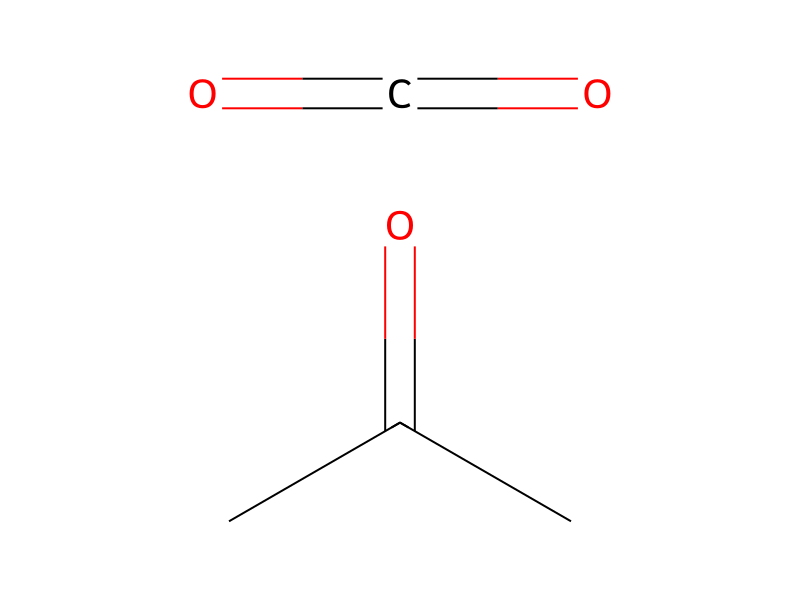
HCID 222Ammonia2×HCID 68461-NaphthalenecarbonitrileHCID 25517Ammonium ChlorideHCID 1427435-Chloro-2-methylbenzonitrileHCID 5462222PotassiumHCID 18522661Acetone cardice

Product 1

HCID 14839239
7-Chloro-3-(1-naphthalenyl)-1-isoquinolineamine
Yield 14.3%

Reagents, catalysts & solvents 2

HCID 16211566Iron nitrate (Fe(NO3)3) nonahydrateCatalystHCID 8028TetrahydrofuranSolvent2×

Procedure

A 500-mL, three-necked, round-bottomed flask equipped with a dry ice-acetone cooled reflux condenser, addition funnel, and a gas inlet was charged with liquid ammonia (150 mL). Iron (III) nitrate nonahydrate (spatula end) was added in one portion as a solid, and then potassium metal (5.16 g, 132.0 mmol) was added cautiously in small portions. A solution of 5-chloro-2-methylbenzonitrile (10.00 g, 65.96 mmol) in THF (30 mL) was added dropwise over 5 minutes, the reaction mixture was stirred for 5 minutes, a solution of 1-cyanonaphthalene (15.16 g, 98.97 mmol) in THF was added dropwise over 5 minutes, and the reaction mixture was allowed to stir overnight as the liquid ammonia gradually evaporated. The crude reaction mixture was cautiously poured into saturated aqueous NH4Cl, and the aqueous phase was extracted with methylene chloride. The combined organic extracts were dried and concentrated. The residue was purified by flash chromatography with 2:1 hexane-ethyl acetate, and the crude product was recrystallized from 2:1 hexane-ethyl acetate to afford the title compound (2.88 g, 9.45 mmol, 14% yield) as yellow crystals: mp 180°-181°; IR(CHCl3) 3513, 3409 cm-1 ; MS m/e 305 (M+ +H NMR(CDCl3) δ 8.00-8.17(m,1H), 7.83-8.00(m,2H), 7.80(s,1H), 7.33-7.79(m,6H), 7.25(s,1H), 5.35(s,2H). Anal. Calcd for C19H13ClN2 : C,74.88; H,4.30; Cl,11.83; N,9.19. Found: C,74.77; H,4.09; Cl,11.87; N,8.81.

Workup

  1. temperaturecooled
  2. temperaturereflux
  3. additioncondenser, addition funnel, and a gas inlet
  4. customgradually evaporated
  5. customThe crude reaction mixture
  6. extractionthe aqueous phase was extracted with methylene chloride
  7. customThe combined organic extracts were dried
  8. concentrationconcentrated
  9. customThe residue was purified by flash chromatography with 2:1 hexane-ethyl acetate
  10. customthe crude product was recrystallized from 2:1 hexane-ethyl acetate

Sources & evidence

ORD record
ord-d1774f3ddb65422ab3b800a15398c18e
Source dataset
uspto-grants-1990_07
DOI
10.6084/m9.figshare.5104873.v1
Patent number
US04942163

Reaction notes

Loading…

On this pageParticipantsProcedureWorkupSources & evidenceReaction notes