HomeMCPWorkbenchSkills
HomeWorkbenchNotificationsMe
llms.txt · MCP GuidePrivacy Policy · Terms of Service · Supportv1.8.3
  1. Home
  2. /Reaction

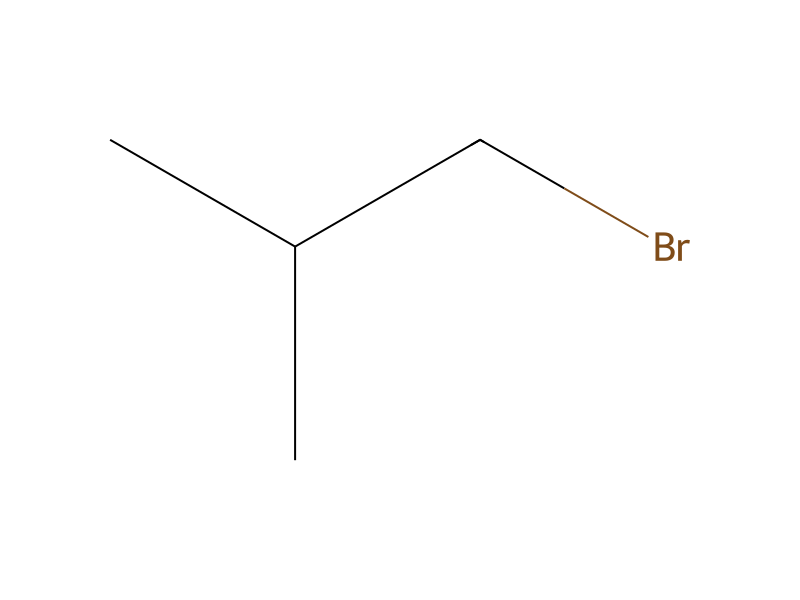
1-Bromo-2-methylpropane → 1-Bromo-4-(difluoromethoxy)-2-isobutoxy-3-methoxybenzene

HRID 2171099
Print

Reaction equation

HRID 2171099 reaction equation
[Br:1][C:2]1[C:7]([OH:8])=[C:6]([O:9][CH3:10])[C:5]([O:11][CH:12]([F:14])[F:13])=[CH:4][CH:3]=1.C(=O)([O-])[O-].[K+].[K+].[CH2:21](Br)[CH:22]([CH3:24])[CH3:23]>C(#N)C>[Br:1][C:2]1[CH:3]=[CH:4][C:5]([O:11][CH:12]([F:13])[F:14])=[C:6]([O:9][CH3:10])[C:7]=1[O:8][CH2:21][CH:22]([CH3:24])[CH3:23]
ParticipantsConditionsProcedureWorkupSources & evidenceReaction notes

Participants

5

Reactant 3

HCID 65551-Bromo-2-methylpropaneHCID 11430Potassium CarbonateHCID 674670406-Bromo-3-(difluoromethoxy)-2-methoxyphenol

Product 1

HCID 674655061-Bromo-4-(difluoromethoxy)-2-isobutoxy-3-methoxybenzeneYield 248.7%

Reagents, catalysts & solvents 1

HCID 6342AcetonitrileSolvent

Conditions

Temperature
80 °C

Procedure

To a stirring solution of 6-bromo-3-(difluoromethoxy)-2-methoxyphenol (100 mg, 0.371 mmol) in acetonitrile (10 mL), was added potassium carbonate (153.8 mg, 1.114 mmol) and isobutyl bromide (152.6 mg, 1.114 mmol) and the resultant reaction mixture was heated to 80° C. for 3 h. The reaction mixture was cooled to RT, filtered through celite and the filtrate was concentrated under reduced pressure to afford 300 mg of 1-Bromo-4-(difluoromethoxy)-2-isobutoxy-3-methoxybenzene as a solid. To a stirring solution of 1-bromo-4-(difluoromethoxy)-2-isobutoxy-3-methoxybenzene (200 mg, 0.615 mmol) in dimethylformamide (5 mL) was purged with argon for 1 h. To this cesium carbonate (599 mg, 1.84 mmol), tetrakis(triphenylphosphine) palladium(0) (35 mg, 0.030 mmol) and 5-(4,4,5,5-tetramethyl-1,3,2-dioxaborolan-2-yl)isoindolin-1-one (191 mg, 0.738 mmol) were added and the resultant reaction mixture was heated to 80-90° C. for 3 h. The reaction mixture was cooled to RT, filtered and the filtrate was diluted with water and extracted with ethyl acetate (3×). The combined ethyl acetate layer was washed with brine and dried over anhydrous sodium sulphate and concentrated under reduced pressure. Purification of the residue by column chromatography (silica gel, 0-20% ethyl acetate in pet ether) afforded the title compound as a (30 mg, 13%).

Workup

  1. customthe resultant reaction mixture
  2. temperatureThe reaction mixture was cooled to RT
  3. filtrationfiltered through celite
  4. concentrationthe filtrate was concentrated under reduced pressure

Sources & evidence

ORD record
ord-07b5cefa2ddf4b6a862468d1ba76f1c8
Source dataset
uspto-grants-2015_06
DOI
10.6084/m9.figshare.5104873.v1
Patent number
US09051290B2

Reaction notes

On this pageParticipantsConditionsProcedureWorkupSources & evidenceReaction notes

