HomeMCPWorkbenchSkills
HomeWorkbenchNotificationsMe
llms.txt · MCP GuidePrivacy Policy · Terms of Service · Supportv1.8.0
  1. Home
  2. /Reaction

Cyclohexane → HCID 66612382, compound

HRID 2174627
Notes
Print preview

Reaction equation

HRID 2174627 reaction equation
Br[C:2]1[N:6]([CH3:7])[N:5]=[C:4]([CH3:8])[C:3]=1[C:9]1[CH:14]=[CH:13][C:12]([F:15])=[CH:11][C:10]=1[Cl:16].C1CCCCC1.C([Li])CCC.[F:28][C:29]1[CH:36]=[C:35]([F:37])[CH:34]=[CH:33][C:30]=1[CH:31]=[O:32]>O1CCCC1>[Cl:16][C:10]1[CH:11]=[C:12]([F:15])[CH:13]=[CH:14][C:9]=1[C:3]1[C:4]([CH3:8])=[N:5][N:6]([CH3:7])[C:2]=1[CH:31]([C:30]1[CH:33]=[CH:34][C:35]([F:37])=[CH:36][C:29]=1[F:28])[OH:32]
ParticipantsProcedureWorkupSources & evidenceReaction notes

Participants

6

Reactant 4

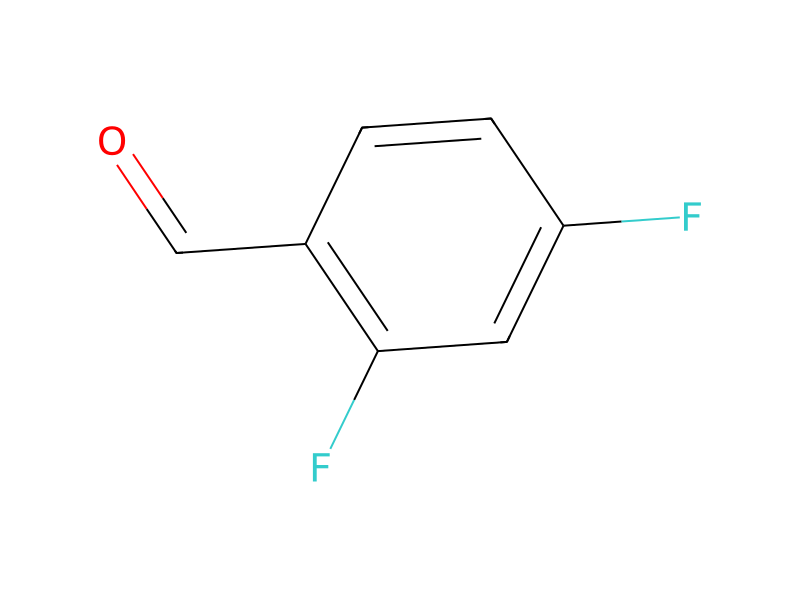
HCID 8078CyclohexaneHCID 737702,4-DifluorobenzaldehydeHCID 666126355-bromo-4-(2-chloro-4-fluorophenyl)-1,3-dimethyl-1H-pyrazoleHCID 178418339Butyllithium

Product 1

HCID 66612382HCID 66612382, compound

Reagents, catalysts & solvents 1

HCID 8028
Tetrahydrofuran
Solvent
2×

Procedure

5-Bromo-4-(2-chloro-4-fluorophenyl)-1,3-dimethyl-1H-pyrazole (i.e. the product of Synthesis Example 2, Step A) (0.25 g, 0.82 mmol) was dissolved in anhydrous tetrahydrofuran (12 mL), and the mixture was cooled in a dry ice/acetone bath under a nitrogen atmosphere. A cyclohexane solution of n-butyllithium (2.0 M, 0.49 mL, 0.98 mmol) was added dropwise over 5 minutes. After 15 minutes, a solution of 2,4-difluorobenzaldehyde (0.09 mL, 0.82 mmol) in anhydrous tetrahydrofuran (3 mL) was added slowly dropwise, causing the dark red-colored solution to lighten to a yellow color. After 45 minutes, the reaction mixture was quenched by the addition of saturated aqueous NH4Cl solution (˜20 mL) and allowed to warm to ambient temperature. This mixture was extracted with ethyl acetate, and the organic phase was washed with saturated aqueous NH4Cl solution (25 mL) and with brine, dried over Na2SO4, and concentrated to leave a viscous residue. This residue was purified by column chromatography through silica gel eluted with a gradient of ethyl acetate in hexane (7% to 10%) to give the title product, a compound of the present invention, as a white semi-solid (109 mg).


Workup

  1. temperaturethe mixture was cooled in a dry ice/acetone bath under a nitrogen atmosphere
  2. waitAfter 45 minutes
  3. customthe reaction mixture was quenched by the addition of saturated aqueous NH4Cl solution (˜20 mL)
  4. extractionThis mixture was extracted with ethyl acetate
  5. washthe organic phase was washed with saturated aqueous NH4Cl solution (25 mL) and with brine
  6. dry with materialdried over Na2SO4
  7. concentrationconcentrated
  8. customto leave a viscous residue
  9. customThis residue was purified by column chromatography through silica gel
  10. washeluted with a gradient of ethyl acetate in hexane (7% to 10%)

Sources & evidence

ORD record
ord-cf5a81affe984eb8b9d715752c9f1630
Source dataset
uspto-grants-2015_06
DOI
10.6084/m9.figshare.5104873.v1
Patent number
US09062005B2

Reaction notes

Loading…

On this pageParticipantsProcedureWorkupSources & evidenceReaction notes