Cumene → (Chloromethyl)(isopropylphenyl)(phenyl)sulfonium triflate
Reaction equation

[C:1]1([S:7]([CH2:9][Cl:10])=O)[CH:6]=[CH:5][CH:4]=[CH:3][CH:2]=1.[C:11]1([CH:17]([CH3:19])[CH3:18])[CH:16]=[CH:15][CH:14]=[CH:13][CH:12]=1.[F:20][C:21]([F:34])([F:33])[S:22]([O:25]S(C(F)(F)F)(=O)=O)(=[O:24])=[O:23]>C(OCC)C>[O-:25][S:22]([C:21]([F:34])([F:33])[F:20])(=[O:24])=[O:23].[Cl:10][CH2:9][S+:7]([C:12]1[CH:13]=[CH:14][CH:15]=[CH:16][C:11]=1[CH:17]([CH3:19])[CH3:18])[C:1]1[CH:6]=[CH:5][CH:4]=[CH:3][CH:2]=1Participants
5
Reactant 3
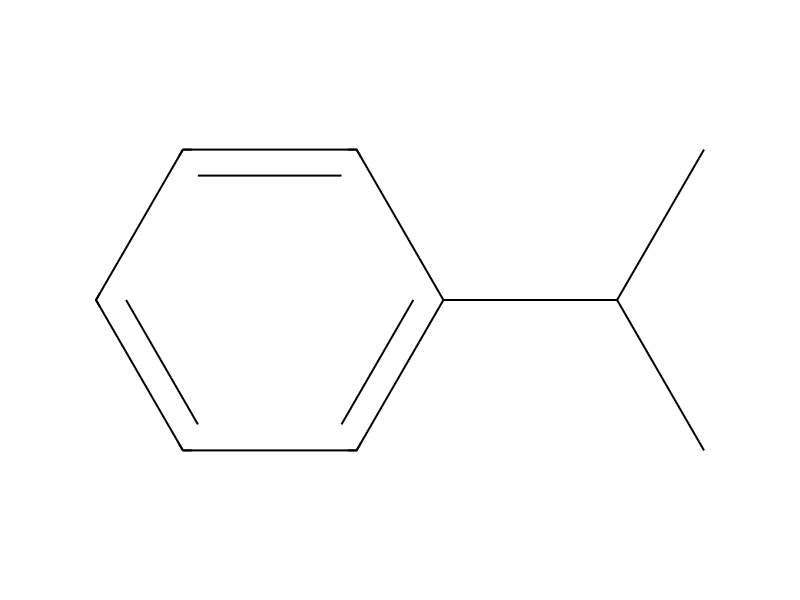


Product 1

Reagents, catalysts & solvents 1

Procedure
Chloromethyl phenyl sulfoxide (170 mg, 1.1 mmol) of example 21 was dissolved in dry diethyl ether (5 mL) under an argon atmosphere. Cumene (145 mg, 1.1 eq) was added to the previous solution and the mixture was cooled to a temperature below −60° C. After stabilizing the temperature, trifluoromethanesulfonic anhydride (0.184 mL, 1 eq) was added slowly maintaining the same temperature. The mixture was stirred until the reaction was complete. The orange precipitated triflate salt was quickly filtered at −60° C. affording 0.399 g as orange viscous oil after heating at room temperature, which was a mixture by proton NMR.