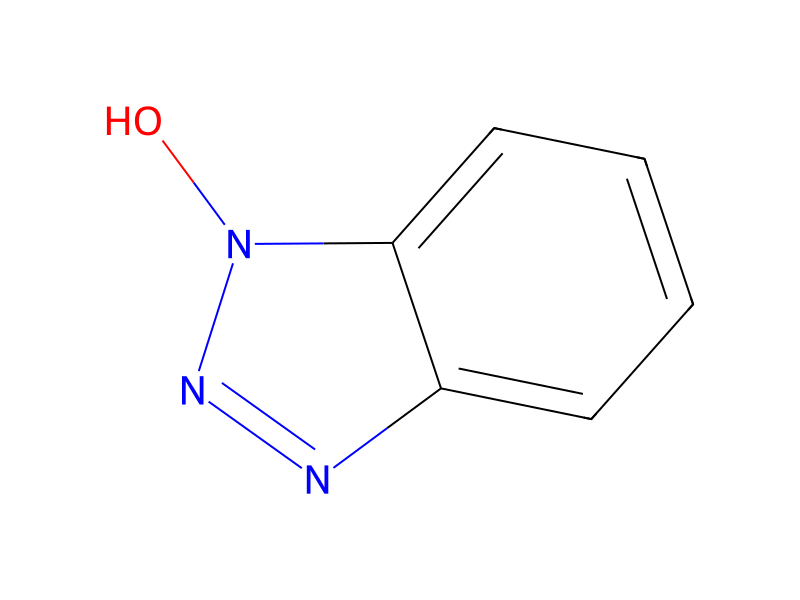
[CH3:1][NH:2][C:3]1[C:8]([NH2:9])=[CH:7][C:6]([C:10]([F:13])([F:12])[F:11])=[CH:5][N:4]=1.[Cl:14][C:15]1(C(O)=O)C=CC(Cl)=NN1.CCN=C=NCCCN(C)C.[ClH:36].C1[CH:38]=[CH:39][C:40]2N(O)[N:44]=[N:43][C:41]=2C=1.[OH2:47]>N1C=CC=CC=1>[CH3:1][NH:2][C:3]1[C:8]([NH:9][C:38]([C:39]2[CH:40]=[C:41]([Cl:36])[N:43]=[N:44][C:15]=2[Cl:14])=[O:47])=[CH:7][C:6]([C:10]([F:13])([F:11])[F:12])=[CH:5][N:4]=1A mixture of 693 mg of N2-methyl-5-trifluoromethylpyridine-2,3-diamine, 700 mg of 3,6-dichloropyridazine-carboxylic acid, 1.04 g of EDCI hydrochloride, 50 mg of HOBt and 2.5 ml of pyridine was stirred at room temperature for 4 hours and then allowed to stand at room temperature overnight. Water was poured to the reaction mixture, and the precipitated solid was filtered. The resulting solid was washed with water and n-hexane and then dried to obtain 1.19 g of 3,6-dichloropyridazine-4-carboxylic acid (2-methylamino-5-trifluoromethylpyridin-3-yl)-amide. 3,6-Dichloropyridazine-4-carboxylic acid (2-methylamino-5-trifluoromethylpyridin-3-yl)-amide