Lithium Hydroxide → 3-Methyl-2-phenylquinoxaline-6-carboxylic acid
HRID 2205103
Reaction equation

[CH3:1][C:2]1[C:3]([C:16]2[CH:21]=[CH:20][CH:19]=[CH:18][CH:17]=2)=[N:4][C:5]2[C:10]([N:11]=1)=[CH:9][C:8]([C:12]([O:14]C)=[O:13])=[CH:7][CH:6]=2.[Li+].[OH-]>O1CCOCC1.O>[CH3:1][C:2]1[C:3]([C:16]2[CH:21]=[CH:20][CH:19]=[CH:18][CH:17]=2)=[N:4][C:5]2[C:10]([N:11]=1)=[CH:9][C:8]([C:12]([OH:14])=[O:13])=[CH:7][CH:6]=2Participants
4
Reactant 2
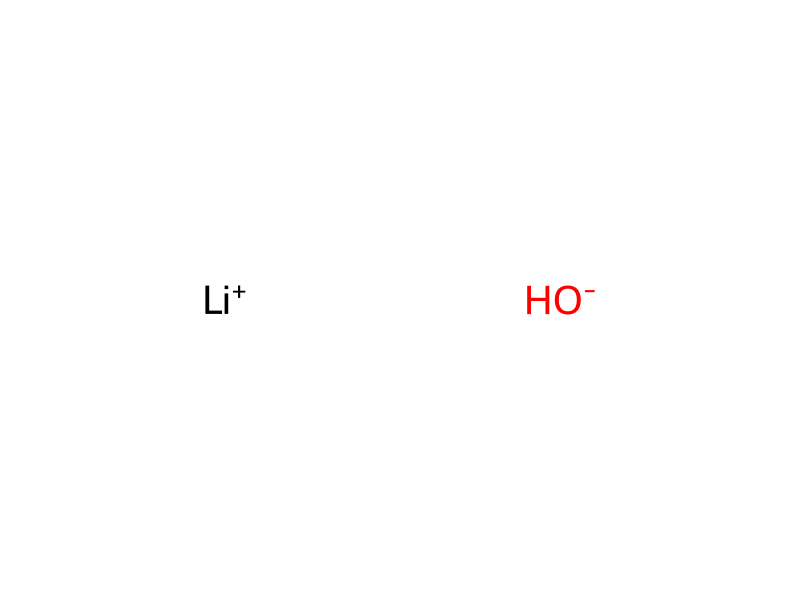

Product 1

Reagents, catalysts & solvents 1

Procedure
A solution of methyl 3-methyl-2-phenylquinoxaline-6-carboxylate (90 mg, 0.32 mmol, 1.00 equiv) and LiOH (20.7 mg, 0.90 mmol, 5.00 equiv) in 1,4-dioxane/H2O (9/3 mL) was placed in a 50-mL round-bottom flask and allowed to react, with stirring, for 1 hr while the temperature was maintained at reflux in an oil bath. The resulting mixture was concentrated under vacuum, and the pH adjusted to 4 with HCl (1M). The solids were collected by filtration and dried in an oven under reduced pressure, yielding 30 mg (33%) of 3-methyl-2-phenylquinoxaline-6-carboxylic acid as a white solid.