Reaction equation
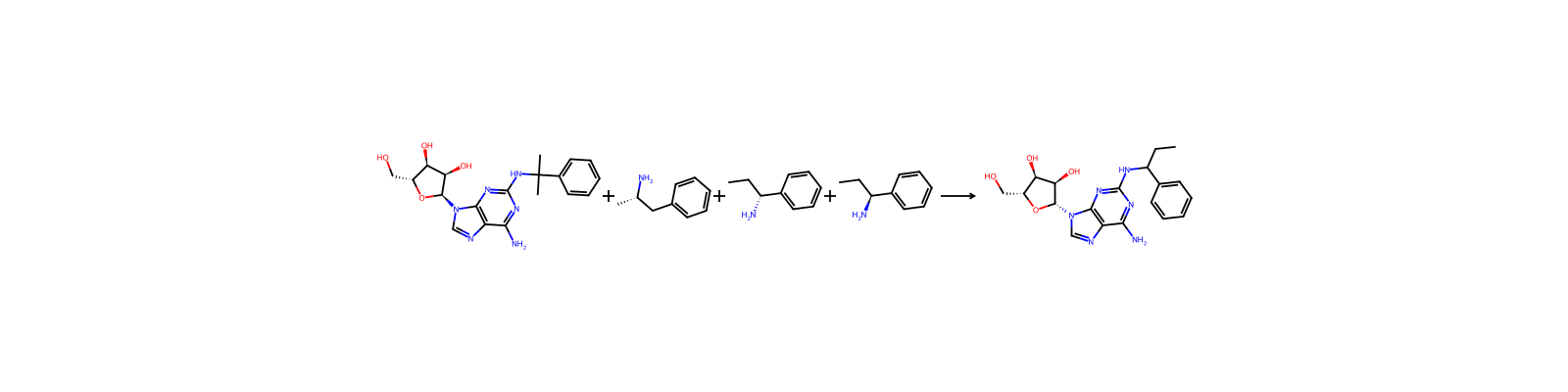
[C:1]1([C:7]([NH:10][C:11]2[N:12]=[C:13]([NH2:29])[C:14]3[N:15]=[CH:16][N:17]([C:27]=3[N:28]=2)[C@H:18]2[O:26][C@H:23]([CH2:24][OH:25])[C@@H:21]([OH:22])[C@H:19]2[OH:20])([CH3:9])C)[CH:6]=[CH:5][CH:4]=[CH:3][CH:2]=1.[CH3:30][C@H](N)CC1C=CC=CC=1.C1([C@H](N)CC)C=CC=CC=1.C1([C@@H](N)CC)C=CC=CC=1>>[C:1]1([CH:7]([NH:10][C:11]2[N:12]=[C:13]([NH2:29])[C:14]3[N:15]=[CH:16][N:17]([C:27]=3[N:28]=2)[C@@H:18]2[O:26][C@H:23]([CH2:24][OH:25])[C@@H:21]([OH:22])[C@H:19]2[OH:20])[CH2:9][CH3:30])[CH:2]=[CH:3][CH:4]=[CH:5][CH:6]=1Participants
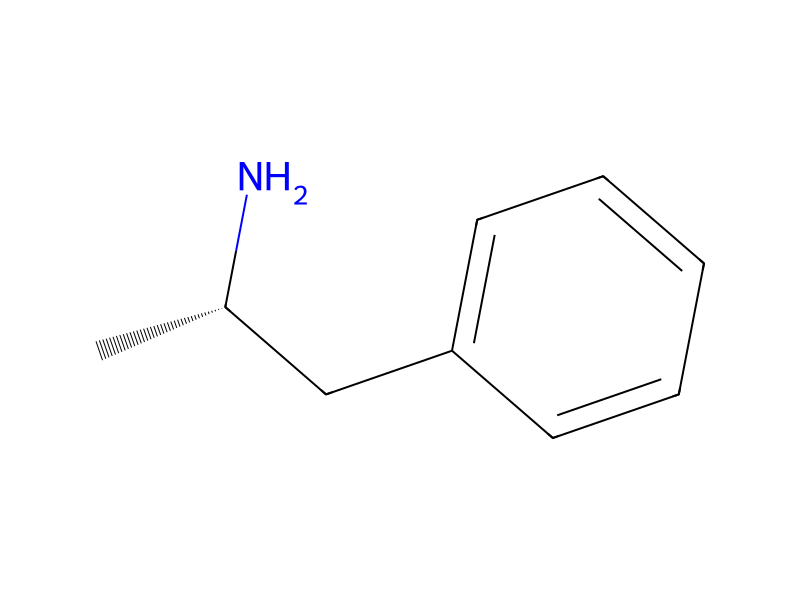
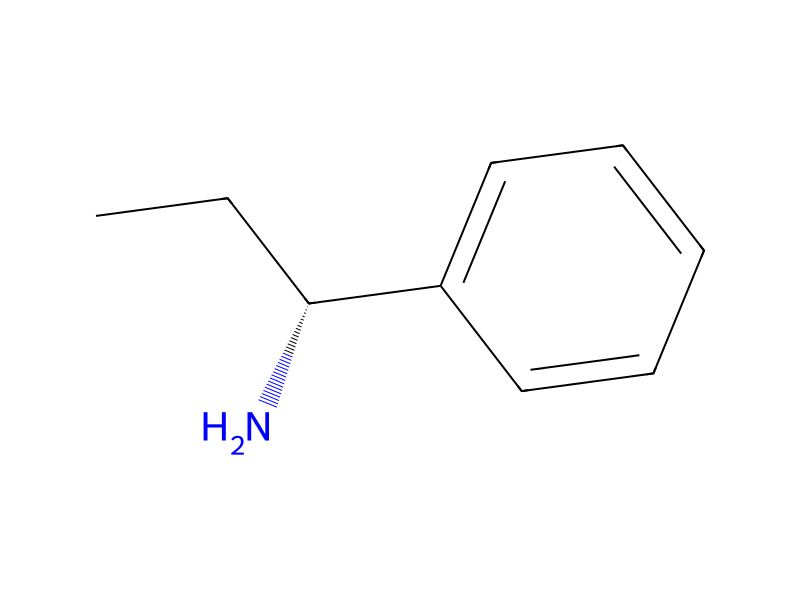
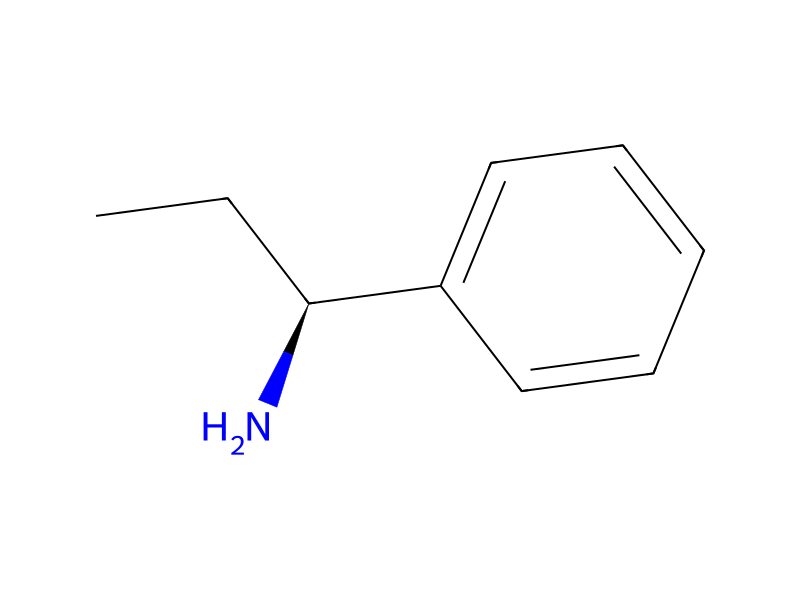
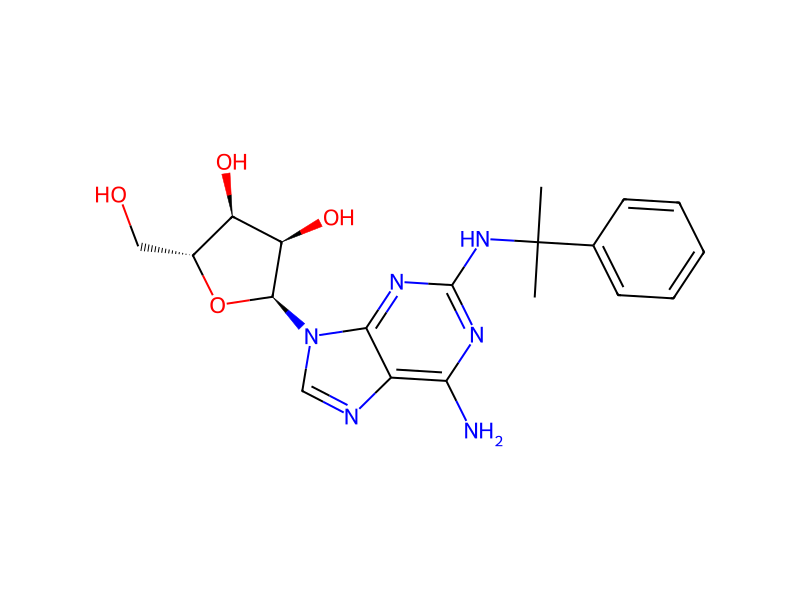
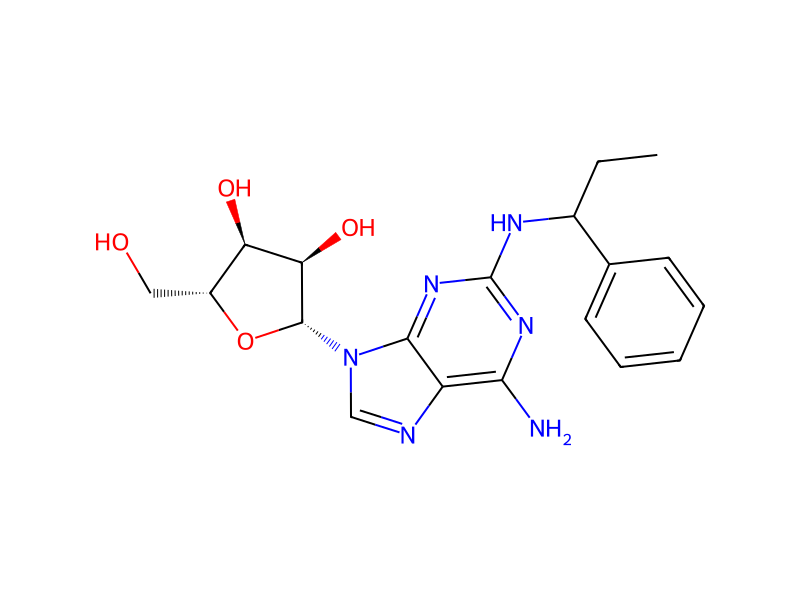
Conditions
- Temperature
- 130 °C
Procedure
In Scheme A, step b, the acetonide (2) is then treated with an appropriately substituted primary amine to provide the secondary amine of structure (3). More specifically, the acetonide (2) is combined with a large excess of an appropriately substituted primary amine, such as L-(-)-amphetamine, D-(+)-amphetamine, (R)-1-phenylpropylamine or (S)-1-phenylpropylamine, under an atmosphere of an inert gas such as nitrogen. The mixture is then heated to approximately 130° C. with stirring for approximately 3 to 6 hours. After cooling, the product can be isolated and purified by techniques well known to one skilled in the art. For example, the crude mixture can be directly purified by flash chromatography followed by radial chromatography using an appropriate eluent such as 3% to 6% methanol/chloroform to provide the secondary amine (3).
Workup
- temperatureAfter cooling
- customthe product can be isolated
- custompurified by techniques
Sources & evidence
- ORD record
- ord-91a42dcf5ab743dabf4e25dc19f9830e
- Source dataset
- uspto-grants-1995_06
- Patent number
- US05426101
Linked notes
Loading…