3-Chloropropionic acid → HCID 178460589, compound
Reaction equation
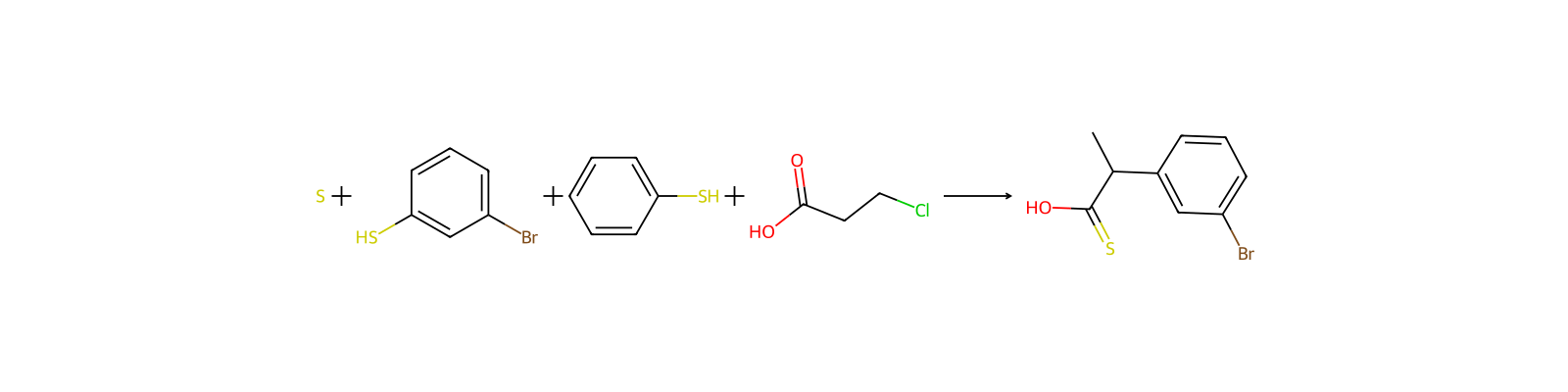
[S].[Br:2][C:3]1[CH:4]=[C:5](S)[CH:6]=[CH:7][CH:8]=1.[C:10]1([SH:16])C=CC=[CH:12][CH:11]=1.ClCCC(O)=[O:21]>>[Br:2][C:3]1[CH:4]=[C:5]([CH:11]([CH3:12])[C:10]([OH:21])=[S:16])[CH:6]=[CH:7][CH:8]=1Participants
5




Procedure
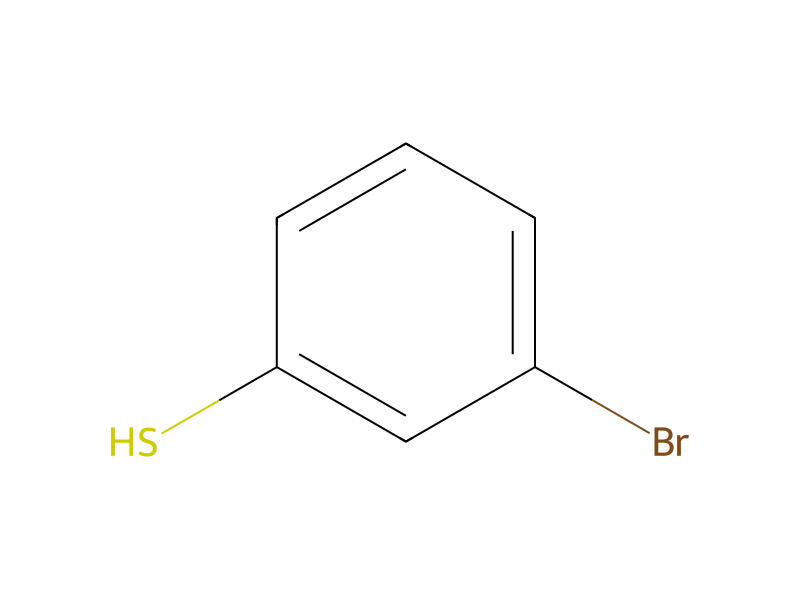
The compounds of this invention in which X is sulfur are available by bromo replacement of the corresponding 2-amino-5-bromothiochromanes. The latter are available by a sequence of reactions beginning with m-bromothiophenol. The thiophenol is treated in base with β-chloropropionic acid to produce m-bromophenylthiopropionic acid. The acid then is cyclized with polyphosphoric acid or with thionyl chloride or phosgene and a Lewis acid to produce a mixture of 5-bromo-4-thiochromanone and 7-bromo-4-thiochromanone. The thiochromanone mixture is reduced using, for example, sodium borohydride, to produce 4-bromo-1,2-benzothiapyran which is then oxidized with an organic peroxide to the corresponding sulfoxide having an epoxy group in the 3,4 position. Upon treatment with a Lewis acid, 5-bromo-3-thiochromanone sulfoxide is formed which can be reduced to the corresponding thiochromanone using dimethyl sulfide in the presence of trifluroacetic anhydride, oxalyl chloride, thionyl chloride, and the like, or reductively aminated to the 3-amino-5-bromothiochromane sulfoxide by treatment with the appropriate amine and sodium borohydride. The latter is reduced to the desired 3-amino-5-bromothiochromane using trifluoroacetic anhydride.