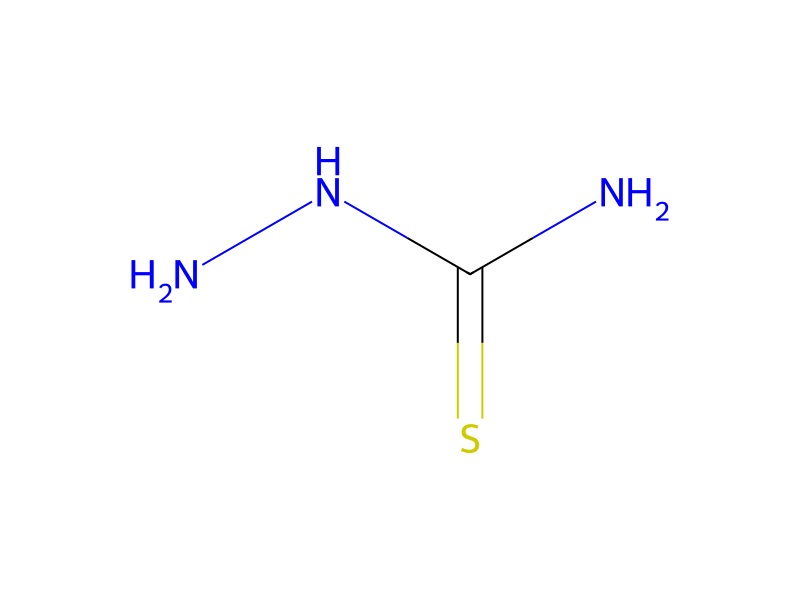
[CH:1]1[CH:2]=[CH:3][C:4]([NH:10][C:11]2[CH:12]=[CH:13][CH:14]=[C:15]([C:17]([F:20])([F:19])[F:18])[CH:16]=2)=[C:5]([C:7](O)=[O:8])[CH:6]=1.[NH2:21][NH:22][C:23]([NH2:25])=[S:24]>O1CCCC1.N1C=CC=CC=1>[NH2:25][C:23](=[S:24])[NH:22][NH:21][C:7](=[O:8])[C:5]1[CH:6]=[CH:1][CH:2]=[CH:3][C:4]=1[NH:10][C:11]1[CH:12]=[CH:13][CH:14]=[C:15]([C:17]([F:20])([F:19])[F:18])[CH:16]=1N,N'-Carbonyldiimidazole (4.56 g, 27.6 mmoles) is added to a room temperature solution of flufenamic acid (5.07 g, 18.0 mmoles) in 70 ml of tetrahydrofuran. The clear yellow solution is stirred at room temperature for three hours. The solution is then added via cannula to a suspension of thiosemicarbazide (3.41 g, 37.5 mmoles) in 55 ml of pyridine. The suspension is heated at reflux overnight. The clear orange solution is concentrated in vacuo, and the residue is partitioned between ethyl acetate and water. The organic layer is washed with additional water, dried over magnesium sulfate, and concentrated. The resulting solid is slurried with a 1:3 mixture of ethyl acetate and hexane. The off-white solid is collected by filtration providing 2.80 g (44%) of 2-[(3-trifluoromethylphenyl)amino]-benzoic acid, 2-(aminothioxomethyl)hydrazide.