Reaction equation

[C:1]1([SeH:7])[CH:6]=[CH:5][CH:4]=[CH:3][CH:2]=1.CC([O-])(C)C.[Na+].I[C:15]1[CH:20]=[CH:19][CH:18]=[CH:17][CH:16]=1.CC1C=CC2C=CC3C=CC(C)=NC=3C=2N=1.N1C2C(=CC=C3C=2N=CC=C3)C=CC=1>[Cu]I.CC1C=CC2C=CC3C=CC(C)=NC=3C=2N=1.C1(C)C=CC=CC=1>[C:1]1([Se:7][C:15]2[CH:20]=[CH:19][CH:18]=[CH:17][CH:16]=2)[CH:6]=[CH:5][CH:4]=[CH:3][CH:2]=1Participants







Procedure
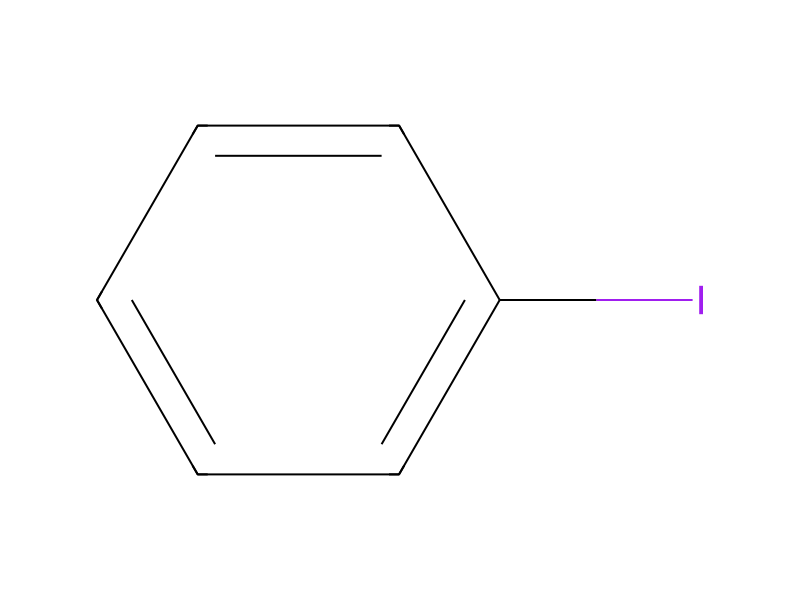
In a similar manner, the cross-coupling reaction between aryl iodides and phenyl selenol was initially investigated using 10 mol % CuI/neocuproine with NaOt-Bu as the base and toluene as the solvent. Using this protocol, in 24 h, the reaction between iodobenzene and phenyl selenol was complete. If in the reaction protocol neocuproine was replaced by phenanthroline, diphenyl selenide was obtained in a lower yield (70% by GC). Moreover, the reaction with the well-defined complex Cu-(neocuproine)(PPh3)Br showed complete conversion to the product after the same period of time. Use of CuI/neocuproine as catalyst, instead of the well-defined Cu(neocuproine)(PPh3)Br, dispenses with the need to synthesize the complex and the results are comparable. The effect of the base on such reactions (see Table 4).
Sources & evidence
- ORD record
- ord-b6e56939b33641dfadc6d291d35e4c94
- Source dataset
- uspto-grants-2006_09
- Patent number
- US07112697B1
Linked notes
Loading…