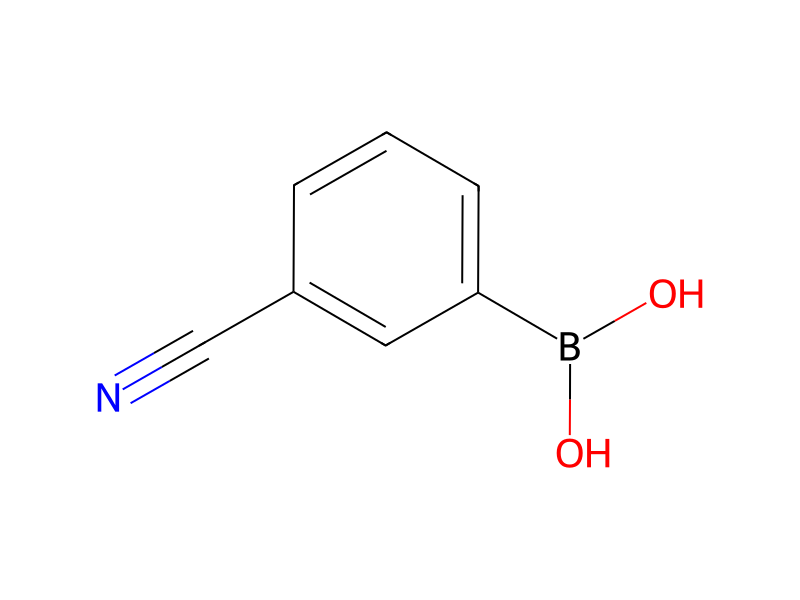
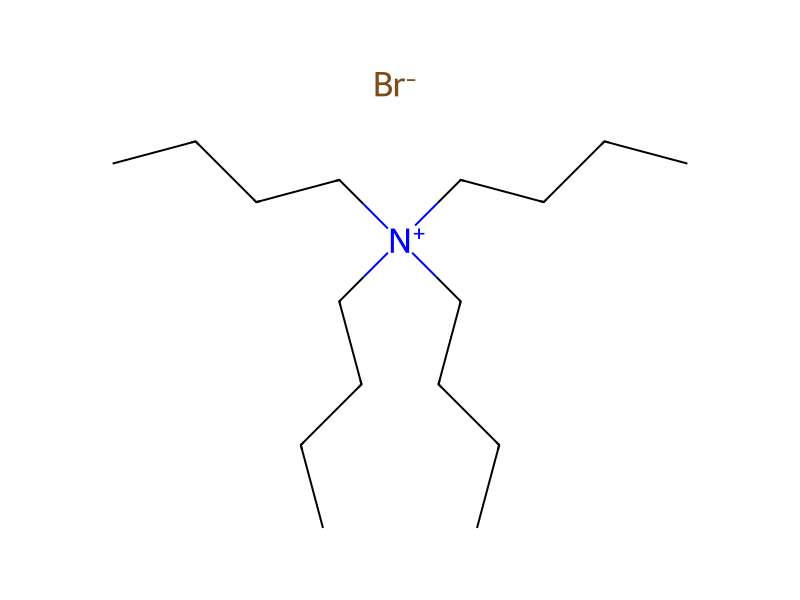
Br[C:2]1[N:11]=[CH:10][CH:9]=[CH:8][C:3]=1[C:4]([O:6][CH3:7])=[O:5].[C:12]([C:14]1[CH:15]=[C:16](B(O)O)[CH:17]=[CH:18][CH:19]=1)#[N:13].C(=O)([O-])[O-].[Na+].[Na+]>C1C=CC=CC=1.[Br-].C([N+](CCCC)(CCCC)CCCC)CCC.Cl[Pd](Cl)([P](C1C=CC=CC=1)(C1C=CC=CC=1)C1C=CC=CC=1)[P](C1C=CC=CC=1)(C1C=CC=CC=1)C1C=CC=CC=1>[C:12]([C:14]1[CH:19]=[C:18]([C:2]2[N:11]=[CH:10][CH:9]=[CH:8][C:3]=2[C:4]([O:6][CH3:7])=[O:5])[CH:17]=[CH:16][CH:15]=1)#[N:13]Methyl 2-bromonicotinate (2.0 g, 9.3 mmol) and 3-cyanophenylboronic acid (2.7 g, 18.4 mmol) were combined in 190 mL benzene. Sodium carbonate (19 mL of a 2 M aqueous solution), tetrabutylammonium bromide (152 mg, 0.5 mmol), and bis(triphenylphosphine)palladium(II) chloride (325 mg, 0.5 mmol) were added. The entire mixture was evacuated to remove dissolved gasses, then placed under argon. The reaction was refluxed for 14 hours, diluted with water and EtOAc, separated, dried over Na2SO4, filtered, and evaporated. The resulting yellow solid was chromatographed on silica gel (30% EtOAc/hexanes) to yield a light yellow solid (1.70 g, 77%). 1H NMR (CDCl3): δ8.81 (dd, 1H, J=4.8, J′=1.8), 8.23 (dd, 1H, J=8.0, J′=1.9), 7.85 (s, 1H), 7.73 (m, 2H), 7.55 (t, 1H, J=7.7), 7.43 (m, 1H), 3.76 (s, 3H).