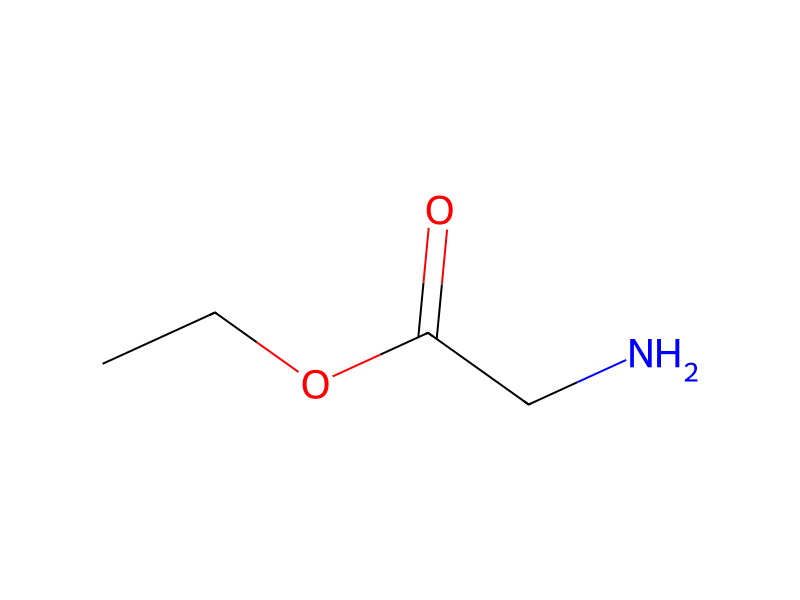
To a well stirred mixture of 20 ml. of 12.5% phosgene in benzene and 50 ml. of benzene is added dropwise a solution of 2.5 gm. (0.01 moles) of 2-methyl-3-hydroxy-4-mercaptomethyl-5-vinylpyridine in 25 ml. of benzene. The reaction mixture is stirred for 3 hours and then purged with nitrogen for 1 hour to remove any unreacted phosgene. The reaction mixture is then concentrated in vacuo to give a gummy solid. To the above is added 5.6 gm. (0.04 moles) of ethyl glycinate and 100 ml. of dry dioxane. The mixture is stirred and 6 ml. of triethylamine added. After stirring overnight at room temperature, the mixture is concentrated in vacuo and the residue extracted between ether and saturated sodium bicarbonate solution. The ether layer is separated, washed with water, dried over sodium sulfate and concentrated to give crude product. Chromatography on 900 gm. of silica gel and elution with ether gives ethyl N-(2-methyl-3-hydroxy-5-vinyl-4-pyridylmethylthiocarbonyl)glycinate.