Reaction equation

[Br:1][C:2]1[CH:14]=[CH:13][C:12]2[C:11]3[C:6](=[CH:7][C:8]([Br:15])=[CH:9][CH:10]=3)[NH:5][C:4]=2[CH:3]=1.Br[CH2:17][CH:18]([CH2:23][CH3:24])[CH2:19][CH2:20][CH2:21][CH3:22].S.C([N+](CCCC)(CCCC)CCCC)CCC.[OH-].[Na+]>CC(C)=O>[Br:1][C:2]1[CH:14]=[CH:13][C:12]2[C:11]3[C:6](=[CH:7][C:8]([Br:15])=[CH:9][CH:10]=3)[N:5]([CH2:17][CH:18]([CH2:23][CH3:24])[CH2:19][CH2:20][CH2:21][CH3:22])[C:4]=2[CH:3]=1Participants
6

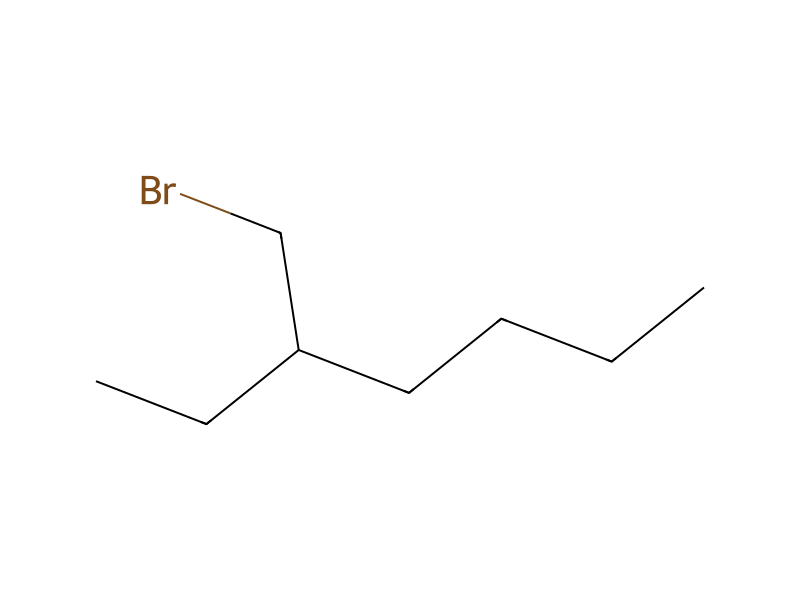



Procedure
A mixture of 2,7-dibromocarbazole (3.0 g, 8.95 mmol), 1-bromo-2-ethylhexane (2.70 g, 13.4 mmol), tetra-n-butylammonium hydrogen sulfide (0.1 g), and NaOH (0.54 g, 13.5 mmol) in acetone (30 mL) was refluxed for 9 h. After the reaction, the acetone was removed under vacuum and the residue was extracted with toluene. The combined organic layer was washed with a saturated NaCl aqueous solution, and dried over MgSO4. After removal of the solvent, the residue was purified by column chromatography on silica gel using hexane as the eluent to afford 2,7-dibromo-9-(2-ethylhexyl)-carbazole as a white powder. Yield: 2.46 g (62.9%). M.P.: 95-97° C.
Workup
- temperaturewas refluxed for 9 h
- customAfter the reaction
- customthe acetone was removed under vacuum
- extractionthe residue was extracted with toluene
- washThe combined organic layer was washed with a saturated NaCl aqueous solution
- dry with materialdried over MgSO4
- customAfter removal of the solvent
- customthe residue was purified by column chromatography on silica gel
Sources & evidence
- ORD record
- ord-4b20a7e3c8ab4988ba23464f0cb0a5ff
- Source dataset
- uspto-grants-2010_03
- Patent number
- US07679082B2
Linked notes
Loading…