HomeMCPWorkbenchSkills
HomeWorkbenchNotificationsMe
llms.txt · MCP GuidePrivacy Policy · Terms of Service · Supportv1.8.3
  1. Home
  2. /Reaction

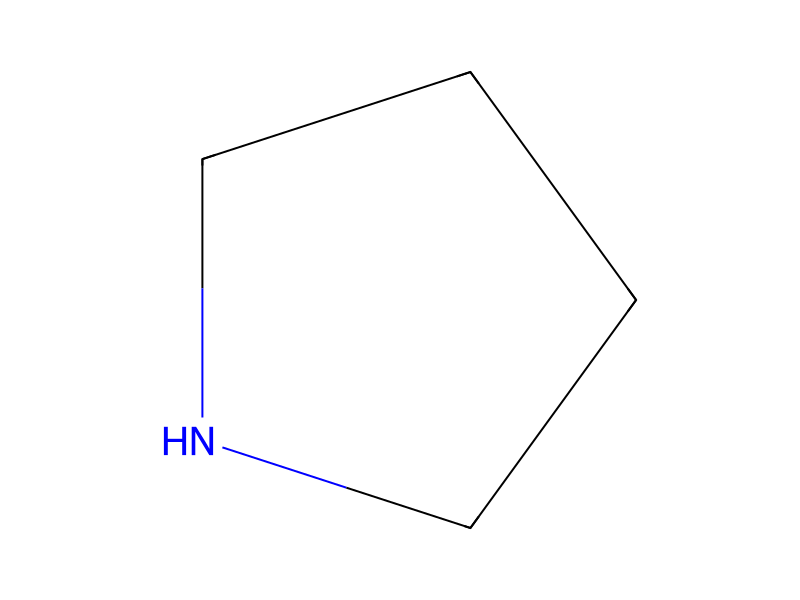
Pyrrolidine → 1-(6-Bromo-3,4-dihydronaphthalen-2-yl)pyrrolidine

HRID 2255257
Print

Reaction equation

HRID 2255257 reaction equation
[Br:1][C:2]1[CH:3]=[C:4]2[C:9](=[CH:10][CH:11]=1)[C:8](=O)[CH2:7][CH2:6][CH2:5]2.[NH:13]1[CH2:17][CH2:16][CH2:15][CH2:14]1>C1(C)C=CC=CC=1>[N:13]1([C:7]2[CH2:6][CH2:5][C:4]3[C:9](=[CH:10][CH:11]=[C:2]([Br:1])[CH:3]=3)[CH:8]=2)[CH2:17][CH2:16][CH2:15][CH2:14]1
ParticipantsProcedureWorkupSources & evidenceReaction notes

Participants

4

Reactant 2

HCID 31268PyrrolidineHCID 101050696-Bromo-1-tetralone

Product 1

HCID 221654851-(6-Bromo-3,4-dihydronaphthalen-2-yl)pyrrolidineYield 97.4%

Reagents, catalysts & solvents 1

HCID 1140TolueneSolvent

Procedure

To a 250 ml round bottomed flask was added 5.00 g (22.21 mmol) of the 6-bromotetralone afforded above in Step B; 70 ml of dry toluene and 3.1 g (3.7 ml) of pyrrolidine. The flask was equipped with a Dean-Stark trap, a condenser, a nitrogen inlet tube and a magnetic stirrer and the reaction refluxed for four hours. The solvent was evaporated under vacuum to afford 6.02 g (97.4%) of the subtitle compound as a brown crystalline material which was used without further purification.

Workup

  1. customafforded above in Step B
  2. customThe flask was equipped with a Dean-Stark trap, a condenser, a nitrogen inlet tube and a magnetic stirrer
  3. temperaturethe reaction refluxed for four hours
  4. customThe solvent was evaporated under vacuum

Sources & evidence

ORD record
ord-1e0f923c07e64ae49eaf327b30ef4815
Source dataset
uspto-grants-1993_08
DOI
10.6084/m9.figshare.5104873.v1
Patent number
US05239075

Reaction notes

On this pageParticipantsProcedureWorkupSources & evidenceReaction notes