HomeMCPWorkbenchSkills
HomeWorkbenchNotificationsMe
llms.txt · MCP GuidePrivacy Policy · Terms of Service · Supportv1.8.3
  1. Home
  2. /Reaction

Carbon Dioxide → N,N-Dimethyl-1H-imidazole-1-sulfonamide

HRID 2259989
Print

Reaction equation

HRID 2259989 reaction equation
[H][H].C1[C:12]2[C:7](=CC=CC=2)CCC1.C([Li])CCC.C(=O)=O.ClC(OCC)=O.CC1C(/C(/C)=C/C2N=C(C(OCC)=O)NC=2)=CC2C(C)(C)CCC(C)(C)C=2C=1.CC1C(/C(/C)=C/C2[N:73]=[C:74](C(OCC)=O)[N:75]([S:77](=[O:82])(=[O:81])[N:78]([CH3:80])[CH3:79])C=2)=CC2C(C)(C)CCC(C)(C)C=2C=1.CC1C(C#C)=CC2C(C)(C)CCC(C)(C)C=2C=1.C[Al](C)C.CN(C)S(N1C=C(I)N=C1)(=O)=O>C1C=CC([P]([Pd]([P](C2C=CC=CC=2)(C2C=CC=CC=2)C2C=CC=CC=2)([P](C2C=CC=CC=2)(C2C=CC=CC=2)C2C=CC=CC=2)[P](C2C=CC=CC=2)(C2C=CC=CC=2)C2C=CC=CC=2)(C2C=CC=CC=2)C2C=CC=CC=2)=CC=1.[Cl-].[Cl-].[CH-]1C=CC=C1.[CH-]1C=CC=C1.[Zr+2]>[CH3:79][N:78]([CH3:80])[S:77]([N:75]1[CH:7]=[CH:12][N:73]=[CH:74]1)(=[O:82])=[O:81]
ParticipantsProcedureWorkupSources & evidenceReaction notes

Participants

13

Reactant 10

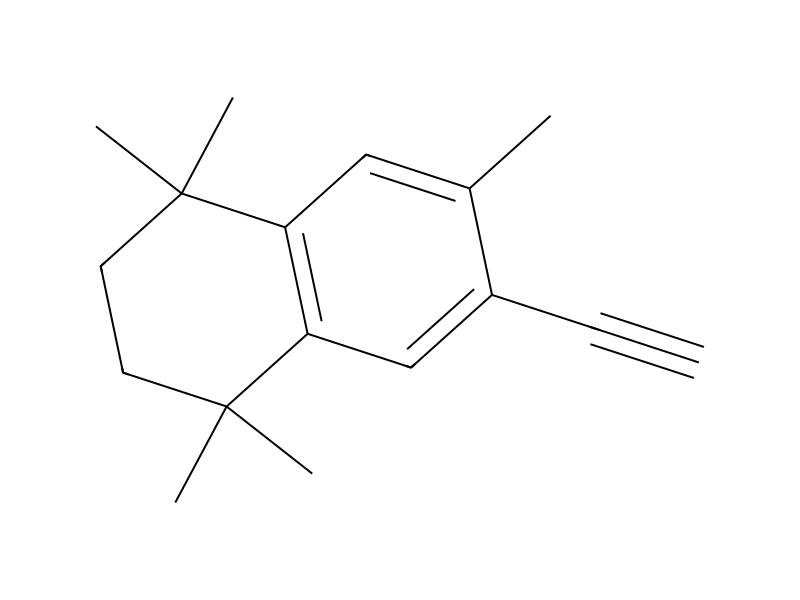
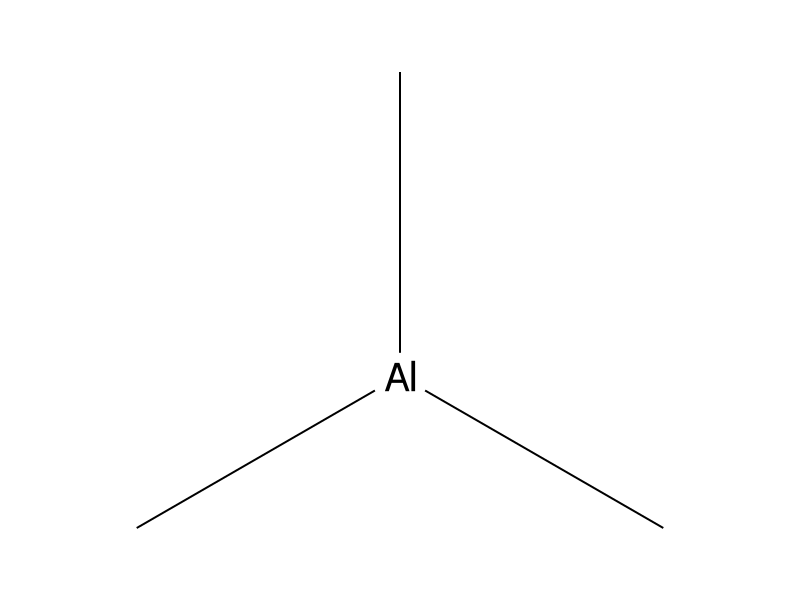
HCID 280Carbon DioxideHCID 8404TetralinHCID 10928Ethyl chloroformateHCID 2773390N,N-Dimethyl 4-iodo-1H-imidazole-1-sulfonamide2×HCID 118063871,1,4,4,7-Pentamethyl-6-ethynyl-1,2,3,4-tetrahydronaphthalene2×HCID 16682925Trimethylaluminum
HCID 86749151
ethyl (E)-4-[2-(5,6,7,8-tetrahydro-3,5,5,8,8-pentamethylnaphthalen-2-yl)propen-1-yl]-1-(N,N-dimethylsulfamoyl)-2-imidazolecarboxylate
HCID 178418339Butyllithium
HCID 178418361HCID 178418361, compound
HCID 178470243HCID 178470243, compound

Product 1

HCID 395751N,N-Dimethyl-1H-imidazole-1-sulfonamide

Reagents, catalysts & solvents 2

HCID 131716798Zirconocene dichiorideCatalystHCID 178418397HCID 178418397, compoundCatalyst

Procedure

It should be noted in connection with Reaction Schemes 1, 2 and 3 that in all of these reaction schemes heterocycle derivatives corresponding respectively to Formula 7, 11 and 15 can be employed where in the A-B' substituent A is (CH2)n, n is 0, and B' is hydrogen. A carboxylic acid group is then introduced into the molecule, after coupling with the tetrahydronaphthalene moiety, by reaction with strong base (such as n-butyl lithium) and carbon dioxide or ethyl chloroformate. Reaction Scheme 4 illustrates specifically the synthesis of Compound 3 and Compound 4 of the present application. In accordance with this scheme (5,6,7,8-tetrahydro-3,5,5,8,8-pentamethylnaphthalen-2-yl)acetylene (Compound 10) is reacted with trimethylaluminum in the presence zirconocene dichloride. The resulting "carboaluminated adduct" (not shown in Scheme 4) is reacted in the presence of tetrakis(triphenylphosphine)palladium (Pd(PPh3)4) catalyst, with 1-(N,N-dimethylsulfamoyl)-4-iodoimidazole (Compound 11) which is obtained by iodination from 1-(N,N-dimethylsulfamoyl)imidazole. The latter compound can be obtained in accordance with the chemical literature: Chadwick et al. J. Chem. Soc., Perkin Trans. I 1984, 481-486. The result of the coupling reaction between between the carboaluminated adduct derived from Compound 10 and Compound 11 is (E)-4-[2-(5,6,7,8-tetrahydro-3,5,5,8,8-pentamethylnaphthalen-2-yl)propen-1-yl]-1-(N,N-dimethylsulfamoyl)imidazole (Compound 12). The carboxylic acid ethyl ester moiety is introduced into the molecule by reacting the anion of Compound 12 generated with strong base such as n-butyl lithium, with ethyl chloroformate, to yield ethyl (E)-4-[2-(5,6,7,8-tetrahydro- 3,5,5,8,8-pentamethylnaphthalen-2-yl)propen-1-yl]-1-(N,N-dimethylsulfamoyl)-2-imidazolecarboxylate (Compound 4). The dimethylsulfamoyl group is removed from the imidazole nitrogen by treatment with acid, to yield ethyl (E)-4-[2-(5,6,7,8-tetrahydro-3,5,5,8,8-pentamethylnaphthalen-2-yl)propen-1-yl]-2-imidazolecarboxylate (Compound 3). ##STR10##


Workup

  1. customIt should be noted in connection with Reaction Schemes 1, 2 and 3 that in all
  2. additionA carboxylic acid group is then introduced into the molecule
  3. customReaction Scheme 4

Sources & evidence

ORD record
ord-ea12ca04a80d41878492628784e50f66
Source dataset
uspto-grants-1995_12
DOI
10.6084/m9.figshare.5104873.v1
Patent number
US05475113

Reaction notes

On this pageParticipantsProcedureWorkupSources & evidenceReaction notes