Imidazole → Ethyl 4-cyano-3-(tert-butyldiphenylsilyloxy)-butanoate
Reaction equation

N1C=CN=C1.[C:6]([CH2:8][CH:9]([OH:16])[CH2:10][C:11]([O:13][CH2:14][CH3:15])=[O:12])#[N:7].[C:17]([Si:21](Cl)([C:28]1[CH:33]=[CH:32][CH:31]=[CH:30][CH:29]=1)[C:22]1[CH:27]=[CH:26][CH:25]=[CH:24][CH:23]=1)([CH3:20])([CH3:19])[CH3:18].O>ClCCl>[C:6]([CH2:8][CH:9]([O:16][Si:21]([C:17]([CH3:20])([CH3:19])[CH3:18])([C:28]1[CH:29]=[CH:30][CH:31]=[CH:32][CH:33]=1)[C:22]1[CH:27]=[CH:26][CH:25]=[CH:24][CH:23]=1)[CH2:10][C:11]([O:13][CH2:14][CH3:15])=[O:12])#[N:7]Participants
6


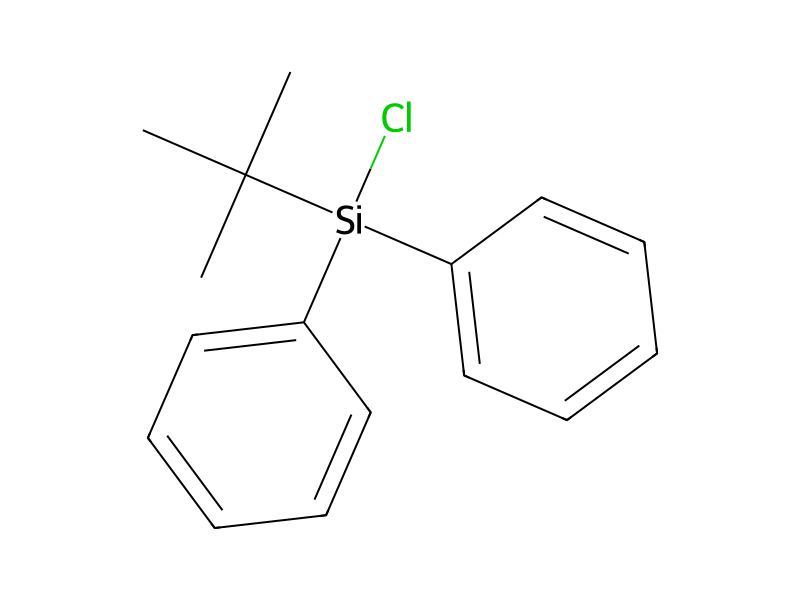



Procedure
Imidazole (6.5 g, 0.095 mol) was added to a chilled solution (−5 to −10° C.) of ethyl 4-cyano-3-hydroxybutanoate (10 g, 0.063 mol) in dichloromethane (100 ml) under stirring, followed by tert-butyl diphenyl silyl chloride (15.7 g, 0.057 mol). After stirring for 4 hours at room temperature, water (250 ml) was added to the reaction mixture and layers separated. The aqueous layer was extracted with dichloromethane (100 ml) and combined with the organic layer. The combined organic layer was evaporated to give title compound.
Workup
- stirringAfter stirring for 4 hours at room temperature
- customseparated
- extractionThe aqueous layer was extracted with dichloromethane (100 ml)
- customThe combined organic layer was evaporated
Sources & evidence
- ORD record
- ord-e26669bfbe024d138ddc363d0ea73067
- Source dataset
- uspto-grants-2009_07
- Patent number
- US07557238B2
Reaction notes
Loading…