HomeMCPWorkbenchSkills
HomeWorkbenchNotificationsMe
llms.txt · MCP GuidePrivacy Policy · Terms of Service · Supportv1.8.3
  1. Home
  2. /Reaction

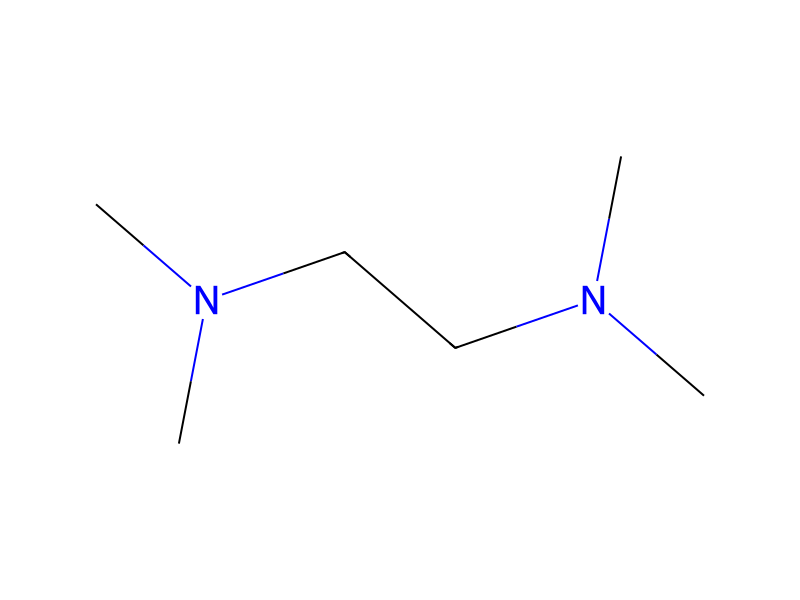
N,N,N',N'-Tetramethylethylenediamine → Methyl (2S)-2-({[(1,1-dimethylethyl)oxy]carbonyl}amino)-5-(2-fluoro-4-{[(2-fluorophenyl)methyl]oxy}phenyl)-5-oxopentanoate

HRID 2264808
Print

Reaction equation

HRID 2264808 reaction equation
[F:1][C:2]1[CH:7]=[CH:6][CH:5]=[CH:4][C:3]=1[CH2:8][O:9][C:10]1[CH:15]=[CH:14][C:13](Br)=[C:12]([F:17])[CH:11]=1.CN(CCN(C)C)C.C([Li])CCC.[O:31]=[C:32]1[N:36]([C:37]([O:39][C:40]([CH3:43])([CH3:42])[CH3:41])=[O:38])[C@H:35]([C:44]([O:46][CH3:47])=[O:45])[CH2:34][CH2:33]1>C1COCC1>[CH3:43][C:40]([O:39][C:37]([NH:36][C@@H:35]([CH2:34][CH2:33][C:32]([C:13]1[CH:14]=[CH:15][C:10]([O:9][CH2:8][C:3]2[CH:4]=[CH:5][CH:6]=[CH:7][C:2]=2[F:1])=[CH:11][C:12]=1[F:17])=[O:31])[C:44]([O:46][CH3:47])=[O:45])=[O:38])([CH3:41])[CH3:42]
ParticipantsConditionsProcedureWorkupSources & evidenceReaction notes

Participants

6

Reactant 4

HCID 8037N,N,N',N'-TetramethylethylenediamineHCID 108684851-O-tert-butyl 2-O-methyl (2S)-5-oxopyrrolidine-1,2-dicarboxylateHCID 595967064-Bromo-3-fluorophenyl (2-fluorophenyl)methyl etherHCID 178418339Butyllithium

Product 1

HCID 59596685Methyl (2S)-2-({[(1,1-dimethylethyl)oxy]carbonyl}amino)-5-(2-fluoro-4-{[(2-fluorophenyl)methyl]oxy}phenyl)-5-oxopentanoate
Yield 39.4%

Reagents, catalysts & solvents 1

HCID 8028TetrahydrofuranSolvent2×

Conditions

Temperature
-78 °C

Procedure

To a solution of 4-bromo-3-fluorophenyl (2-fluorophenyl)methyl ether (D41, 500 mg, 1.67 mmol) and TMEDA (178 mg, 1.53 mmol) in dry THF (7 ml) at −78° C. under nitrogen atmosphere was added n-butyllithium 1.6M solution in hexanes (1 ml, 1.6 mmol) dropwise. The resulting suspension was stirred at −78° C. for 15 minutes and then it was added dropwise to a solution of 1-(1,1-dimethylethyl) 2-methyl (2S)-5-oxo-1,2-pyrrolidinedicarboxylate (D5, 338 mg, 1.39 mmol) in dry THF (2 ml). The mixture was stirred at −78° C. for 1 h, then it was quenched with a saturated ammonium chloride aqueous solution. The phases were separated and the organic layer was washed with brine, dried over Na2SO4, filtered, and evaporated under reduced pressure. The resulting residue was purified by chromatography on silica gel eluting with cyclohexane/ethylacetate (9:1 to 85:15) affording the title compound as a white solid (254 mg, 39%); 1H NMR (300 MHz, CDCl3-d) δ (ppm): 8.00-7.80 (m, 1H); 7.53-7.42 (m, 1H); 7.42-7.25 (m, 1H); 7.23-7.05 (m, 2H); 6.90-6.80 (m, 1H); 6.75-6.65 (m, 1H); 5.18 (s, 2H); 4.50-4.30 (m, 1H); 3.71 (s, 3H); 3.18-2.85 (m, 2H); 2.40-2.20 (m, 1H); 2.15-1.90 (m, 1H); 1.40 (s, 9H).

Workup

  1. stirringThe mixture was stirred at −78° C. for 1 h
  2. customit was quenched with a saturated ammonium chloride aqueous solution
  3. customThe phases were separated
  4. washthe organic layer was washed with brine
  5. dry with materialdried over Na2SO4
  6. filtrationfiltered
  7. customevaporated under reduced pressure
  8. customThe resulting residue was purified by chromatography on silica gel eluting with cyclohexane/ethylacetate (9:1 to 85:15)

Sources & evidence

ORD record
ord-9454c9f091ee47ef87bc3b4daacd0b7b
Source dataset
uspto-grants-2010_12
DOI
10.6084/m9.figshare.5104873.v1
Patent number
US07855218B2

Reaction notes

On this pageParticipantsConditionsProcedureWorkupSources & evidenceReaction notes