Reaction equation

[C:1]1(=[O:8])[O:7][CH2:6][CH2:5][CH2:4][CH2:3][CH2:2]1.[C:9]1(=[O:15])[O:14][CH2:13][CH2:12][CH2:11][O:10]1.C(O)C(O)C.CCCCC(C([O-])=O)CC.CCCCC(C([O-])=O)CC.[Sn+2]>C1(C)C=CC=CC=1>[C:1]1(=[O:8])[O:7][CH2:6][CH2:5][CH2:4][CH2:3][CH2:2]1.[C:9]1(=[O:15])[O:14][CH2:13][CH2:12][CH2:11][O:10]1Participants
Reactant 4


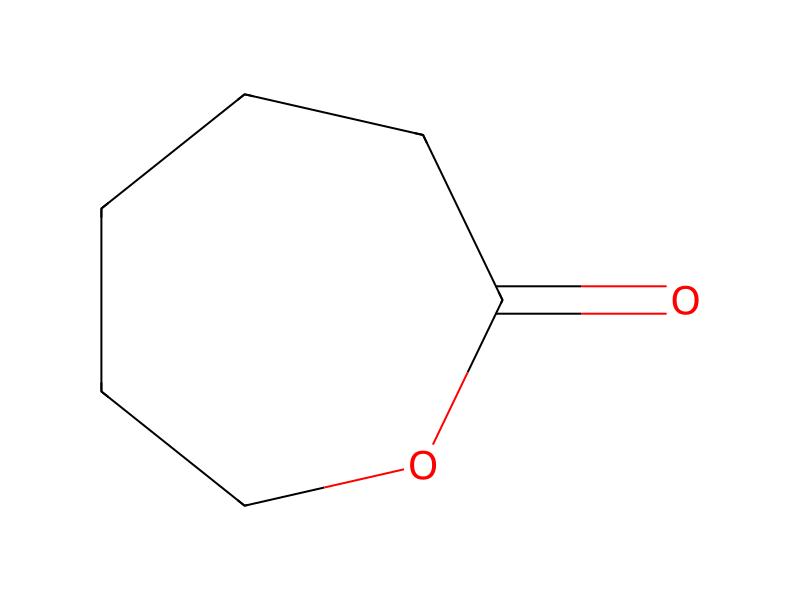

Product 1

Reagents, catalysts & solvents 1

Conditions
- Temperature
- 160 °C
Procedure
A flame dried, 250 mL, round bottom single neck flask was charged with 102.7 grams (0.90 mole) of ε-caprolactone, 10.2 grams (0.10 mole) of trimethylene carbonate, 2.9 mL (40 mmol) of propylene glycol (USP), and 0.10 mL (34 μmol) of a 0.33M stannous octoate solution in toluene. The flask was fitted with a flame dried mechanical stirrer. The flask was purged with nitrogen three times before venting with nitrogen. The reaction mixture was heated to 160° C. and maintained at this temperature for about 18-20 hours. The copolymer was dried under vacuum (0.1 mm Hg) at 80° C. for about 16 hours to remove any unreacted monomer. The copolymer had an inherent viscosity of 0.25 dL/g in HFIP at 25° C. The copolymer was a viscous liquid at room temperature.
Workup
- customA flame dried
- customThe flask was fitted with a flame
- customdried mechanical stirrer
- customThe flask was purged with nitrogen three times
- temperaturemaintained at this temperature for about 18-20 hours
- customThe copolymer was dried under vacuum (0.1 mm Hg) at 80° C. for about 16 hours
- customto remove any unreacted monomer
- customat 25° C
- customat room temperature
Sources & evidence
- ORD record
- ord-8ed745f48d774f70a727a25216a3f78b
- Source dataset
- uspto-grants-1998_03
- Patent number
- US05728752
Linked notes
Loading…