HomeMCPWorkbenchSkills
HomeWorkbenchNotificationsMe
llms.txt · MCP GuidePrivacy Policy · Terms of Service · Supportv1.8.3
  1. Home
  2. /Compound

2-ethylhexanoic acid tin(II) salt

HCID 9318
New reaction
Print
Basic informationOverviewNames & identifiersPropertiesSafety & regulationChemistry & industryRelated reactionsCompound notes
Substructure searchFind similar structures

Basic information

CAS
301-10-0
Standard SMILES
CCCCC(CC)C(=O)[O-].CCCCC(CC)C(=O)[O-].[Sn+2]
InChIKey
KSBAEPSJVUENNK-UHFFFAOYSA-L
Molecular formula
C16H30O4Sn
Average molar mass
405.1 g/mol
Monoisotopic mass
406.116612

Overview

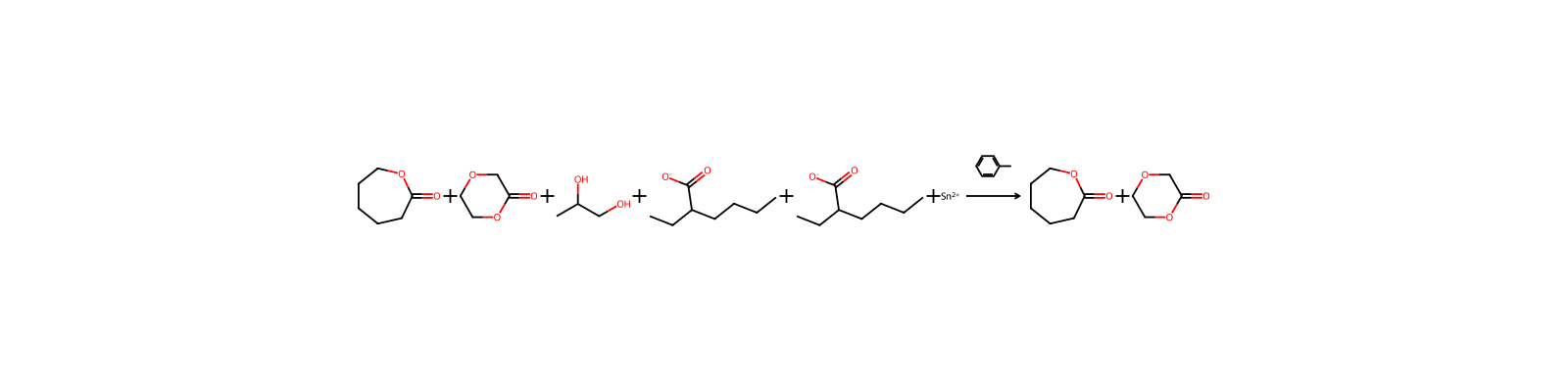
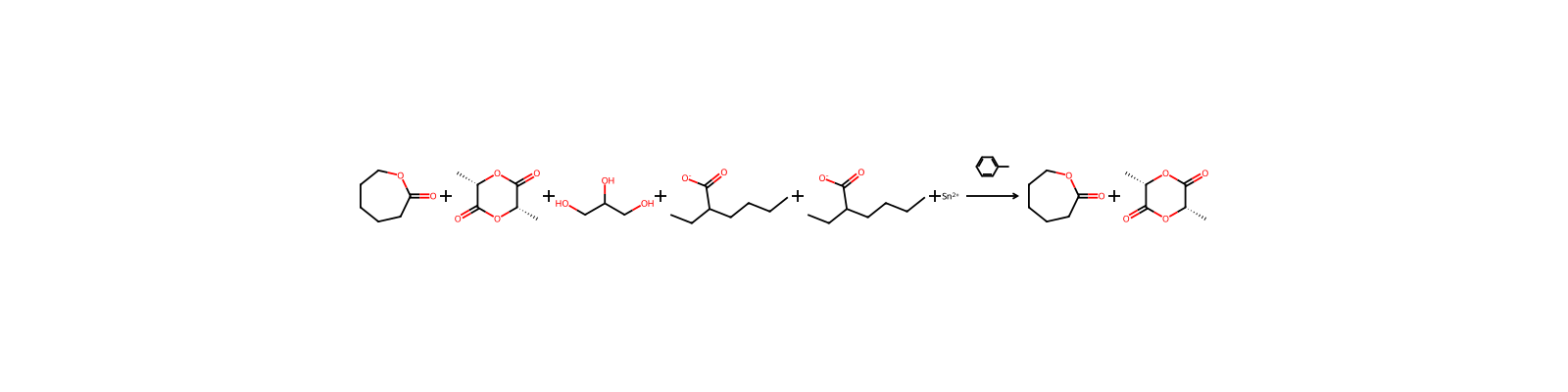
used as a catalyst for ring-opening polymerization to make D,L-lactide and epsilon-caprolactone copolymers

Names & identifiers

Preferred name
2-ethylhexanoic acid tin(II) salt
IUPAC
bis(2-ethylhexanoate);tin(2+)
English name
Stannous octoate
Molecular formula
C16H30O4Sn
Molecular weight
405.12

Names & synonyms

2-Ethylhexanoic acid tin(II) saltSn(Oct)2RefChem:58487301-10-0Tin(II) 2-ethylhexanoateTin dioctoateStannous 2-ethylhexanoateTin bis(2-ethylhexanoate)Tin octoateTin(II) bis(2-ethylhexanoate)Tin 2-ethylhexanoateTin ethylhexanoate
Show more names
Stannous octanoateTIB KAT 129Stannous Octoate T-9Tin(Ⅱ) 2-ethylhexanoateBIS(2-ETHYLHEXANOATE)TIN
Stannous 2-ethylhexoateNuocure 28Tin(II) 2-ethylhexylate2-ethylhexanoate;tin(2+)Tin(2+) 2-ethylhexanoateHexanoic acid, 2-ethyl-, tin(2+) saltUNII-519A78R12Y2-Ethylhexanoic acid stannous salt

Database identifiers

CAS
301-10-0
PubChem CID
9318
DTXSID
DTXSID1027138
UNII
519A78R12Y
EC Number
206-108-6
Nikkaji
J193.708A

Properties

Computed structural properties

Topological polar surface area
80.3 Ų
Hydrogen bond donors
0
Hydrogen bond acceptors
4
Rotatable bonds
8
Heavy atoms
21
Formal charge
0
Complexity
93.9

Experimental & physicochemical properties

Chemical ClassesMetals -> Organic Acids, Metal Salts
Vapor Pressure0.00000001 [mmHg]
Food Contact SubstancesFCS -> FDA Inventory of Food Contact Substances Listed in 21 CFR
Physical Description · 2 items

CBI

Liquid; [Sigma-Aldrich MSDS]

Physicochemical properties

Melting point
-20 °C · <-20°C
Boiling point
200 °C · >200°C
Density
1.251 g/mL · 1.251 g/mL at 25 °C(lit.)
vapor pressure
0.3 Pa · 0.3Pa at 20℃
refractive index
20 · n20/D 1.493(lit.)
Flash point
110 °C · >110°C
pka
5.09 · 5.09[at 20 ℃]
form
liquid
Specific Gravity
1.251 · 1.251
color
Transparent
Viscosity
306 mm2/s · 306mm2/s
Water Solubility
Miscible with water.
Hydrolytic Sensitivity
7 · 7: reacts slowly with moisture/water
Exposure limits
0.1 mg/m3; · ACGIH: TWA 0.1 mg/m3; STEL 0.2 mg/m3 (Skin)NIOSH: IDLH 25 mg/m3; TWA 0.1 mg/m3
InChI
1S/2C8H16O2.Sn/c2*1-3-5-6-7(4-2)8(9)10;/h2*7H,3-6H2,1-2H3,(H,9,10);/q;;+2/p-2
InChIKey
KSBAEPSJVUENNK-UHFFFAOYSA-L
SMILES
CCCCC(CC)C(=O)O[SnH2]OC(=O)C(CC)CCCC
LogP
2.64 at · 2.64 at 25℃
CAS DataBase Reference
301 · 301-10-0(CAS DataBase Reference)
Indirect Additives used in Food Contact Substances
2 · STANNOUS 2-ETHYLHEXANOATE
FDA 21 CFR
175.105 · 175.105; 175.300
FDA UNII
519 A78R12Y · 519A78R12Y
EPA Substance Registry System
2 · Stannous 2-ethylhexanoate (301-10-0)
UNSPSC Code
12161600 · 12161600
NACRES
22 · NA.22
Symbol(GHS)
5 · GHS05,GHS07,GHS08,GHS09
Signal word
Danger
Hazard statements
303 · H303-H316-H318-H361-H317-H411
Precautionary statements
501 · P501-P273-P272-P202-P261-P201-P280-P302+P352-P312-P391-P362+P364-P333+P313-P305+P351+P338+P310-P405
PPE
Eyeshields, Gloves, type ABEK (EN14387) respirator filter
Hazard Codes
Xi,Xn
Risk Statements
36 · 36/37/38-62-52/53-43-41-63
Safety Statements
26 · 26-36/37/39-61
WGK Germany
1 · 1
RTECS
7870000 · MO7870000
TSCA
TSCA listed
PackingGroup
III
HS Code
29159000 · 29159000
Storage Class
6.1 C · 6.1C - Combustible acute toxic Cat.3toxic compounds or compounds which causing chronic effects
Hazard Classifications
3 Eye · Aquatic Chronic 3Eye Dam. 1Repr. 1BSkin Sens. 1
REACH Registrations
Active

Safety & regulation

Safety information is for reference only and does not replace the supplier’s Safety Data Sheet (SDS), applicable regulations, or professional assessment.

GHS classification

GHS Classification · 6 items

This chemical does not meet GHS hazard criteria for 0.2% (2 of 972) of reports.

Danger

H315 (26.1%): Causes skin irritation [Warning Skin corrosion/irritation]

P203, P261, P264, P264+P265, P272, P273, P280, P302+P352, P305+P351+P338, P305+P354+P338, P317, P318, P321, P332+P317, P333+P317, P337+P317, P362+P364, P391, P405, and P501 (click each P-code to see the statement)

Aggregated GHS information provided per 972 reports by companies from 30 notifications to the ECHA C&L Inventory. Each notification may be associated with multiple companies.

Danger

Hazard information

Regulatory Information · 3 items

Chemical: Hexanoic acid, 2-ethyl-, tin(2+) salt

Hexanoic acid, 2-ethyl-, tin(2+) salt (2:1) is listed on the EPA's Chemical Data Reporting (CDR) system. Manufacturers and importers of Hexanoic acid, 2-ethyl-, tin(2+) salt (2:1) are required to report information about their production and use of this chemical to the EPA under the Toxic Substances Control Act (TSCA). (40 eCFR Part 711)

REACH registered substance: Tin bis(2-ethylhexanoate) (EC: 206-108-6)

Other Safety InformationIMAP assessments - Hexanoic acid, 2-ethyl-, tin(2+) salt: Human health tier II assessment
Hazards Summary · 1 item

Oral LD50 (rat) = 3,400-5,870 mg/kg; Causes mild skin and moderate eye irritation in rabbits; [EPA ChAMP: Submissions - Final Summaries] Metal carboxylates readily dissociate in water into the free metal and free acid; [EPA ChAMP: Submission] A skin and strong eye irritant; [Sigma-Aldrich MSDS] See Tin and inorganic compounds. See 2-Ethylhexanoic acid.

Hazard Classes and Categories · 2 items

Skin Irrit. 2 (26.1%)

Eye damage - category 1

Safety & protection

Threshold Limit Values (TLV)2.0 [mg/m3], as Sn
Permissible Exposure Limit (PEL)2.0 [mg/m3], as Sn

Safety data

PPE
Eyeshields, Gloves, type ABEK (EN14387) respirator filter
wgk
1
tsca
TSCA listed
rtecs
MO7870000
hs_code
29159000
risk_code
36/37/38-62-52/53-43-41-63
Signal word
Danger
Symbol(GHS)
GHS05,GHS07,GHS08,GHS09
hazard_code
Xi,Xn
safety_code
26-36/37/39-61
Storage Class
6.1C - Combustible acute toxic Cat.3toxic compounds or compounds which causing chronic effects
packing_group
III
Hazard statements
H303-H316-H318-H361-H317-H411
REACH Registrations
Active
Hazard Classifications
Aquatic Chronic 3Eye Dam. 1Repr. 1BSkin Sens. 1
Precautionary statements
P501-P273-P272-P202-P261-P201-P280-P302+P352-P312-P391-P362+P364-P333+P313-P305+P351+P338+P310-P405

Chemistry & industry

Uses & manufacturing

Uses · 2 items

Used as a crosslinking agent for flexible polyurethane foams and catalyst for polymer production; [EPA ChAMP: Submissions - Final Summaries]

Plastic Composites Manufacturing [Category: Industry]

U.S. Production2023: 5,500,000 - <7,000,000 lb
Consumer UsesCatalyst
Industry UsesCatalyst
General Manufacturing Information · 2 items

Other (requires additional information)

Hexanoic acid, 2-ethyl-, tin(2+) salt (2:1): ACTIVE

Applications · 3 items

UsesStannous octoate is susceptible to hydrolysis and oxidation and cannot be used in combination polyethers (premixes). Its catalytic activity is higher than that of dibutyltin dilaurate.Stannous octoate can be used as a catalyst for polyurethane, mainly in the production of soft block polyether type polyurethane foam, but also as a catalyst for polyurethane coatings, elastomers, room temperature curing silicone rubber, etc. As it is a divalent tin compound, it may be oxidized to tetravalent tin compound itself after foaming, and it remains in the foam body to play the role of an antioxidant, which stays in the foam after foaming and has no adverse effect on the foam performance.

UsesTin(II) 2-ethylhexanoate is used as a polymerization initiator in polylactic acid production. It acts as an intermediate as well as a catalyst for urethane foams, lubricants, addition agents and stabilizers for transformer oils.

UsesA catalyst for polylactide polymerization.

Preparation methods

PreparationStannous octoate is produced by reacting 2-ethylhexanoic acid with sodium hydroxide to form sodium 2-ethylhexanoate, which then undergoes a complex decomposition reaction with stannous chloride by heating in an inert solvent.

Upstream & downstream products

Upstream raw materials

Tin2-Ethylhexanoic acidStannous chlorideSodium hydroxide

Downstream products

demulsifier SAP seriesmain chain liquid crystalling polysiloxane polyurethanehydrophilic silicone finishing agent

Related reactions

86 records
New reaction record
HRID 2257 reaction equation
HRID 2257As reactant
HRID 2258 reaction equation
HRID 2258As reactant
HRID 2260 reaction equation
HRID 2260As reactant
HRID 2261 reaction equation
HRID 2261As reactant
HRID 2264 reaction equation
HRID 2264As reactant
HRID 2265 reaction equation
HRID 2265As reactant
HRID 22149 reaction equation
HRID 22149As reactant
HRID 22150 reaction equation
HRID 22150As reactant
PreviousPage 1 of 11

Compound notes

On this pageBasic informationOverviewNames & identifiersPropertiesSafety & regulationChemistry & industryRelated reactionsCompound notes